EUR/USD Forecast: bleeding not over, neither global economic downturn
- The first week of April fulfilled with first-tier data.
- EUR/USD poised to extend the decline next week, longer-term dollar's strength still unclear.

The EUR/USD pair fell for a second consecutive week, approaching the yearly low of 1.1175 as fear ruled. The common currency started the week with a positive stance amid a better-than-expected German IFO survey, which brought temporal relief by coming above the market's expectations. The upward mood, however, didn't last long and was quickly reverted throughout the rest of the week, as an inverted US Treasury yields' curve and more data from the EU pointing to a deeper economic slowdown in the Union, sent investors running into safety, with the greenback being the overall winner.
US data was, on average, discouraging, missing forecasts. The final version of USQ4 GDP came in at 2.2%, below the previous estimate of 2.6%, also below analysts' estimates, yet it only exacerbated the ruling concerns and fueled further demand for the dollar instead of sending it lower.
Brexit provided an additional reason to buy the greenback, as the stalemate situation arose fears of a hard landing for the United Kingdom, as the clock keeps ticking and the Irish border backstop issue remains the same.
Mid-week, ECB's Draghi said that risk to the outlook remain tilted to the downside, hinting that policymakers don't discard delaying the rate hike even further, or even cutting back rates if needed. The last of the central banks to made a monetary policy decision was the RBNZ, flipping its neutral stance to dovish, so once again, the US Federal Reserve is the leading one. That's not a minor detail for speculative interest, as despite the FOMC has become more 'patient' rates in the US are close to neutral, while in the rest of the world, they remain near record lows, and with increasing chances of additional cuts coming in the nearer future.
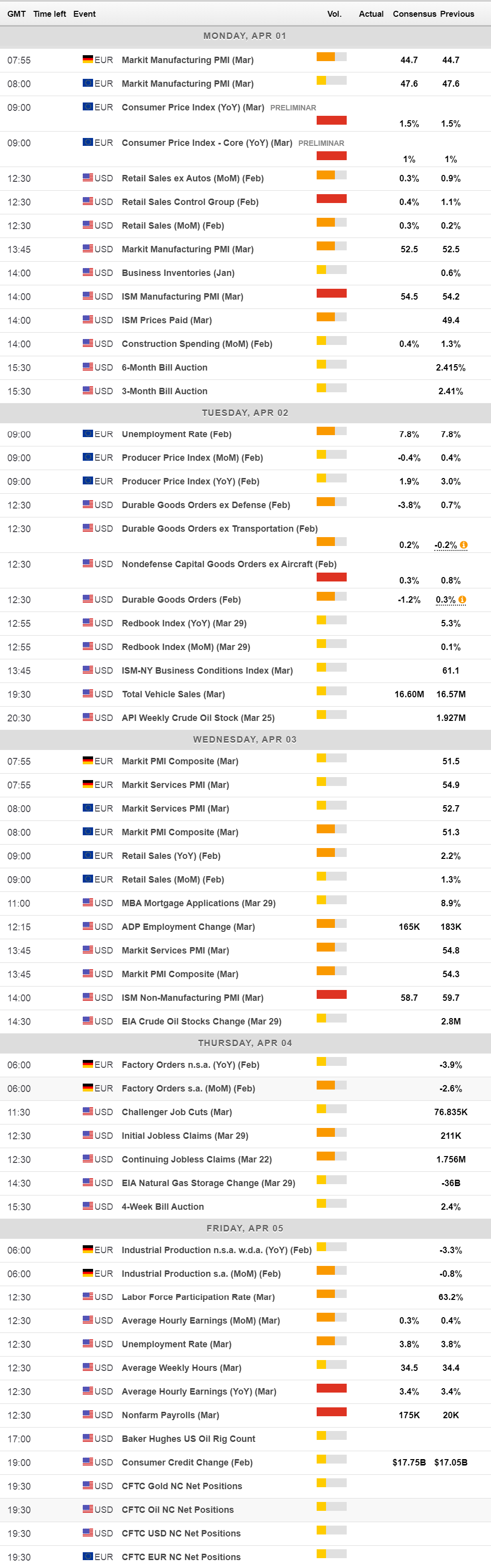
For the EUR/USD pair, next week will be quite intense since the beginning, as the EU will release Monday the EU preliminary March inflation, while the US will release February Retail Sales and the March ISM Manufacturing PMI.
Being the first week of the month, there will be multiple first-tier reports out that could hint about the health of both economies, with the final versions of the March Markit PMI for both economies and the US Nonfarm Payroll report taking center stage.
EUR/USD technical outlook
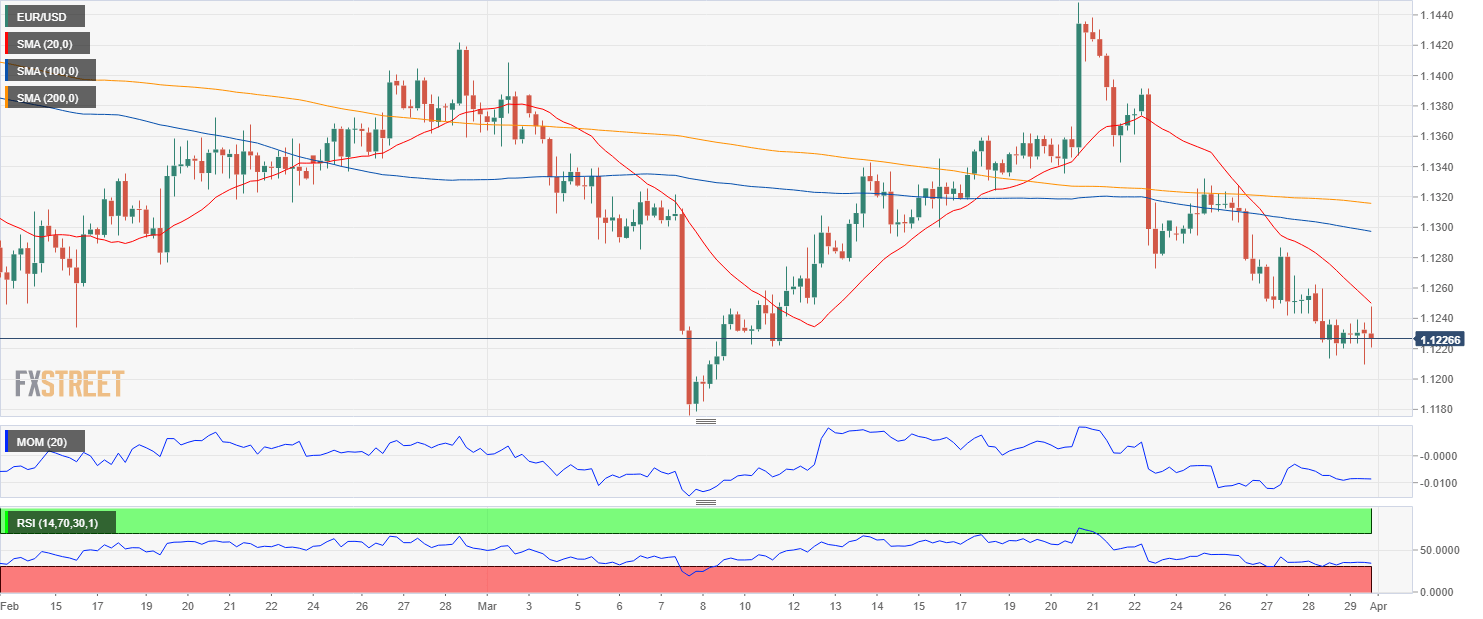
Despite recovering Friday, the pair is bearish long-term, according to weekly and daily readings. Also, it settled well below the 61.8% retracement of the 1.1175/1.1447 rally at 1.1280, breaking below the level and therefore opening doors for a test of the bottom of the range.
In the weekly chart, the pair remained below all of its moving averages, with the closest being the 200 SMA, at around 1.1335, a handful of pips above the weekly high. The 20 SMA continues heading south above and closer to the longer one, while technical indicators extended their declines within negative levels, although with moderate strength.
In the daily chart, the pair also offers a bearish stance, developing far below all of its moving averages and with the 20 SMA gaining bearish strength below the larger ones, while technical indicators lack directional strength, but stand below their midlines. The immediate support is 1.1175, the yearly low, with a break below it exposing 1.1120 first, and the 1.1060 area later. An approach to the 1.1000 price zone will probably trigger some profit taking as the market is not ready to push the pair below the critical level. The mentioned 1.1280 level is the immediate resistance, followed by 1.1340, and the 1.1400 price zone.
EUR/USD sentiment poll
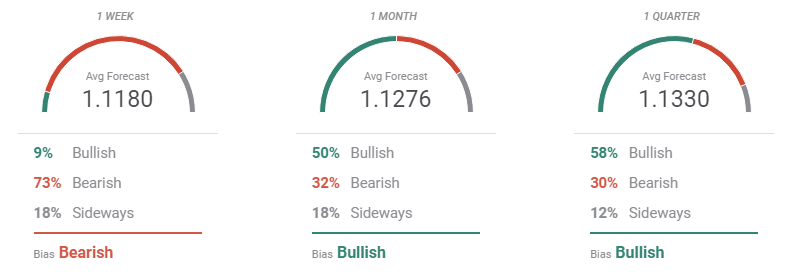
The FXStreet Forecast Poll shows that the pair is set to extend its decline news week, with bears up to 73% and the average target at 1.1180. Yet, as discussed in the past week, the market is not mentally ready to take off the 1.1000 level, that's why the pair is then seen rising in the monthly and quarterly views, with bulls up to 50% and 58% respectively. The averages targets, however, don't indicate any relevant recovery for the common currency.
The overview chart shows that in the three timeframes under study, and despite the wide spread of possible targets, the moving averages maintain their bearish slopes, capping further chances of a relevant move higher in the upcoming quarter.
Related Forecasts:
Author

Valeria Bednarik
FXStreet
Valeria Bednarik was born and lives in Buenos Aires, Argentina. Her passion for math and numbers pushed her into studying economics in her younger years.
















