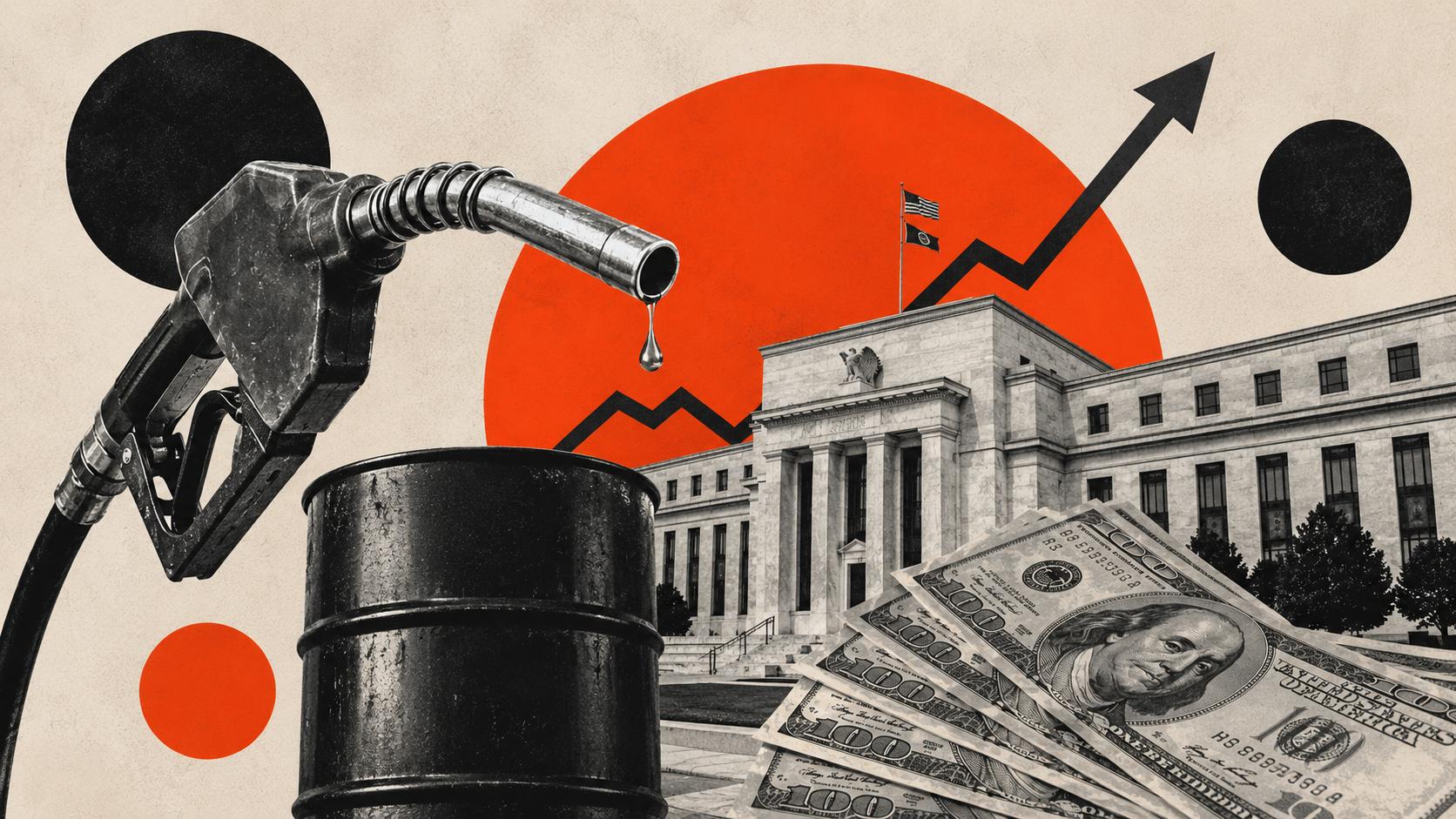
Understanding the weaponization of the Dollar

Money Metals' Midweek Memo host Mike Maharrey recently interviewed Saleha Mohsin, a senior correspondent at Bloomberg News and author of the new book "Paper Soldiers: How the Weaponization of the Dollar Changed the World Order." The discussion delved into the motivations behind Mohsin's book and explored key topics surrounding U.S. currency policy, the Treasury's role in foreign and domestic policy, and the future of the dollar as a global reserve currency.
Who is Saleha Mohsin?
Saleha Mohsin is a highly respected journalist known for her expertise in covering economic and financial policy. With years of experience as a correspondent for Bloomberg News, she has specialized in reporting on U.S. government economic policies, particularly those related to the U.S. Treasury Department and currency regulations. Her in-depth understanding of these complex issues is reflected in her work and in her role as the host of the "Big Take DC" podcast, where she delves into policy-related discussions.
In addition to her journalism career, Mohsin is also the author of Paper Soldiers: How the Weaponization of the Dollar Changed the World Order. This book offers a comprehensive look at the influence of the U.S. Treasury and the global impact of the U.S. dollar. Her career began in Norway, where she gained insights into European economic policies before transitioning to the U.S., where she continued to expand her expertise in the country's financial systems. Her background and experience have established her as a trusted voice on global economics and policy.
Exploring the genesis of the book
Mohsin shared that her interest in the dollar and the U.S. Treasury Department started in 2013 while covering currency policy in Norway. Later, after relocating to the U.S., she recognized the nuanced interplay between the Treasury and other institutions. She noted that there are many books on the Federal Reserve, but not many focused specifically on the Treasury. This gap inspired her to dive deeper into the Treasury's role and uncover its influence on the U.S. and global economy.
Defining the weaponization of the Dollar
Mohsin defined the weaponization of the dollar in two ways. First, the dollar's value as measured by foreign exchange rates, and second, its hegemony as the world's dominant reserve currency. The dollar's unique position allows the U.S. to wield substantial influence over global financial transactions, giving it the power to impose economic sanctions on entities deemed counter to U.S. interests. Mohsin highlighted the exponential increase in U.S. sanctions usage over the last two decades, emphasizing that such frequent use has prompted allies and adversaries alike to consider alternatives to the dollar.
The rise of alternative economic blocks
Discussing the rising number of countries applying to join the BRICS economic bloc, Maharrey and Mohsin explored how U.S. currency policy has driven nations to seek alternatives. She pointed out that the BRICS group, consisting of Brazil, Russia, India, China, and South Africa, is looking to expand by including oil-rich countries like Saudi Arabia. This reflects a trend toward a multipolar world where other nations are striving to create their own financial systems, lessening their dependence on the dollar.
Domestic threats to the Dollar
Contrary to initial assumptions about her book, Mohsin emphasized that domestic threats pose a greater risk to the dollar than external factors. She argued that the U.S. fiscal deficit, now over $34 trillion, and deep political divisions are the most significant dangers. The dollar's strength relies on the global faith in the U.S. democratic system and its institutions. Should that faith waver, the dollar's dominant position may weaken.
Impact of 9/11 on Dollar weaponization
Mohsin traced the origins of the dollar's weaponization to post-9/11 policies. The terrorists behind the attacks used the global financial system to move money, leading the U.S. to recognize the need to monitor and control financial flows more closely. The Treasury Department became instrumental in imposing economic sanctions as a tool of foreign policy, and the USA PATRIOT ACT established the Terrorism and Financial Intelligence Unit to strengthen Treasury's capabilities in this regard.
Balancing power and responsibility
When asked how the U.S. can balance the responsible use of its financial tools, Mohsin stressed that while the U.S. has maintained its dominant position thus far, complacency is a risk. She remains optimistic that the U.S. can maintain its influence but cautioned that it will require vigilance and a commitment to maintaining a strong democracy.
Here are some key questions and answers from the interview between Mike Maharrey and Saleha Mohsin:
What motivated you to write this book?
Mohsin explained her background covering currency policy since 2013, starting in Norway and then moving to the U.S. She saw a gap in literature specifically focused on the Treasury Department and its influence on economic policy, which motivated her to write the book.
What does "weaponization of the dollar" mean?
The weaponization of the dollar can be understood in two ways. The first is its exchange rate value, and the second is its role as a global reserve currency. The dollar's dominance allows the U.S. to influence global financial transactions and impose economic sanctions, which has been used increasingly over the last two decades.
How does the weaponization of the dollar impact global financial systems?
Mohsin highlighted that sanctions can restrict access to the dollar and the global financial system, significantly impacting economies. As the U.S. continues to use sanctions, countries seek ways to reduce their dependence on the dollar by finding alternative systems.
What are some downsides of economic sanctions as a policy tool?
Sanctions can significantly impact countries and companies by cutting them off from the global financial system, making it harder to conduct business. For the U.S. and its allies, overusing sanctions can encourage other nations to create systems that bypass the dollar.
How does the Treasury Department fit into this equation?
According to Mohsin, the Treasury plays a critical role in enforcing sanctions and tracking financial flows, especially post-9/11. The PATRIOT ACT expanded its responsibilities to include a specialized unit for terrorism and financial intelligence.
What are some domestic threats to the dollar?
She emphasized that domestic issues, such as the growing fiscal deficit and political polarization, are the greatest threats to the dollar. The strength of the dollar relies heavily on global trust in U.S. democracy and its institutions.
What impact did 9/11 have on the weaponization of the dollar?
9/11 significantly changed the Treasury's role, as the first act in the war on terror was to give the Treasury authority to apply economic sanctions and track financial flows. This led to the development of more sophisticated sanctions tools.
How can the U.S. responsibly balance the use of financial tools?
Mohsin highlighted that the U.S. needs to avoid complacency and maintain its strong democracy to ensure the continued influence of the dollar. She expressed optimism that the U.S. can maintain its power, but this requires careful management of its financial policies and institutions.
Conclusion
Saleha Mohsin's Paper Soldiers provides an in-depth exploration of the complex role the dollar plays in the global economy, highlighting both its strengths and vulnerabilities. Her interview with Maharrey underscores the importance of understanding U.S. currency policy's far-reaching impact and the challenges it faces domestically and abroad.
To receive free commentary and analysis on the gold and silver markets, click here to be added to the Money Metals news service.
Author

Stefan Gleason
Money Metals Exchange
Stefan Gleason is President of Money Metals Exchange, the national precious metals company named 2015 “Dealer of the Year” in the United States by an independent global ratings group.