US Retail Sales: Reassurance for the Fed

It is never a good idea to count down on the US consumer.
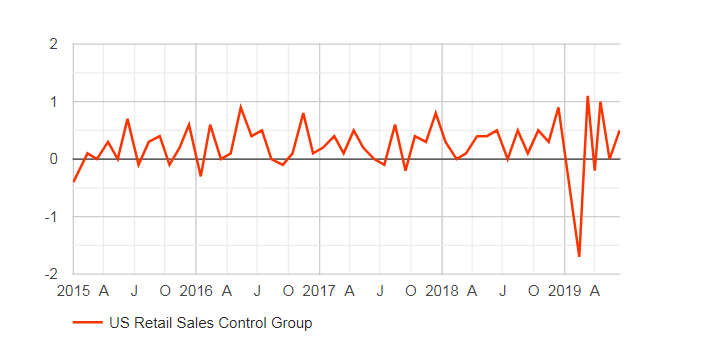
Retail sales rose a healthy and normal 0.5% in May and April's result, initially reported at -0.2% and the source of much consternation, was revised up to 0.3%, according to the Commerce Department. A 0.6% gain had been forecast.
The so-called control group category, which is included in the government's GDP calculation, increased 0.5%, beating the 0.4% median prediction and April's number was adjusted up to 0.4% from flat. Sales excluding automobiles gained 0.5% in May and the prior month was revised to 0.5% from 0.1%.
FXStreet
Consumer spending accounts for about 70% of US economic activity
Treasury yields fell and the dollar rose as the better than expected results undermined the need for a Fed economy supporting rate cut. In early afternoon trading the 2-year yield was up 1 point at 1.84%. The euro was at 1.1210 down from its open at 1.1276, the yen at 108.55, off about 40 points and the sterling was 1.2595 lower by three quarters of a figure.
The original -0.2% reading on April retail sales which was followed by May’s disappointing 75,000 non-farm payrolls, negative revisions to the March and April jobs figures and after February’s weak 56,000 report suggested that the declines in the labor market might be restraining consumer spending.
It also hinted that the Fed’s long running concerns about the impact of the slowdown in global growth, the trade dispute with China and Brexit, on the US economy might be more than mere caution and have fueled expectations for a rate cut.
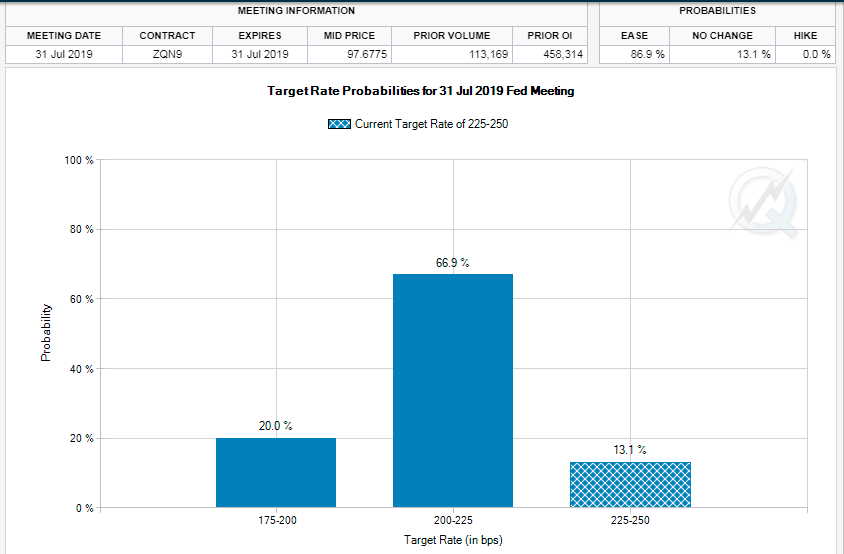
The Fed Funds futures on Friday have the odds for a 25 basis point or more reduction by the July 31st FOMC meeting at almost 90%.
CME Group
Retail sales have expanded smartly this year despite the reporting volatility around the partial government shutdown in January and show that the economy is on a solid trajectory. With unemployment at a half-century century low and minority employment at an all-time high, manufacturing returning to communities abandoned in previous decades, with wage increases close to their best level since the recession and consumer confidence buoyant all indications are that the US economy is continuing it best run in a generation.
Inflation is quiescent and while it remains below the Fed’s 2% target, core PCE is 1.6% annually, it is a boon to consumers and by itself is probably not enough to trigger a Fed rate cut.
Chairman Powell has said as much noting the governors considered the low inflation in the first quarter a transitory phenomenon and that they expected a “symmetric” return to their target.
Economic growth in the first quarter was unexpectedly strong at 3.1% and early readings from the Atlanta Fed GDPNow model for the second three months of the year dipped as low as 0.9%. Estimates have moved gradually higher with the latest after the retail sales report at 2.1% the highest for this quarter so far.
Even with the generally positive economic outlook the recent decline in job creation, the 3-month moving average for non-farm payrolls has dropped from 245,000 in January to 174,000 in March and 151,000 in May could if it continues engender lower consumer spending in coming months.
Tariffs on a wide range of Chinese imports which might spread to all mainland products if a trade deal is not reached between Washington and Beijing could either raise prices for consumers or lower profits for corporations, neither of which is positive for the economy.
The Commerce Department reported broad-based gains in spending. Eleven of 13 major sales categories increased, headed by a 1.4% rise in online purchases, the largest since January. Sporting goods stores, electronic retailers, and book stores recorded 1.1% increases. Only food and beverage stores, department and miscellaneous goods outlets and clothing goods retailers showed declines.
Receipts at gasoline filling stations rose 0.3% and since they are not corrected for price changes and fuel costs declined in the month that indicates higher sales at the start of summer vacation season.
Author

Joseph Trevisani
FXStreet
Joseph Trevisani began his thirty-year career in the financial markets at Credit Suisse in New York and Singapore where he worked for 12 years as an interbank currency trader and trading desk manager.