US Initial Jobless Claims Preview: Extraordinary normality
- Unemployment filings expected to be 825,000 in the October 9 week.
- Continuing claims forecast at 10.7 million on October 2.
- Congressional tension over the stimulus package dominates markets.

In the week of October 2nd 840,000 American filed for unemployment benefits. The last time fewer people applied for government help was the week of March 13th, seven months ago.
It’s a measure of the extraordinary past half-year and how almost anything can become normal, that markets will barely notice on Thursday when nearly one million new people apply for jobless claims.
Initial jobless claims are expected to drop to 825,000 in the Week of October 9. Continuing claims are forecast to fall to 10.7 million in the week of October 2.
Initial Jobless Claims
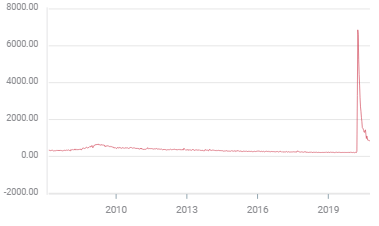
Non-farm payrolls rose 661,000 in September the smallest increase of the COVID-19 era. With the four-week moving average for claims at 870,250 in the final week of September, 2.8 million more people will have been laid off than found jobs last month.
Q2 and Q3 GDP
The pandemic shutdown in March and April and its lingering aftermath sent the US economy in the second quarter into its fastest and steepest drop on record, 31.4% at an annualized rate.
Growth has rebounded even faster in the third quarter, estimated at 35.2% by the Atlanta Fed on October 9. The GDPNow model includes Nonfarm Payrolls and the purchasing managers’ indexes for September.
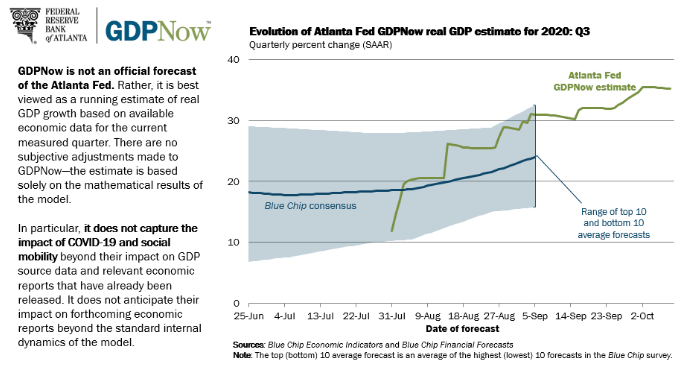
The next release will be on Friday October 16 after the September Retail Sales numbers which are expected to rise 0.7% after the 0.6% gain in August. The final third quarter estimate will be on October 28.
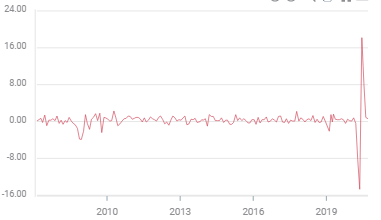
Third quarter economic activity is following the surge in consumer spending in May, June and July which more than reversed the plunge in March and April. The August increase of 0.6% and September’s expected 0.7% gain would seem to indicate that consumption has returned to normal.
Retail sales and the GDP component control group averaged increases of 0.87% and 1.28% monthly for the six months from March to August.
Retail sales
But there is no gainsaying the unemployment. According to payroll figures 11 million of the 22.16 million people laid off in the shutdowns remained out of work in September.
The unemployment rate of 7.9% and the underemployment rate of 12.8% represent a loss of purchasing power not seen since the double recessions of the early 1980s. Combined with the net layoffs of nearly three million workers in September the impact on fourth quarter consumer spending and GDP could be profound.
Conclusions and markets
Markets have been ignoring the unemployment claims for several months preferring the economic indications of the job recovery in the Nonfarm Payrolls.
The US presidential election and the attempt of the Republicans, Democrats and the White House to craft a second stimulus package in the final weeks of a bitter and knife-edge campaign has obsessed markets. Each positive comment bringing on a spate risk-on dollar selling and a negative prognosis its risk-off reversal. That focus will not change until there is a new stimulus or a new president.
Author

Joseph Trevisani
FXStreet
Joseph Trevisani began his thirty-year career in the financial markets at Credit Suisse in New York and Singapore where he worked for 12 years as an interbank currency trader and trading desk manager.
















