US inflation reinforces the Fed neutral policy
- December’s headline and core price rise less than forecast.
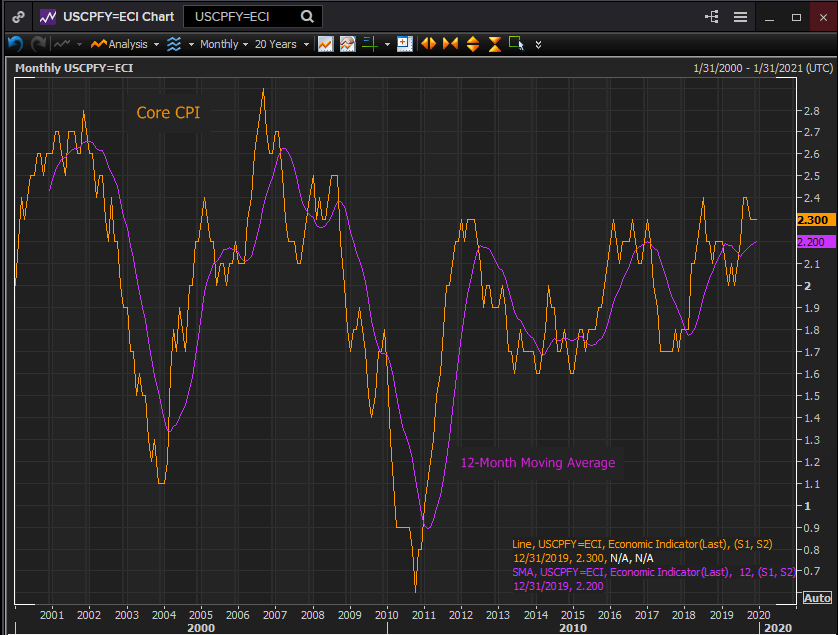
- Annual core CPI at 2.2% for 2019 highest since 2008.
- Fed rate policy not challenged by 2019 inflation.

Inflation in the US advanced less than forecast in December but the rise in the core average for the year was the highest in more than a decade.
The core consumer price index (CPI) which excludes food and energy costs, climbed 0.1% last month, according to Labor Department data, missing the 0.2% prediction for the smallest increase since September. The 2.2% average gain for this index in 2019 was the highest since 2.3% in 2008.
Reuters
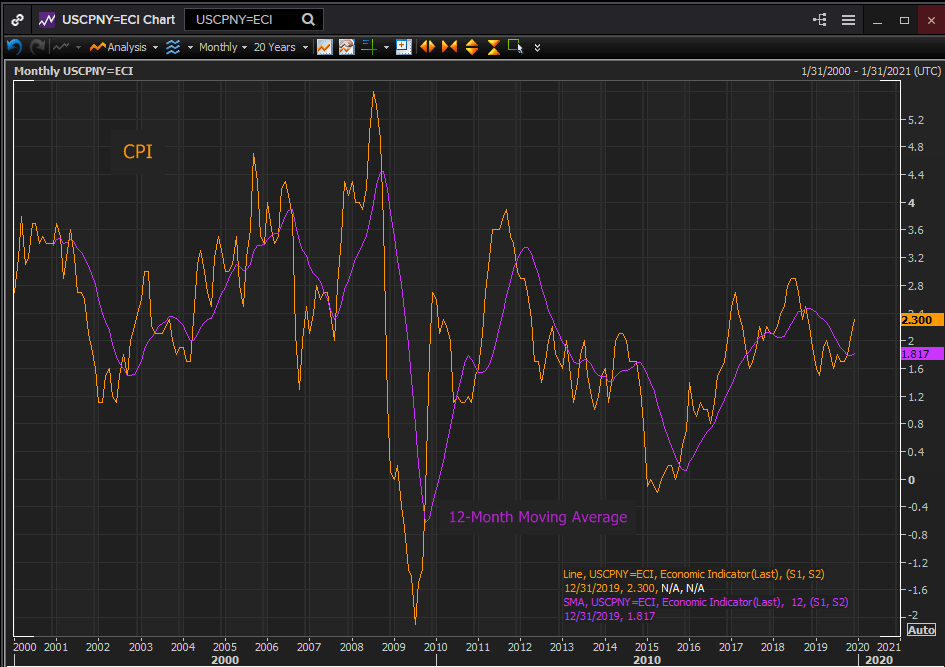
On the year from last December core prices rose 2.3% as expected. Overall CPI increased 0.2% on the month and 2.3% compared to a year earlier. The median estimates in the Reuters survey of analysts were 0.3% and 2.3%.
Reuters
Treasury prices rose dropping the yields on the 10-year three points to 1.82% and the 2-year one point to 1.57% (10:06 am EST). The dollar initially moved slightly higher gaining about 10 points versus the euro to 1.1104 but within the hour had reverted to the 1.1120 level prior to the release.
Inflation was muted last year and there are few indications that prices are headed either substantially higher or lower. Core CPI had a narrow 0.4% range from 2.0% in May to 2.4% in August and September. The spread in overall CPI was wider, from 1.5% in February to 2.3% in December with a slight upward tilt, averaging 1.7% in the first half and 1.9% in the second.
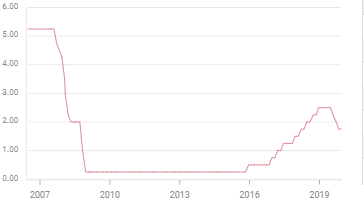
The Federal Reserve adopted a neutral policy after its third 25 basis point rate cut at the October FOMC meeting had dropped the target range for the fed funds rate to 1.5% to 1.75%. Economic projections from the Fed governors predict that the mid-point for the fed funds will be unchanged at 1.6% through the end of this year and rise to 1.9% by the end of 2021.
While the core CPI rose the most eleven years the Fed’s preferred price measure, the core personal consumption price index (PCE) from the Bureau of Economic Analysis, was more subdued. It rose just 1.6% on the year in November and has been below the Fed’s 2% target for most of the past ten years.
The PCE index for December will be released on January 31st at 8:30 13:30 GMT.
Fed officials and the FOMC statements have consistently stated over the past five years that the bank expects that inflation will rise in time to its 2% target. This has been true whether policy has been on hold—to December 2016, raising rates—to December 2018 or cutting rates-July to October last year, or the neutral policy since then.
Fed Funds Rate
It may be that the lack of inflation, especially in wages, despite the 3.5% unemployment rate, a level that in the past would have the Fed considering rate hikes, is a new and uncharacteristic development.
Price stability is one of the Fed’s twin Congressional mandates. Bank policy statements and Fed officials pay due attention to this goal even when it appears that economic growth is the main concern.
During the summer and fall rate reductions Chairman Powell and the FOMC statement cited the specific threats to GDP and the labor market expansion from the US-China trade dispute, the slowdown in global growth and Brexit. In his press conference after the October meeting Chairman Powell noted the reduction in global risk factors as the reason for assuming a neutral stance.
Author

Joseph Trevisani
FXStreet
Joseph Trevisani began his thirty-year career in the financial markets at Credit Suisse in New York and Singapore where he worked for 12 years as an interbank currency trader and trading desk manager.