Real interest rates and why they matter
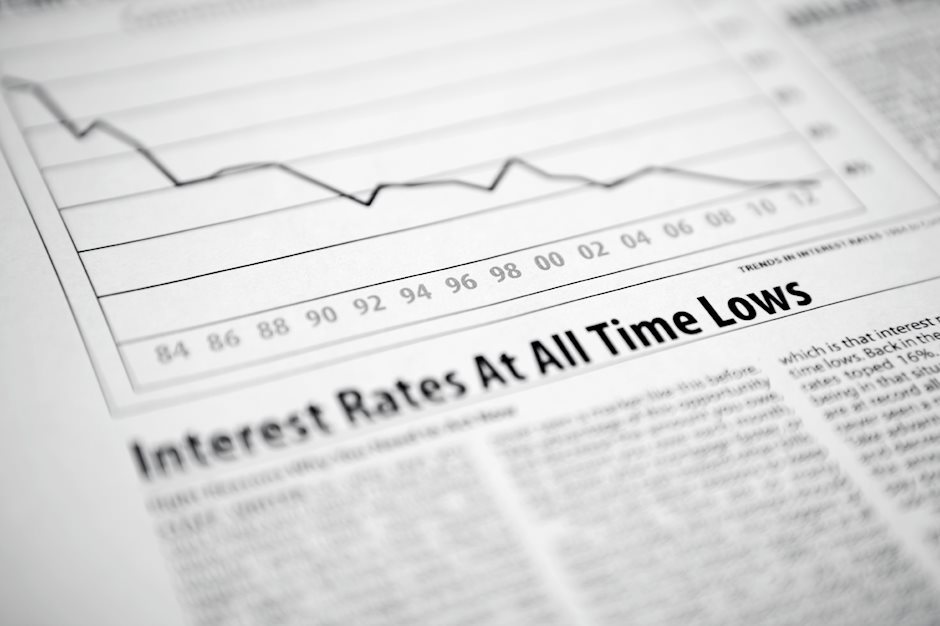

Since the Federal Reserve started raising interest rates, investors have enjoyed higher yields on cash socked away in money market accounts and bonds. Higher yields have created some headwinds for gold as well. Since gold is a non-yielding asset, many people assume they will do better with bonds, or even putting money in a savings account.
But it's important not to take the interest rates you see advertised at face value. You need to determine the real interest rate before you make an investment decision.
How do I calculate the real interest rate?
The real interest rate is simply the stated rate you see on the news adjusted for price inflation.
To calculate the real interest rate, you take the quoted nominal rate and subtract CPI.
For example, let's say a 10-year Treasury bond is yielding 4 percent. That seems like a pretty good return. But if the CPI is running at 3.5 percent, the real interest rate on that bond is only 0.5 percent (4-3.5=0.5).
Note that in a low interest rate environment or if price inflation is particularly high, it is possible for real interest rates to go negative.
If that same 10-year Treasury is only yielding 3 percent and the CPI is 5 percent, your real interest rate is -2 percent. That means you will lose money in real terms if you buy and hold that bond (Assuming every remains static).
When making this calculation, it's important to remember that price inflation is generally even worse than the CPI reveals.
The government revised the CPI formula in the 1990s so that it understates the actual rise in prices. Based on the formula used in the 1970s, CPI is closer to double the official numbers. So, if the BLS reports a CPI of 3 percent, under the old formula, you'd be looking at CPI closer to 6 percent.
If you fail to grasp the concept of real interest rates, you can easily get fooled by media headlines.
As the Fed began increasing interest rates to combat price inflation, bond yields began to climb. You immediately heard reports on mainstream financial networks about how this was "increasing the opportunity cost" of holding gold. Opportunity cost refers to the interest you could have earned if you had bought a bond instead of a bar of gold.
This is the reason gold started selling off every time we got hot CPI data. Everybody assumed the Fed would raise rates and keep them higher for longer, increasing the opportunity cost of holding gold even more.
But even as pundits were telling everybody to sell gold, real interest rates were still deeply negative. And there is no "opportunity cost" when real rates are negative, even if nominal rates are going up.
Even today, bond yields are barely positive using the government's CPI calculation.
The bottom line is it's crucial to keep real interest rates in mind when you're making borrowing or investing decisions.
To receive free commentary and analysis on the gold and silver markets, click here to be added to the Money Metals news service.
Author
Mike Maharrey
Money Metals Exchange
Mike Maharrey is a journalist and market analyst for MoneyMetals.com with over a decade of experience in precious metals. He holds a BS in accounting from the University of Kentucky and a BA in journalism from the University of South Florida.