GBP/USD Weekly Forecast: Boris blows pound's rally, BOE, Fed, and Brexit all eyed
- GBP/USD has tumbled down amid a quickly deteriorating Brexit crisis.
- Rate decisions and retail sales on both sides of the Atlantic join existing political issues in moving the pound.
- Mid-September's daily chart is showing bears are gaining ground.

That escalated fast – the UK presented draft legislation that upends some of the Brexit Withdrawal Agreement, and the EU responded angrily. The news overwhelmed everything else and pounded the pound. Central bank decisions, data, and coronavirus are set to join the drama in moving the pound.
This week in GBP/USD: Brexit crisis and mostly risk-off
Prime Minister Boris Johnson seemed to have regretted his acceptance of a customs border in the Irish Sea – what enables getting Brexit done in 2019. He has presented draft legislation that knowingly violated international law.
The EU, engaged in talks about future relations with Britain, called for an emergency meeting and laid down an ultimatum – remove the bill by the end of the month or face sanctions and perhaps a court appointment.
The pound reacted with a rapid downfall. Markets were doubtful that an agreement on future trade would be reached before the transition period expires by year-end – but were shocked that the previous deal is back on the table.
Other developments were also mostly adverse to cable bulls. UK coronavirus cases are on the rise, prompting the government to announce new restrictions, most importantly limiting meetings to a maximum of six people. Britain aims to enable opening the economy by using fast tests, but that may take time.
The safe-haven dollar saw some demand after AstraZeneca halted its Phase 3 COVID-19 vaccine trial after one person receiving the injection fell ill. Markets slipped, but when it emerged that the patient already left the hospital and on hopes for a quick resumption of the project. It is also essential to remember that other efforts are underway.
US coronavirus infections are declining, yet from a high level. President Donald Trump acknowledged that he played down the severity of the virus after journalist renowned journalist Bob Woodward revealed it in an upcoming book.
The president had already been engulfed in a scandal after disparaging dead American soldiers, calling them "losers" and "suckers." Trump continues trailing challenger Joe Biden by a substantial margin. Markets are yet to tune to the elections.
US vs. UK COVID-19 cases:
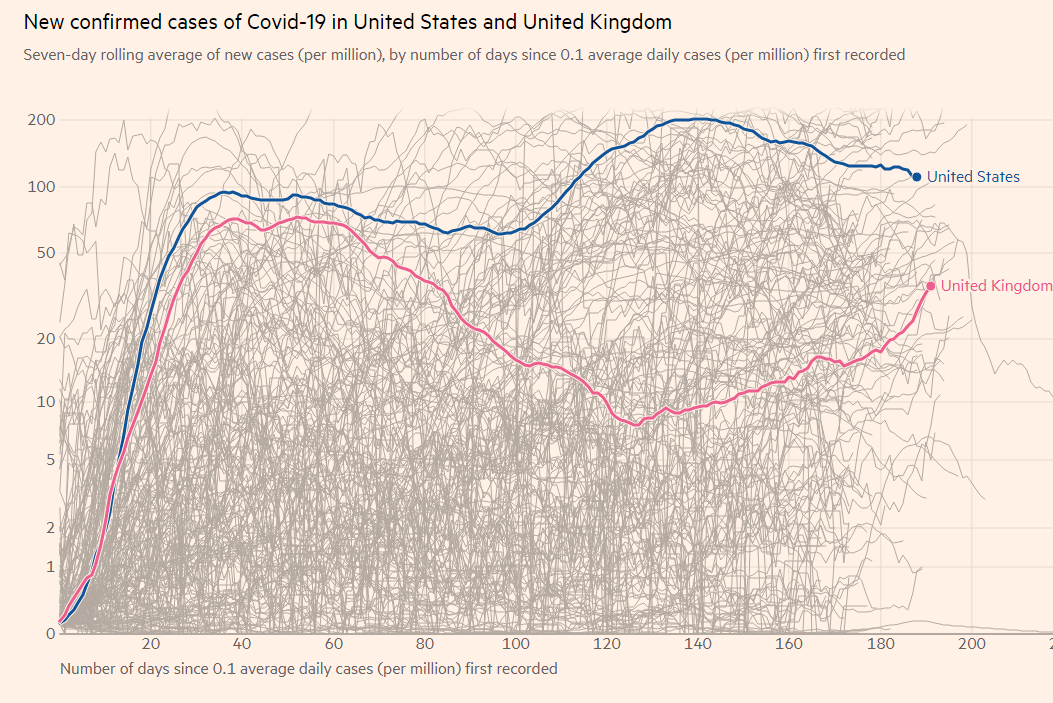
Source: FT
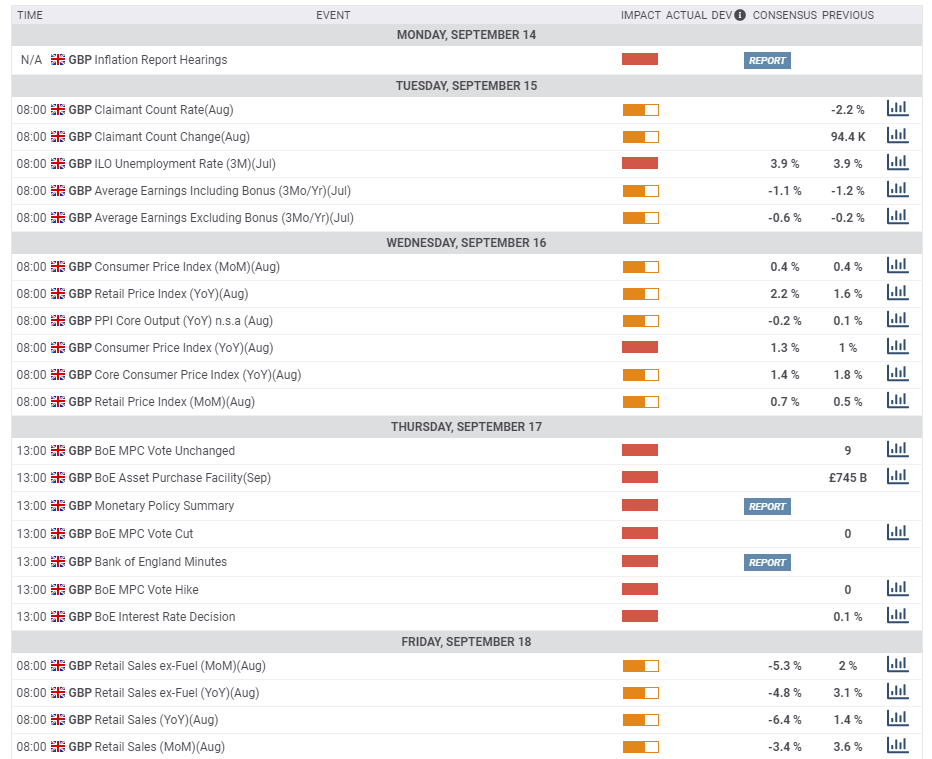
UK events: More Brexit, BOE, and retail sales
The Brexit crisis is set to remain left, right, and center. If both sides calm and work toward a solution, sterling has significant room to rise. On the other hand, if the EU begins publishing details of potential sanctions – or if Johnson insists he is doing the right thing – there is more room to fall.
The controversial deal arrives at the House of Commons early in the week. The PM's Conservatives command a large majority in parliament, so there are little doubts that the bill would pass. Nevertheless, the debate may rock markets, especially as prominent Tories such as former PM Theresa May oppose the move. The opinion of opposition leader Keir Starmer may also make a difference. If Starmer backs Johnson, the EU will face a more significant crisis.
Another political development – currently on the backburner – is the fate of the furlough scheme. The government pays workers unable to perform their jobs most of their salaries. The successful plan kept Brits attached to their positions, but it expires in October. Chancellor of the Exchequer Rishi Sunak said the scheme is unsustainable but is yet to lay out a plan on how to phase it out.
Thanks to the furlough program, the UK's unemployment rate remained depressed at 3.9% in June. The jobs report for July is set to show the same level. Investors may focus on August's Claimant Count Change, which disappointed in July with a substantial rise and may give a nasty taste of things to come.
The Consumer Price Index is forecast to bump from 1% to 1.3% in July. In normal times, it would have a meaningful impact on sterling, yet inflation statistics are currently dismissed by investors, as central banks focus on the recovery.
Andrew Bailey, Governor of the Bank of England, said that negative rates are in the institution's toolkit, but are not meant for imminent use. Has he changed his opinion? Economists expect the BOE to leave its interest rate unchanged on Thursday as the bank is in a "wait-and-see" mode. It is also projected to maintain the bond-buying scheme at £745 billion.
Any increase in printing money could boost sterling – as it allows the government to further stimulate the economy – contrary to the pound's reaction in pre-pandemic times.
August's retail sales figures, due out on Friday, may have a more significant impact than the BOE, especially if it falls as expected. The end of the "reopening effect" – which unleashed expenditure held back beforehand – and the resurgence of the virus have likely depressed shopping. Any surprises could rock sterling.
Here is the list of UK events from the FXStreet calendar:
US events: Politics and Fed in focus
Sino-American relations have been out of investors' eyes. Still, they may return to the spotlight as the deadline for ByteDance to sell TikTok – the popular Chinese-owned social short video app – is nearing.
Moreover, the US elections are entering high gear, and Trump may opt to shift the focus away from his mishandling of the coronavirus crisis – especially after admitting he played it down. If relations with China worsen, the safe-haven dollar could rise.
Trump is set to lose by 115 electoral votes, with Democrats flipping five states in comparison to 2016.
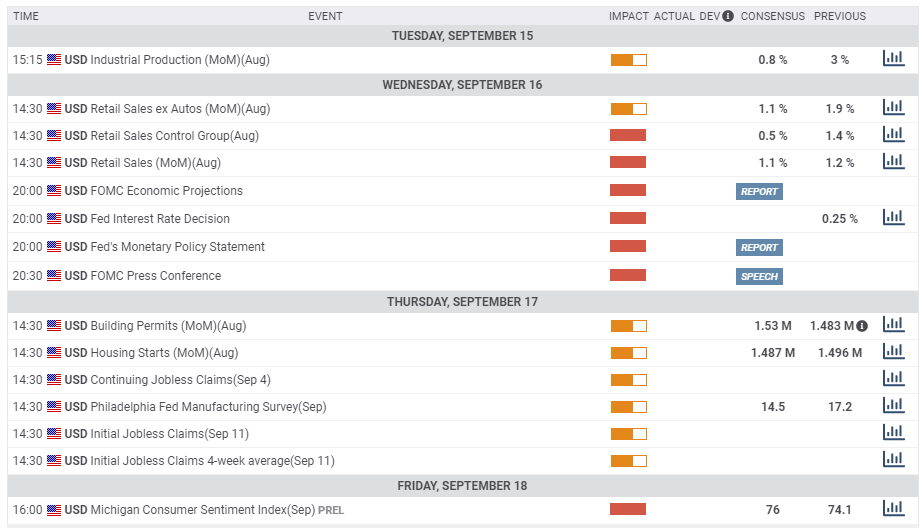
The Federal Reserve is forecast to leave the interest rate unchanged in its upcoming decision but will publish new growth, inflation, and unemployment forecasts. The rapid fall in joblessness – 8.4% in August – will likely prompt an upgrade. The bigger question is about the economic output – and when the Fed sees a return to pre-pandemic levels.
Jerome Powell, Chairman of the Federal Reserve, laid out a new policy framework in the virtual Jackson Hole conference, allowing for inflation to overheat while prioritizing full employment. Reporters are set to ask Powell about the additional stimuli, such as setting negative rates or acting to depress the yield curve. The Fed previously dismissed these ideas. If Powell opens the door to more action, the dollar could fall.
Overall, the Fed is unlikely to rock the boat – especially as the elections are drawing near.
Several hours before the bank announces its decision, the US publishes retail sales statistics for August. Did the lapse of federal unemployment insurance – a weekly top-up of $600/week – impact spending? That is an open question. The economic calendar is pointing to moderate increases after a catch-up in previous months. The dollar is set to react to any figure.
Weekly jobless claims are for the week ending September 11 – when the Non-Farm Payrolls surveys are held. After a disappointing increase in weekly applications, investors will be watching if claims top one million or resume their falls.
Last but not least, the University of Michigan's preliminary Consumer Sentiment Index for September is set to rise from the lows, pointing to a fresh pickup in spending.
Here the upcoming top US events this week:
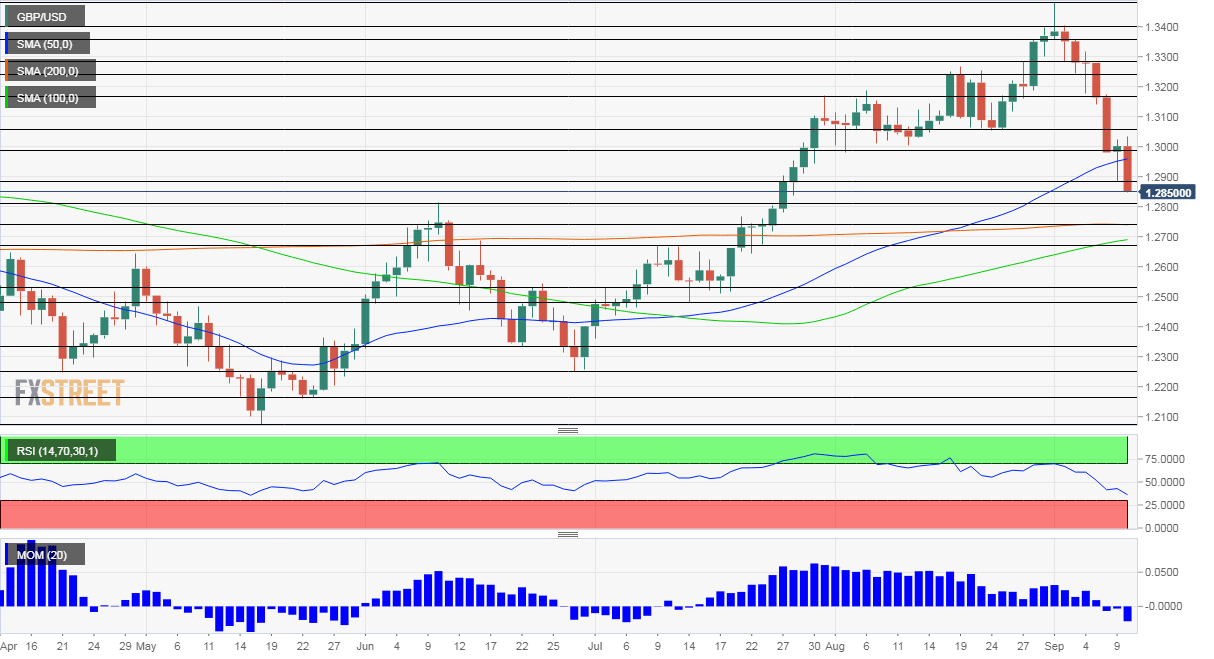
GBP/USD Technical Analysis
Pound/dollar dropped below the 50-day Simple Moving Average, and momentum turned negative. Bears are gaining ground, but bulls still have strength while the currency pair trades above the 200-day SMA, which comes out at around 1.2740.
Support awaits at 1.2805, which was a peak in June. Below 1.2740, the next cushion is at 1.2670, which was a stubborn cap in July. Next, 1.2530 and 1.2480 await GBP/USD.
Thursday's low of 1.2890 serves as a battle line. It is followed by 1.30 – a psychologically significant level – and also a support line in August. Further above, 1.3050, 1.3170, and 1.3250 await cable.
GBP/USD Sentiment
Sterling is suffering and for good reasons – violating the previous agreement is a significant escalation. While the chances of a no-deal Brexit are rising, some calmer words and extended positions could trigger profit-taking in the short-term. Later, the mix of the Brexit crisis and safe-haven flows to the dollar could send GBP/USD lower.
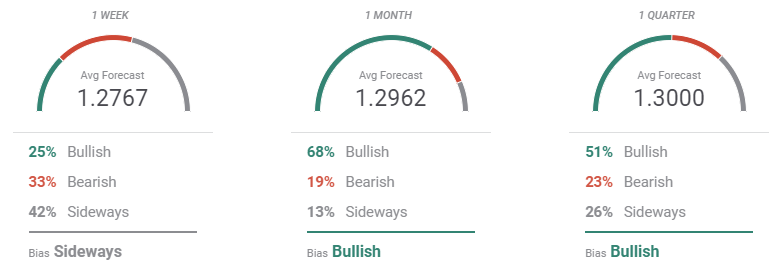
The FXStreet Forecast Poll provides additional insights.
It shows that most polled experts seen the pair hovering around the current level next week, with an average target of 1.2767. The sentiment is bullish in the monthly and quarterly views, not because market players are expecting a bounce, but because of the latest slump catching them off guard.
The moving averages in the Overview chart are bearish in the weekly and monthly perspectives, but neutral in the 3-month view. A wide range of possible targets in the longer-term perspectives suggests that speculative interest needs more clues before making up its mind.
Related Reads
Author

Yohay Elam
FXStreet
Yohay is in Forex since 2008 when he founded Forex Crunch, a blog crafted in his free time that turned into a fully-fledged currency website later sold to Finixio.