FOMC meeting: looking beyond a rate hike
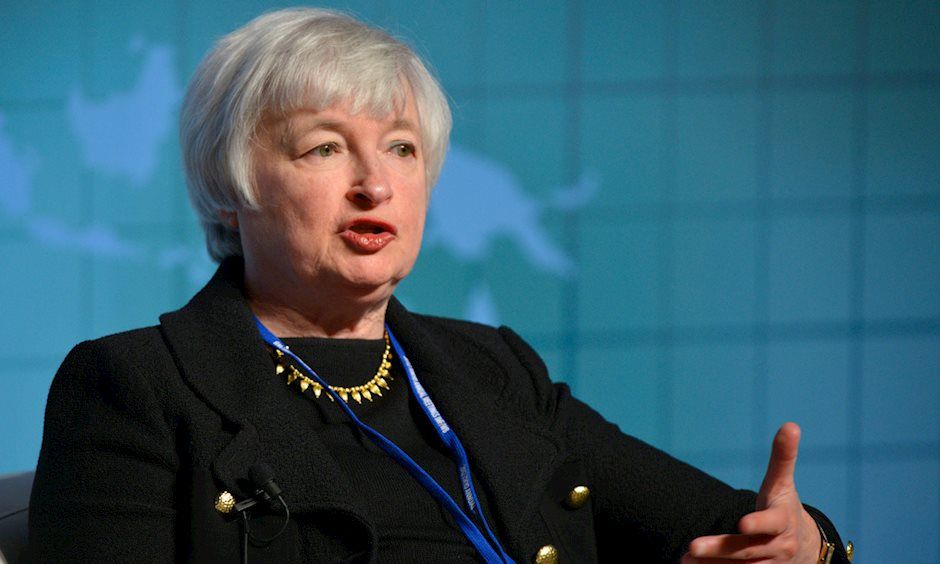

The market is heading into the last FED´s meeting of the year pretty much convinced that the FOMC will raise the Fed fund rate by 25bps, from current 0.25% to 0.50% to a new target range of 0.50% to 0.75%. Odds for a rate hike are close to 100% after the US Presidential election ended up with Donald Trump's victory, as his promises of high investment in infrastructure and tax cuts point to a faster pace of growth next year, while they are usually understood as inflationary measures that will force the FED to catch up with economic developments.
Not only policymakers have been anticipating the move, in a clear effort to prevent wild markets' reactions, but also US economic data has been quite supportive: economic growth accelerated in the third quarter, employment continued to advance at a steady pace, with the unemployment rate now at 4.6%, level last seen in August 2007, while inflation pressures firmed up according to official data.
Assuming that Yellen and Co. will actually pull the trigger tomorrow, the big question will be what's next for the FED, and at which pace rates will raise next year. Seems unlikely, however, that Yellen will be anything but cautious, as policymakers will likely wait until Trump takes the office, and starts announcing its policy and economic measures, before deciding on economic policies.
Average consensus among investors suggests that the FED has two rate hikes in the docket for 2017, the same as the ones expected after the September meeting. If the number, however, is higher, the dollar will get a nice boost, moreover if GDP figures are also revised higher.
A stand-alone rate hike, with no upward revisions in the dot-pot, or a hawkish, optimistic Yellen, could play against the greenback, and send the US currency lower across the board, as the market has put too much hopes on this event, and upcoming Trump's policies.
One thing is for granted: the forex market won't like action this Wednesday.
EUR/USD technical outlook, levels to watch

Despite the dollar pulled back from the yearly low achieved post-ECB at 1.0504 against the common currency, the upward potential remains well-limited for the EUR/USD pair. A FED rate hike, following Draghi's announcement to extend QE, will only highlight the imbalances between both Central Banks, and whatever the initial reaction is, will end up with the pair resuming its bearish trend towards fresh year lows. The more hawkish the decision is, the more chances are that the pair will tend to parity by year-end.
Technically, the daily chart shows that the pair has corrected the extreme oversold conditions reached last November, and that are currently turning lower with the Momentum in neutral territory and the RSI at 45. The price is around a flat 20 DMA, but well below its 100 and 200 DMAs, which are gaining bearish strength far above the current level, being little relevant for this week, as its seems unlikely the pair can advance towards the 1.1000 region, even in the worst-case scenario, that is an on hold FED.
The pair has an immediate support around 1.0590, followed by the 1.0500/20 region, where it presents multiple monthly lows from these last two years. Below it, 1.0460, 2015 low is the next probable bearish target. To the upside, the first relevant resistance comes at 1.0700, with a break above it seeing little in the way up to 1.0800. Steady gains beyond 1.0850 are required to deny the bearish case for the pair, and see a recovery towards the 1.1000 region during the rest of the month.
Author
Valeria Bednarik
FXStreet
Valeria Bednarik was born and lives in Buenos Aires, Argentina. Her passion for math and numbers pushed her into studying economics in her younger years.

















