|

Silver Price Analysis: US Dollar´s bearish correction could still support, but bears are moving in

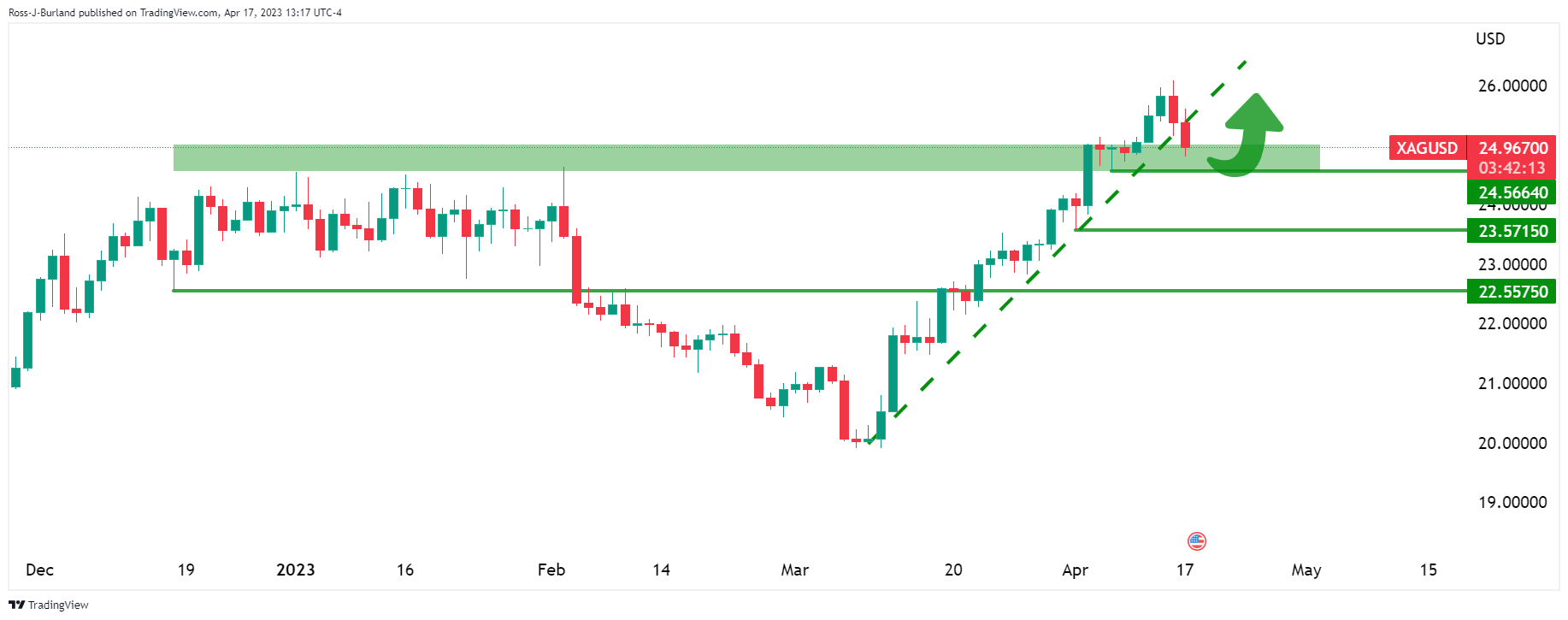
  • Silver has corrected into a 61.8% Fibonacci area and bears are moving in.
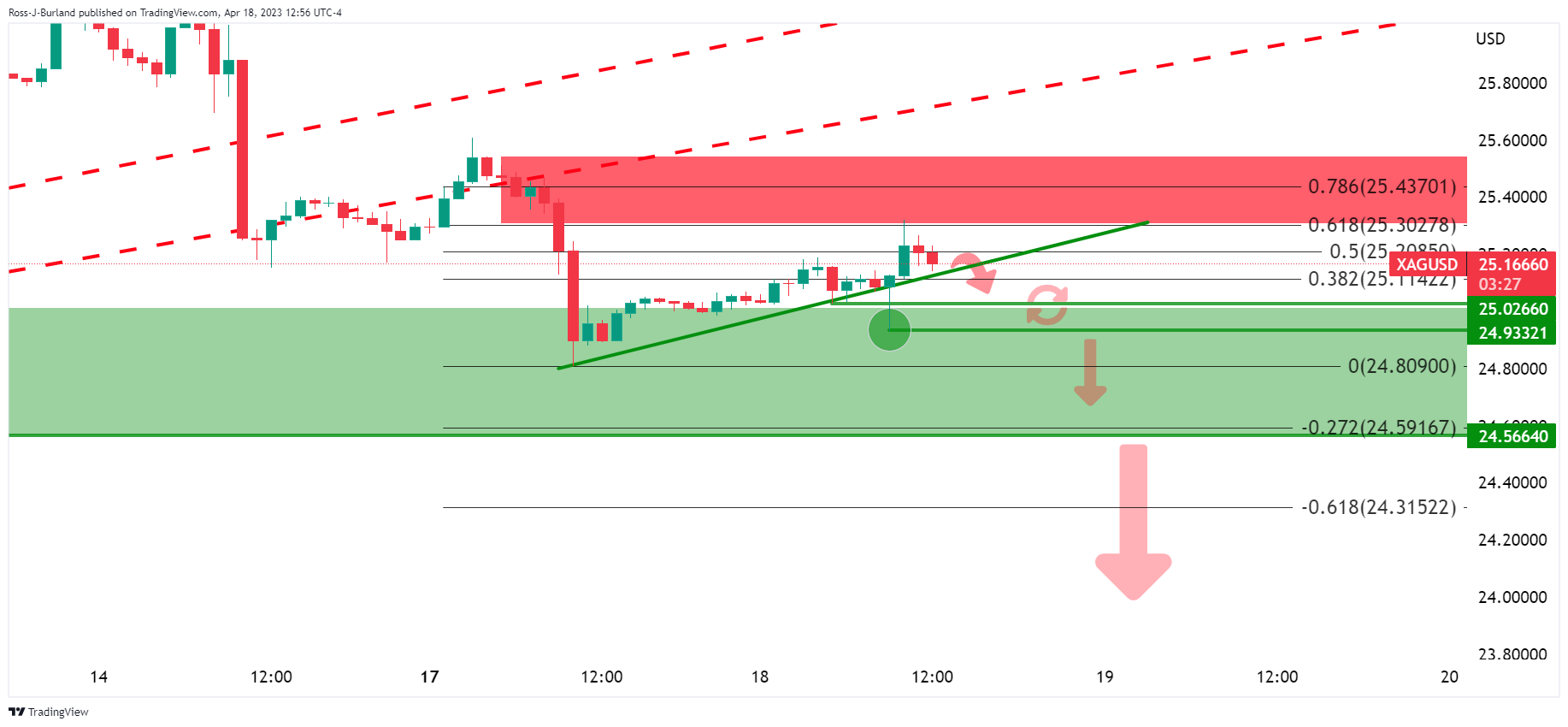
  • However, the confirming break-of-structure-point is not until $24.9332 to confirm a downside bias. 
  • US Dollar could continue to correct lower, bullish for Silver. 

As per the prior session´s analysis, ´´Silver bulls are lining up as the US Dollar hits a 61.8% Fibo area,´´ the US Dollar did indeed come under pressure and Silver has corrected bullishly as the following will illustrate:

Silver prior analysis
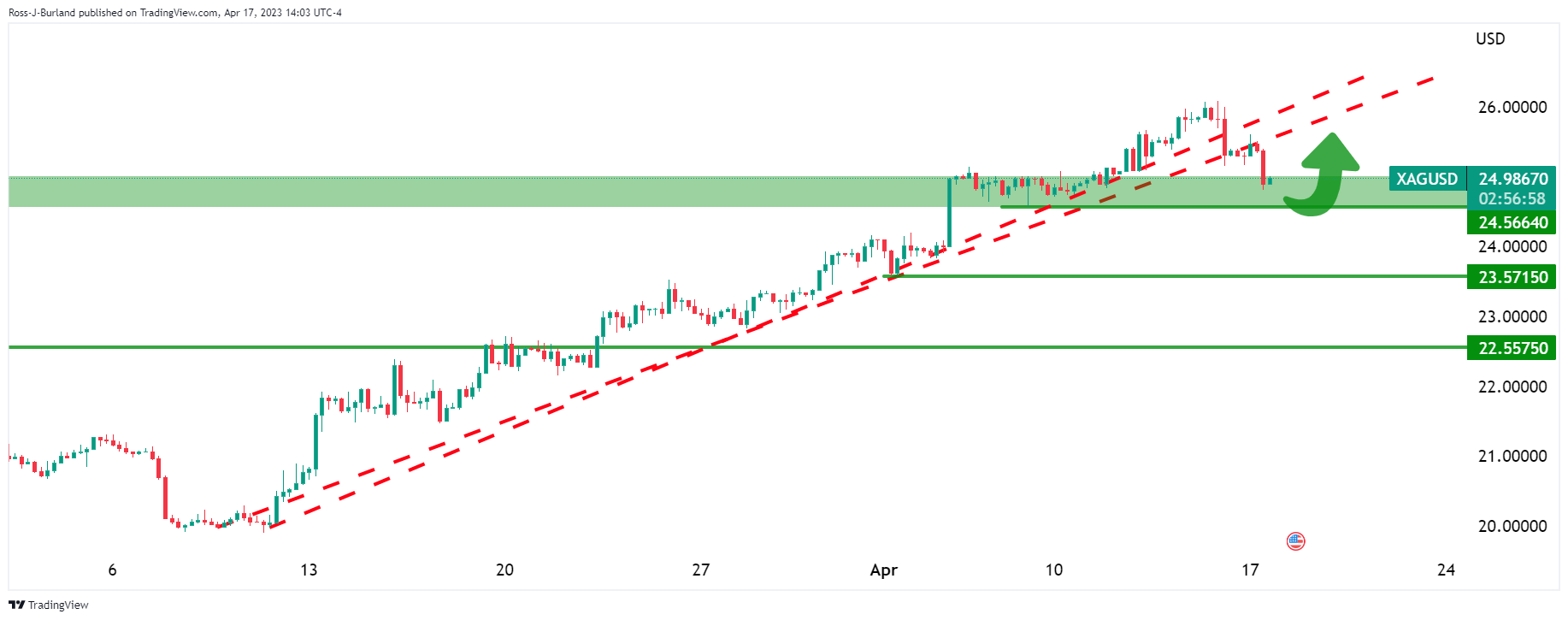
It was stated that Silver had broken below the trendline support and that the Silver price could close on a daily candle in the support area.

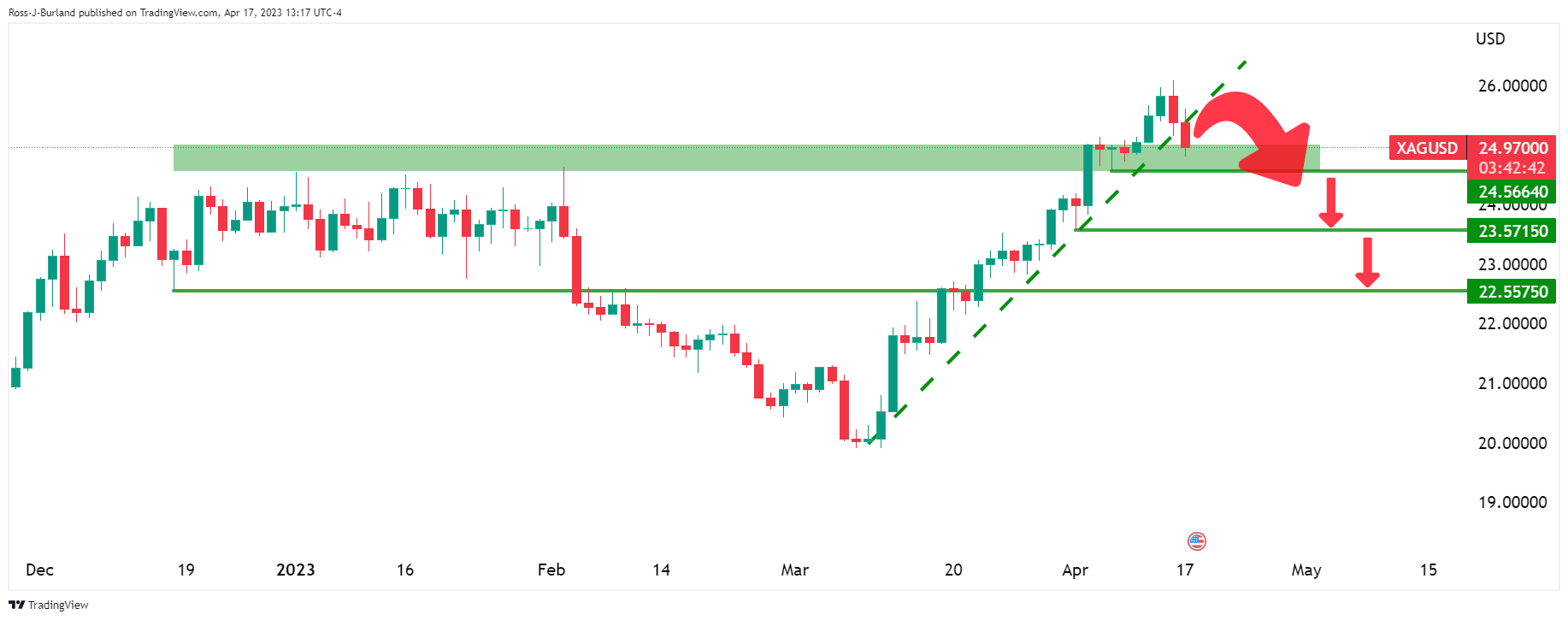
$24.5664 was the first import structure level that may otherwise have given way to sell-off as illustrated below. However, it was explained that there could be some consolidation and price discovery to follow over the coming days in and around the recent highs and lows.
US Dollar took on a 61.8% Fibo:
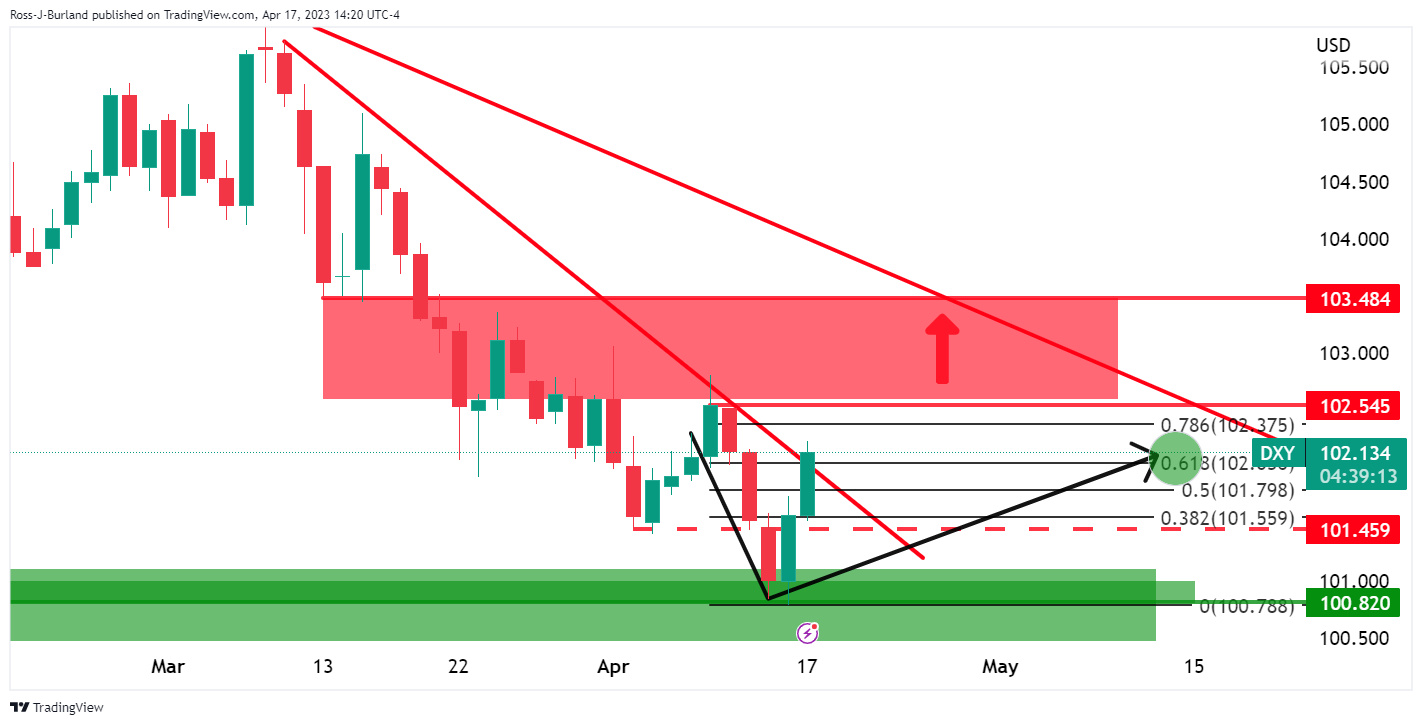
It was acknowledged that f the DXY stalled, then Silver bulls would be in play:

Silver & DXY updates 
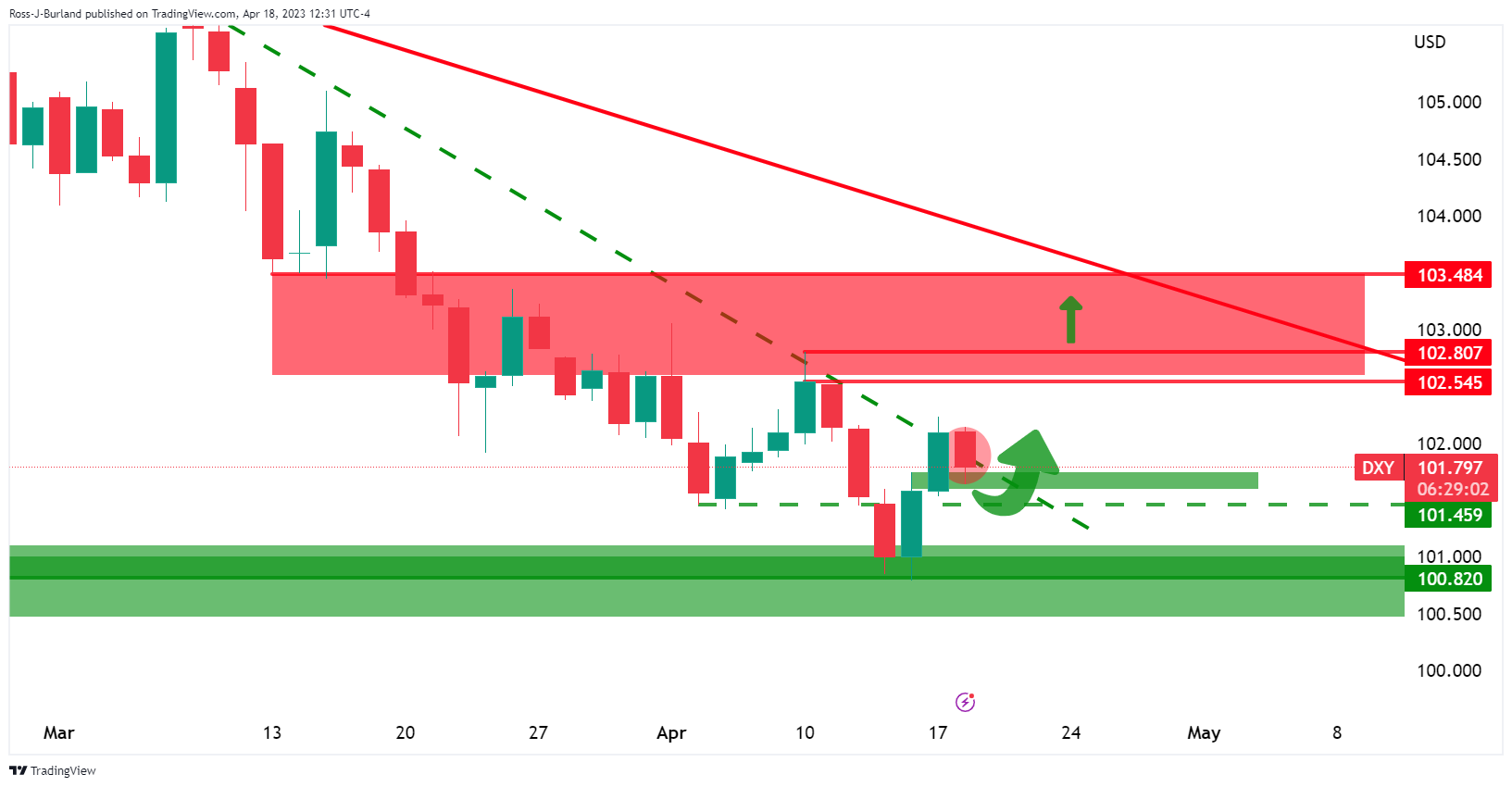
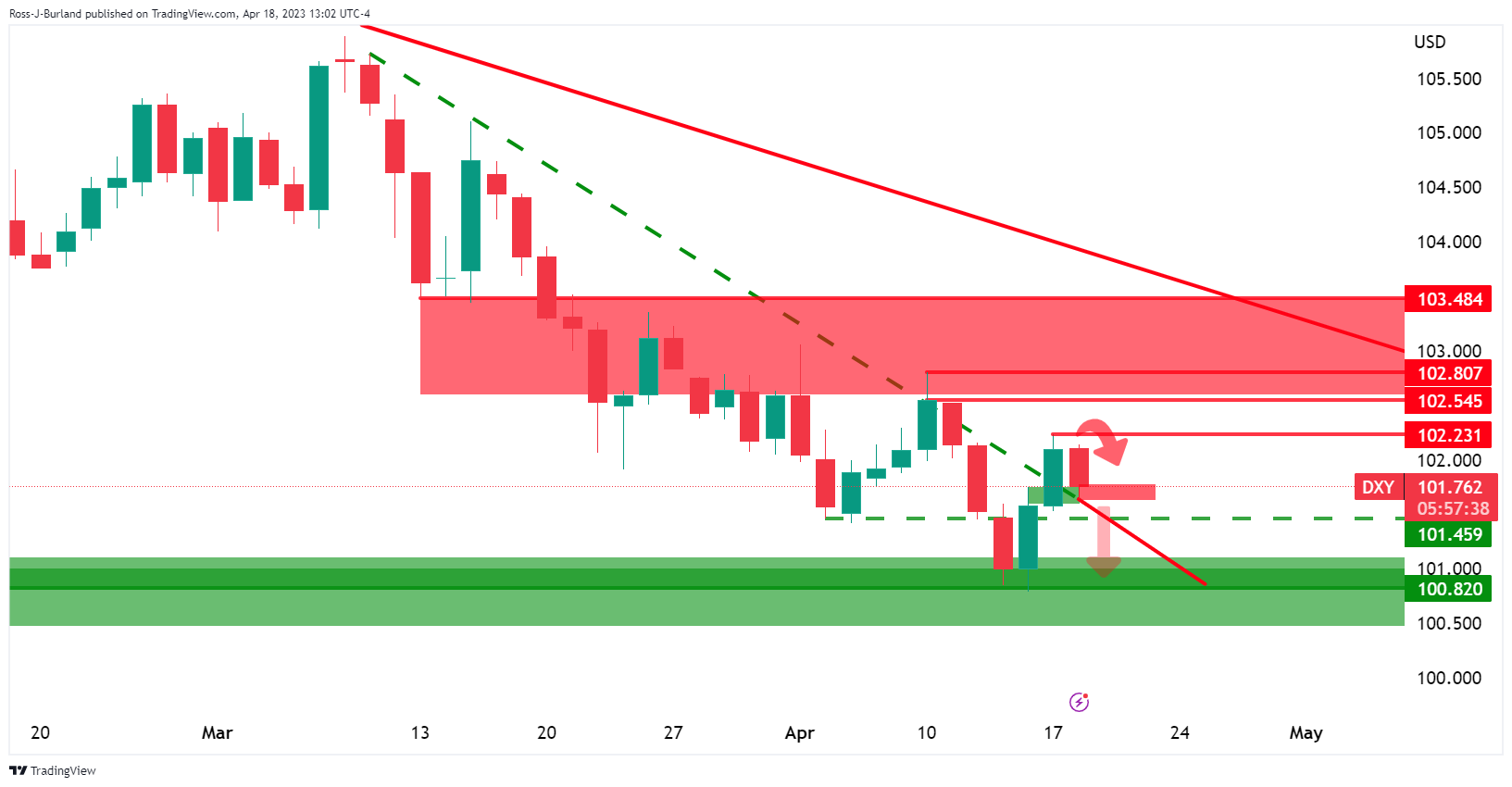
We are seeing the correction in the US Dollar on Tuesday. However, so long as 101.50 holds on a closing basis, then the bulls will likely be encouraged within a bullish schematic that is in development. 

This is giving rise to a bullish correction in the white metal:
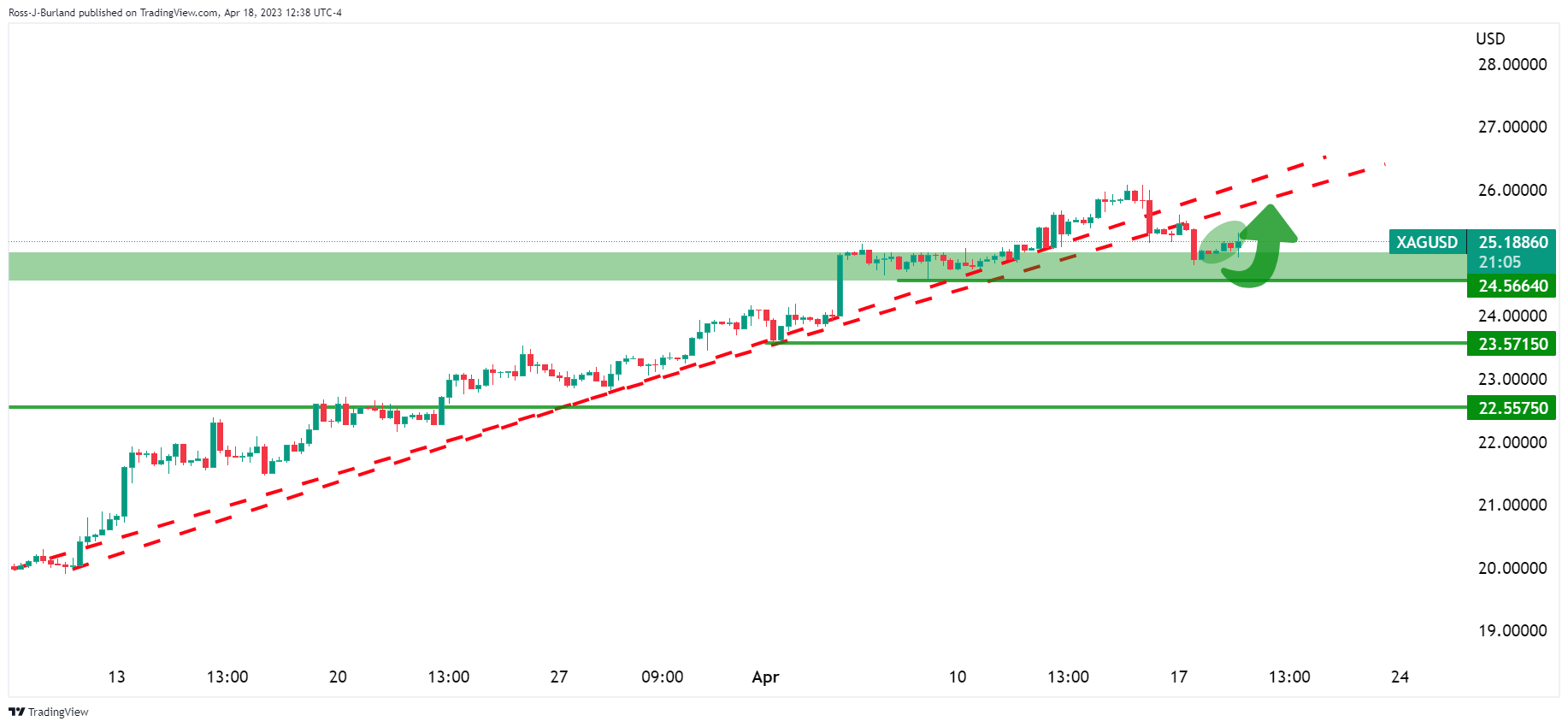
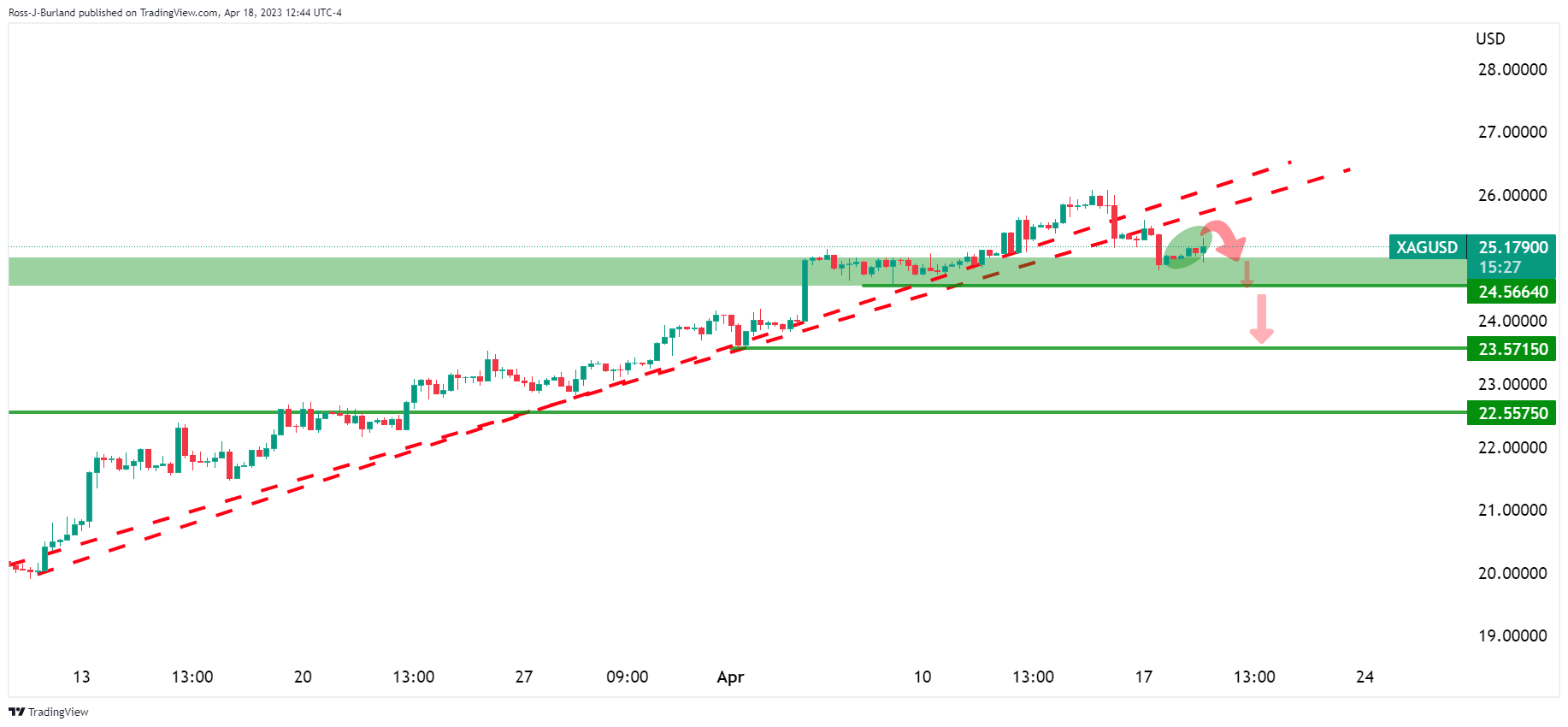
However, while being on the backside of the bearish trend, the $24.5664 structure remains vulnerable:
Zooming in:
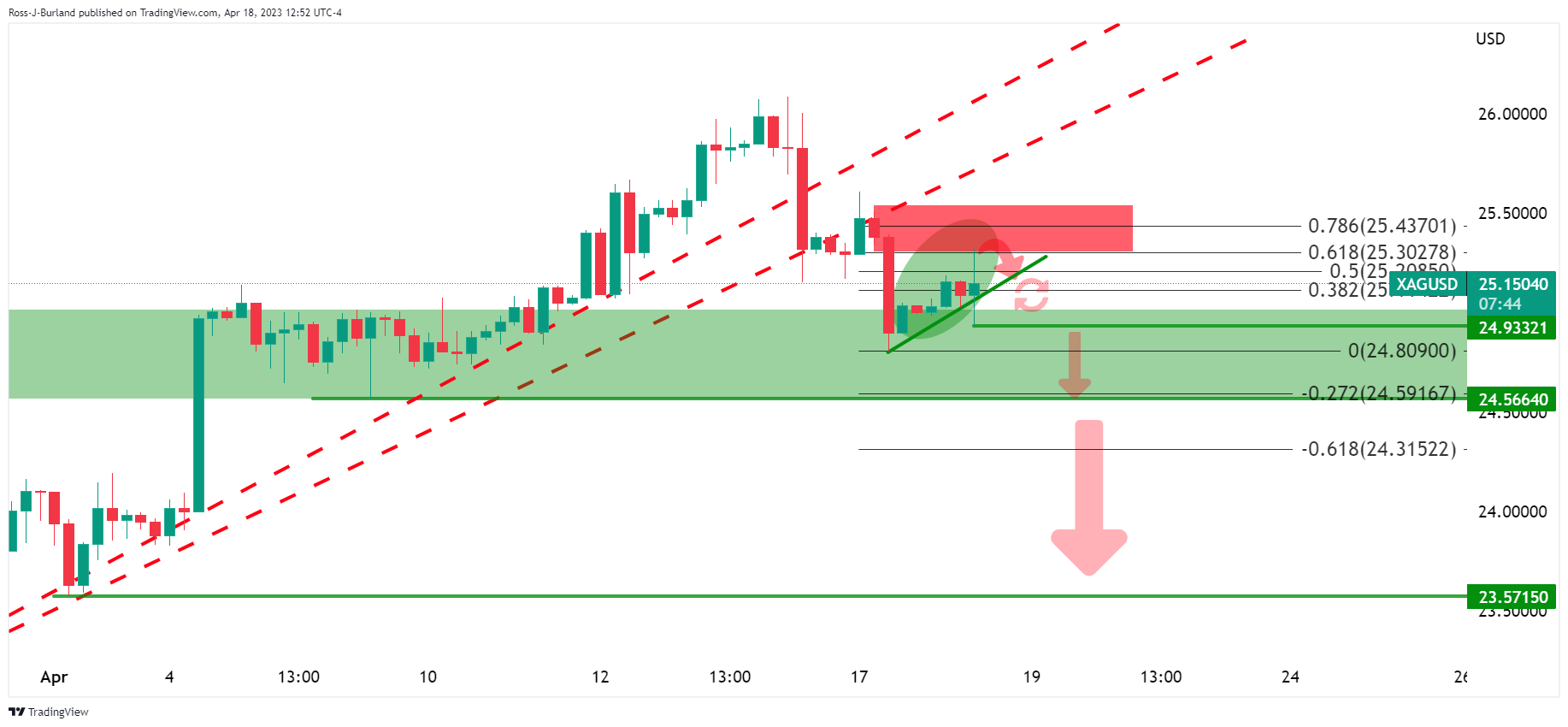
Silver has corrected into a 61.8% Fibonacci area and is being rejected toward trendline support. However, the confirming break-of-structure-point is not until $24.9332 to confirm the downside bias. 

Silver H1 chart
US Dollar bearish scenario

All in all, this could be too premature and the US Dollar could remain under pressure for some time to come, leading to a firmer correction in Silver for the sessions and days ahead:
Author

Ross J Burland

Ross J Burland, born in England, UK, is a sportsman at heart. He played Rugby and Judo for his county, Kent and the South East of England Rugby team.


More from Ross J Burland
Share:

Editor's Picks

GBP/USD stays defensive near 1.3450 amid Mideast uncertainty

GBP/USD drifts lower to near 1.3460 in European trading on Thursday. Conflicting rhetoric from US and Iranian officials about a potential deal fuels market concerns, allowing the US Dollar to attract some haven demand. Next of note for the major is the US Initial Jobless Claims report, while Mideast headlines will remain in play.

EUR/USD turns lower toward 1.1500 as USD finds demand

EUR/USD is turning south toward 1.1500 in the European session on Thursday, pressured by a modest US Dollar rebound. Markets stay wary about the prospects of a US-Iran peace deal and the reopening of the Strait of Hormuz, keeping the safe-haven USD underpinned. The focus is now on the Eurozone Retail Sales and US Jobless Claims data.

How Wall Street rigs the game [Video]

In this week’s Live from the Vault, Andrew Maguire is joined by Peter Antico and Sean Stone to discuss the Paradigm of Money - an in-depth expose of financial market corruption, from naked shorting to the two-tier system that protects Wall Street.

Top Altcoins: Ripple, Cardano, and Solana vulnerable to deeper losses

Ripple, Cardano, and Solana are trading in the red on Thursday, facing downside pressure. The technical outlook for altcoins is bearish, as XRP risks falling below $1.00, ADA is eyeing the 50-day Exponential Moving Average at $0.1766, and SOL remains capped below a cluster of resistance levels.

AI defies the disinflationary playbook: Why lower oil prices might not be enough to cool core inflation
The global economic landscape has been fixated on the Middle East since the US-Iran war started in late February, reacting to significant changes in crude Oil prices and assessing how they could influence inflation dynamics and growth outlook.
9-3: Is the Federal Reserve’s vote tally Warsh's new forward guidance?
The rate did not move. Neither did the statement, and that’s the more interesting fact. Set the July 29 Federal Open Market Committee (FOMC) statement beside the one issued on June 17, and the two documents are identical apart from a single verb and a paragraph at the bottom naming three dissenters.