Pound Sterling Price News and Forecast: GBP/USD Elliott Wave technical analysis [Video]
![Pound Sterling Price News and Forecast: GBP/USD Elliott Wave technical analysis [Video]](https://editorial.fxstreet.com/images/Markets/Currencies/Majors/GBPUSD/iStock-157771037.jpg)
GBP/USD Elliott Wave technical analysis [Video]
The ongoing Elliott Wave analysis for GBPUSD on the daily chart indicates a counter-trend structure featuring an impulsive wave (orange wave A) currently active within navy blue wave 2. This configuration suggests that orange wave A operates as a corrective phase within the broader downtrend and is nearing completion. When orange wave A finalizes, orange wave B is expected to initiate, leading to a temporary corrective phase or consolidation, diverging from the prevailing downtrend.
Navy blue wave 2 remains active, though it is nearing its endpoint, paving the way for the transition to orange wave B. In Elliott Wave theory, such a shift often implies a short-term reversal or a pause in the prevailing trend, providing traders insight into a likely corrective move. Read more...
GBP/USD Forecast: Pound Sterling struggles to clear strong resistance
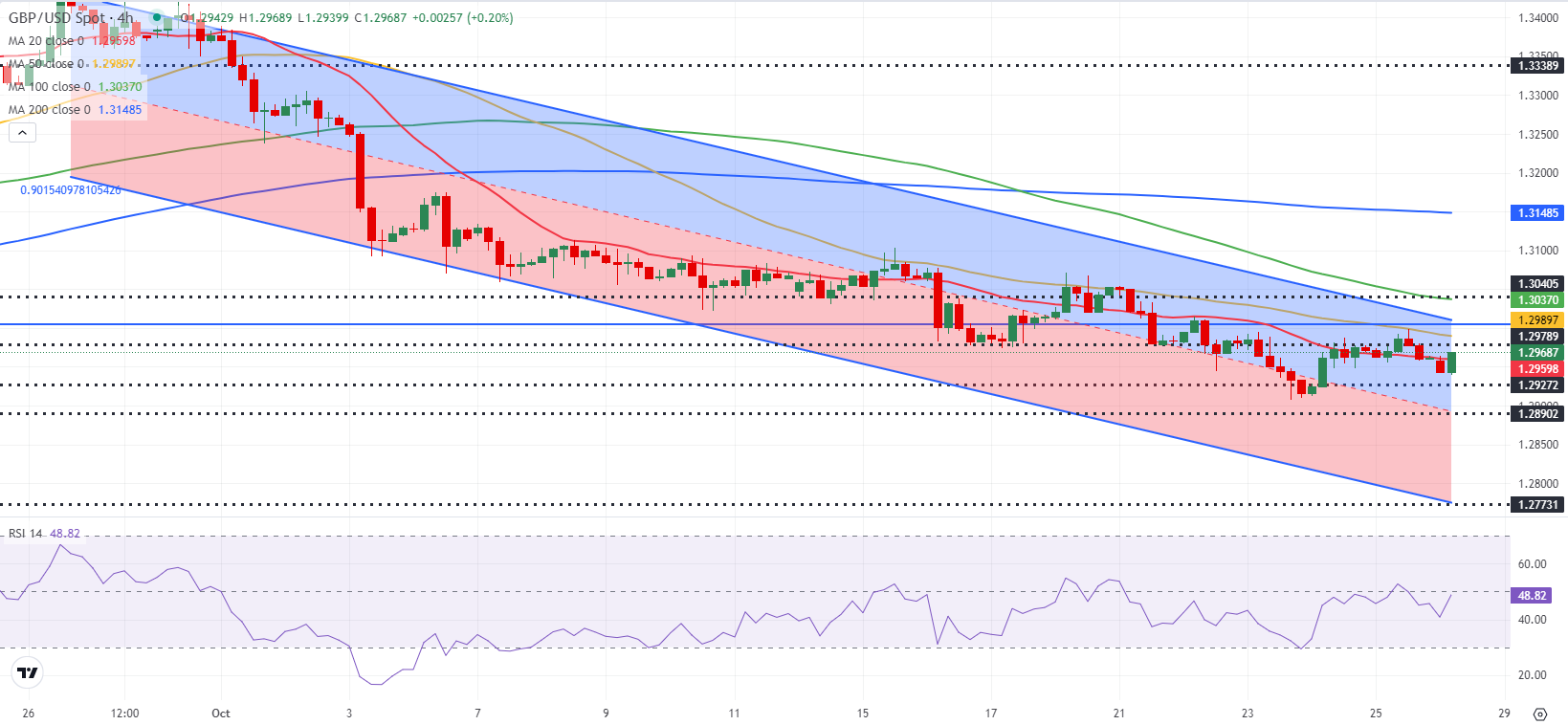
After rising toward 1.3000 on Friday, GBP/USD lost its traction and closed the day marginally lower. The pair stays relatively quiet and moves sideways above 1.2950 in the European morning on Monday.
Although the upbeat market mood helped GBP/USD hold its ground in the European trading hours on Friday, rising US Treasury bond yields supported the US Dollar heading into the weekend, causing the pair to reverse its direction. Read more...
GBP/USD Weekly Forecast: Pound Sterling stays vulnerable, braces for action-packed week
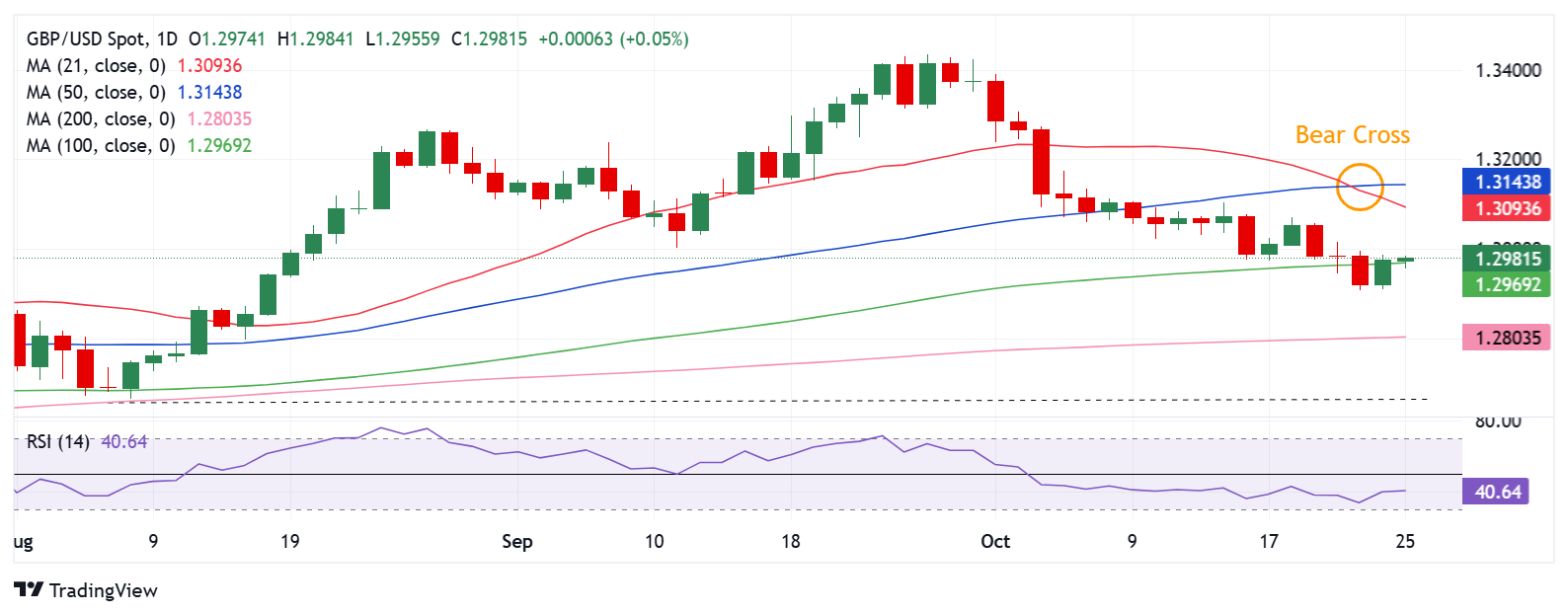
The Pound Sterling (GBP) remained at its lowest level in over two months versus the US Dollar (USD), leaving the GBP/USD vulnerable below the 1.3000 threshold.
The demand for the safe-haven USD dominated throughout the week for varied reasons, including the heightened uncertainty leading into the November 5 US presidential election, rising Middle East geopolitical tensions and earnings season globally. Read more...
Author

FXStreet Team
FXStreet
Composed of a group of economic journalists and FX experts, the FXStreet content team produces and oversees all content published on FXStreet. It provides a purely journalistic approach to the Forex market.















