|

Wyckoff Theory suggests “The Spring is in” for the Bitcoin price

  • Bitcoin price is seeing bullish candles following several fakeouts this month.
  • BTC price needs one upswing to justify the macro thesis.
  • Invalidation of the bullish scenario is a breach below $37,650

Bitcoin price back and forth nature spells for a Wyckoff accumulation in play. Traders should expect more up-trend with games and fakeouts along the way.

“The spring is in”

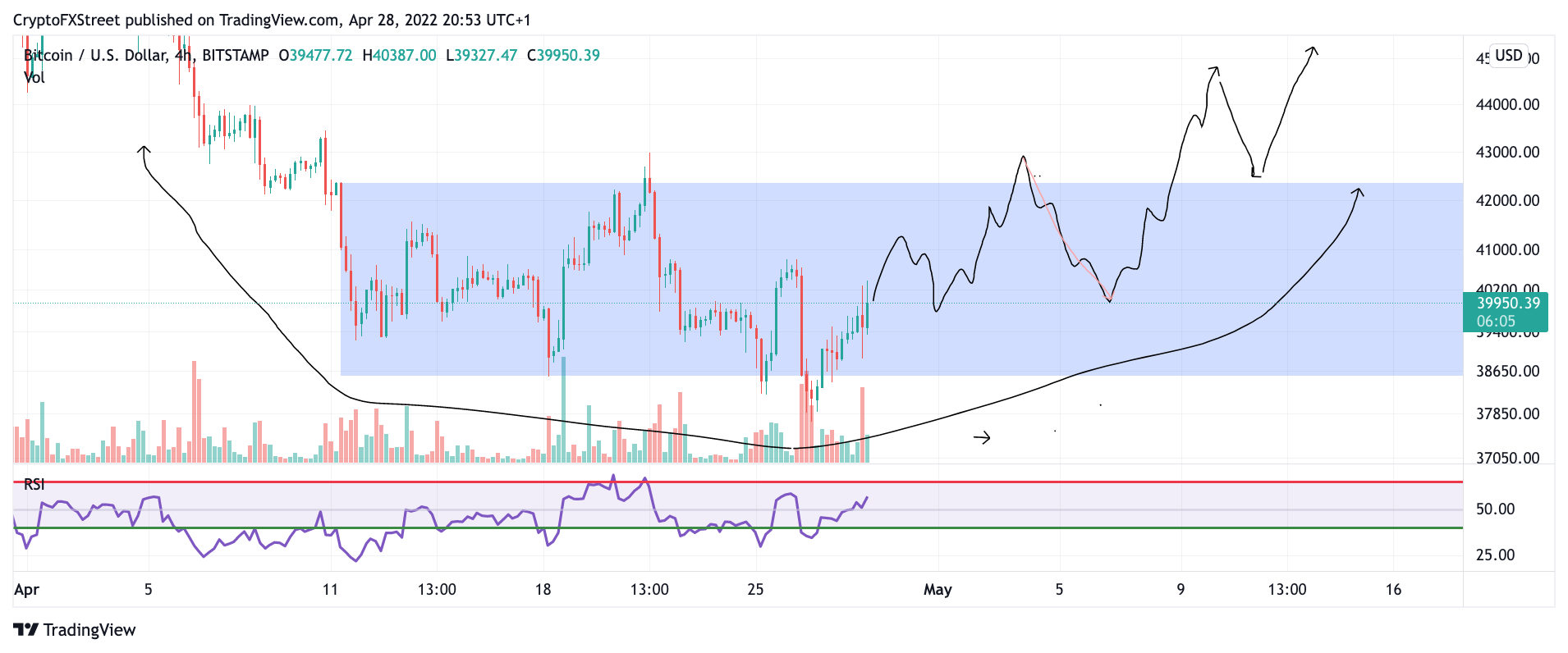
Bitcoin price has been a complicated chart to swing trade as the “original cryptocurrency” has experienced several erratic trend changes within the last few weeks. On a psychological level, the fakeouts and traps could justify an accumulation phase implemented by smart money. Analyzing the technicals, it seems the low point (meant to shake out traders) of the accumulation, also known as “the spring,” may have occurred.

Bitcoin price currently trades at $40,300, a level intraday traders should be very familiar with. Analyzing the Relative Strength Index, the bulls could be increasing in momentum. If the Wycoff methodology plays out, the bulls will continue to see uptrend rallies with brief retracements into significant key levels this month. 
TM/BTC/4.28.22

BTC/USDT 4-hour chart

Traders willing to take an early risk should consider an intraday trading plan accompanied by a dollar-cost average approach to maximize potential profit and manage risk. The ultimate target for Bitcoin price still resides somewhere in the $51,000 zone to complete the Wave D of the macro Bitcoin triangle.

Invalidation of the bullish thesis is now the swing low at $37,650. If the bears can suppress the Bitcoin price back to this level, consider $34,500 as their next target resulting in a 15% dip from the current price.

Author

Tony M.

Tony M.

FXStreet Contributor

Tony Montpeirous began investing in cryptocurrencies in 2017. His trading style incorporates Elliot Wave, Auction Market Theory, Fibonacci and price action as the cornerstone of his technical analysis.


More from Tony M.
Share:

Markets move fast. We move first.

Orange Juice Newsletter brings you expert driven insights - not headlines. Every day on your inbox.

By subscribing you agree to our Terms and conditions.

Editor's Picks

Avalanche struggles near $12 as Grayscale files updated form for ETF

Avalanche trades close to $12 by press time on Wednesday, extending the nearly 2% drop from the previous day. Grayscale filed an updated form to convert its Avalanche-focused Trust into an ETF with the US Securities and Exchange Commission.

Bitcoin slips below $87,000 as ETF outflows intensify, whale participation declines

Bitcoin price continues to trade around $86,770 on Wednesday, after failing to break above the $90,000 resistance. US-listed spot ETFs record an outflow of $188.64 million on Tuesday, marking the fourth consecutive day of withdrawals.

Michael Selig assumes role as new CFTC Chair, what does this mean for crypto?

Michael Selig has been sworn in to serve as the 16th Chairman of the Commodity Futures Trading Commission. Selig was confirmed by the US Senate to head the commission last week, following his October nomination by the US President Donald Trump.

Crypto.com hires sports trader for event prediction market-making

Crypto.com plans to recruit a quant trader for the sports market-making team to buy and sell financial contracts related to these events. Opponents argue that internal trading desks put operators or their affiliates on the opposite side of customer trades. 

Orange Juice Newsletter – Smart insights by real people. Every day.

A free newsletter highlighting key market trends to help traders stay a step ahead. Daily insights on the most relevant trading topics, compiled by our experts in an easy-to-read format so you never miss an important move.

Bitcoin: Fed delivers, yet fails to impress BTC traders

Bitcoin (BTC) continues de trade within the recent consolidation phase, hovering around $92,000 at the time of writing on Friday, as investors digest the Federal Reserve’s (Fed) cautious December rate cut and its implications for risk assets.