Classic Remake: Terra proposes recoupling LUNC and UST months after collapse
- Terra Classic community has passed a proposal to relink Luna Classic with USTC, through an operational framework.
- The proposal’s goal is to rebind the stablecoin with the token, and restore the value lost in the May 2022 decoupling event.
- LUNC price yielded 18% gains and USTC rallied 67.5% since February 2 in response to plans to bind the two assets.

The de-pegging of Terra ecosystem’s logarithmic stablecoin UST and the collapse of the sister tokens LUNA-UST wiped out $41 billion from the crypto ecosystem. The community is still reeling from the aftermath of the event and recently passed a proposal to link Luna Classic LUNC (formerly LUNA) and the stablecoin USTC.
Terra Classic LUNC community has passed proposal to link LUNC and USTC
The Terra Classic community has passed the proposal to "relink LUNC with UST". This proposal is a signal proposal and it describes an operational framework for the Luna Classic (LUNC) community to rebind Terra Classic USD (USTC) from the code level, consensus level and guidelines, with the ultimate goal of restoring the value lost in the May 2022 "decoupling" event.
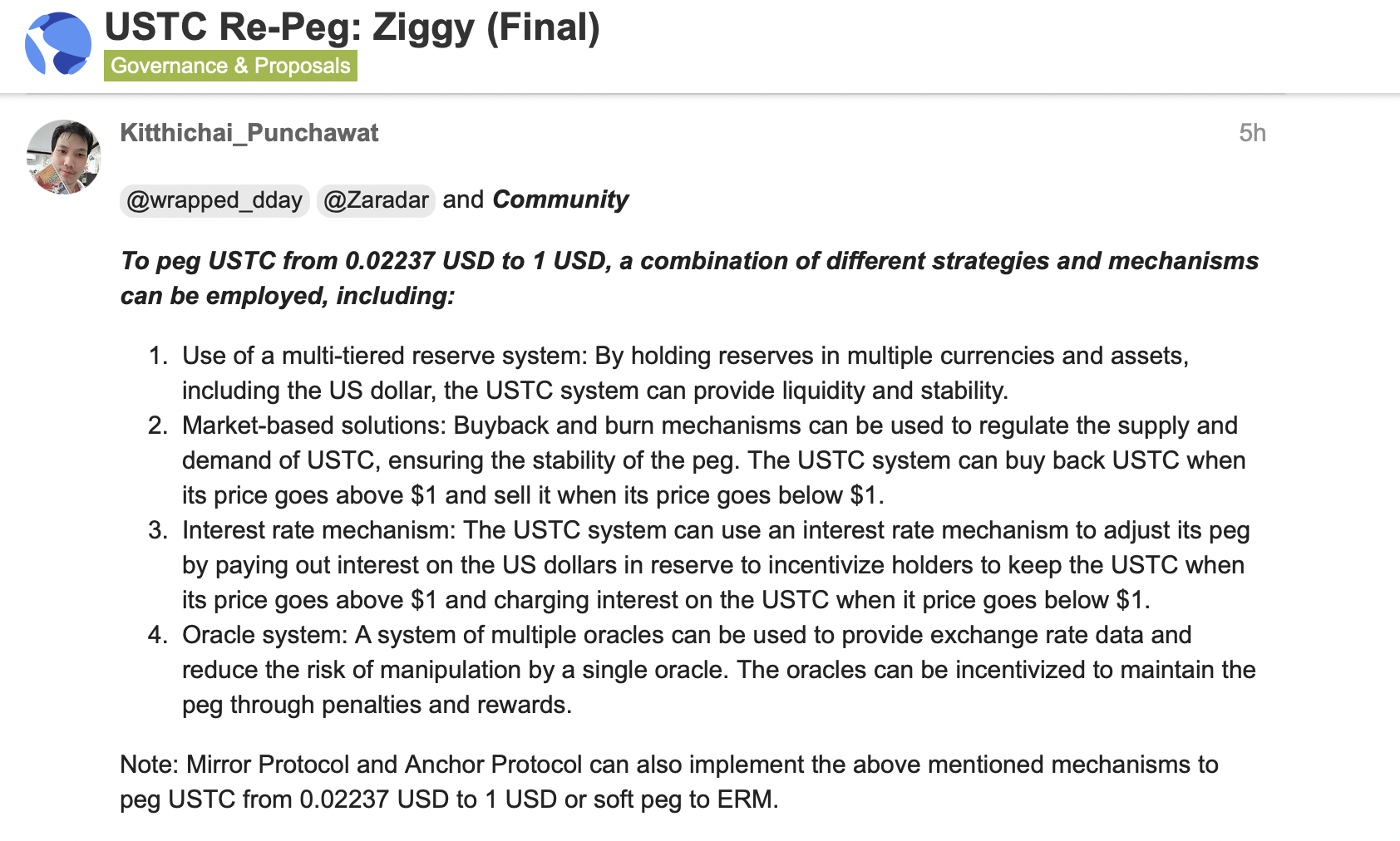
Proposal to re-peg USTC to $1
The May 2022 “decoupling” event involved the de-pegging of algorithmic stablecoin UST and the collapse of the sister tokens LUNA-UST. The community is seeking to make themselves whole again and simplify the burn of LUNC tokens through the proposal.
1 USTC is currently equivalent to $0.04171, the community proposes to re-establish the stablecoin’s $1 peg through a combination of different strategies and mechanisms. One of the proposed mechanisms is as follows:
- Use of a multi-tiered reserve system: By holding reserves in multiple currencies and assets, including the US dollar, the USTC system can provide liquidity and stability.
- Market-based solutions: Buyback and burn mechanisms can be used to regulate the supply and demand of USTC, ensuring the stability of the peg. The USTC system can buy back USTC when its price goes above $1 and sell it when its price goes below $1.
- Interest rate mechanism: The USTC system can use an interest rate mechanism to adjust its peg by paying out interest on the US Dollars in reserve to incentivize holders to keep the USTC when its price goes above $1 and charging interest on the USTC when its price goes below $1.
- Oracle system: A system of multiple oracles can be used to provide exchange rate data and reduce the risk of manipulation by a single oracle. The oracles can be incentivized to maintain the peg through penalties and rewards.
It's important to note that LUNC’s revival still largely depends on the burning of the token and while the community is proposing reestablishing the link between LUNC and USTC at the one year anniversary of the crash, there is criticism from community members on Twitter.
The two assets have witnessed a massive spike in their price since February 2, LUNC climbed 18% while USTC rallied 67.5% on Binance and OKX respectively.
Author

Ekta Mourya
FXStreet
Ekta Mourya has extensive experience in fundamental and on-chain analysis, particularly focused on impact of macroeconomics and central bank policies on cryptocurrencies.