Can Powell tonight break the chain for Uniswap and trigger 25% gains in ten days?
- Uniswap price is still under pressure from too many bearish forces.
- UNI could drop as much as 10% this week if another bullish catalyst does not occur.
- All hope is pinned on Powell to confirm the cool-down in inflation and bring a Merry Christmas.

Uniswap (UNI) booked nearly 3% on the back of that lower US CPI inflation print on Tuesday, which triggered a massive buying wave in equities and cryptocurrencies. Unfortunately for UNI, that is as far as the good news goes, as the price action is held in the grip of bears, with 55-day and the 200-day Moving Averages still keeping price action muted. The last man standing, Jerome Powell of the Fed, could be the savior of Uniswap and deliver a dovish message that could finally see UNI break above these bearish levels.
UNI will depend on Powell for the coming weeks
Uniswap price was on the good path to break at least the 55-day Simple Moving Average (SMA) on Tuesday as it popped above $6.15 but unfortunately received a firm rejection against the 200-day SMA at $6.25. The close below the 55-day SMA makes it even more painful and reveals that bulls got trapped in the area between the 55-day SMA and the 200-day SMA.
UNI thus sees its beloved bulls in a bull trap that could squeeze them out as price action is at risk of dropping lower. Luckily another big event is set to happen this Wednesday night with the last Fed rate decision for this year. Expectations are for a dovish Fed confirming the US inflation drop and giving some oxygen to markets to rally in the last weeks of the year.UNI is primed to break and rally up to $7.50, bearing 25% gains by the end of next week.
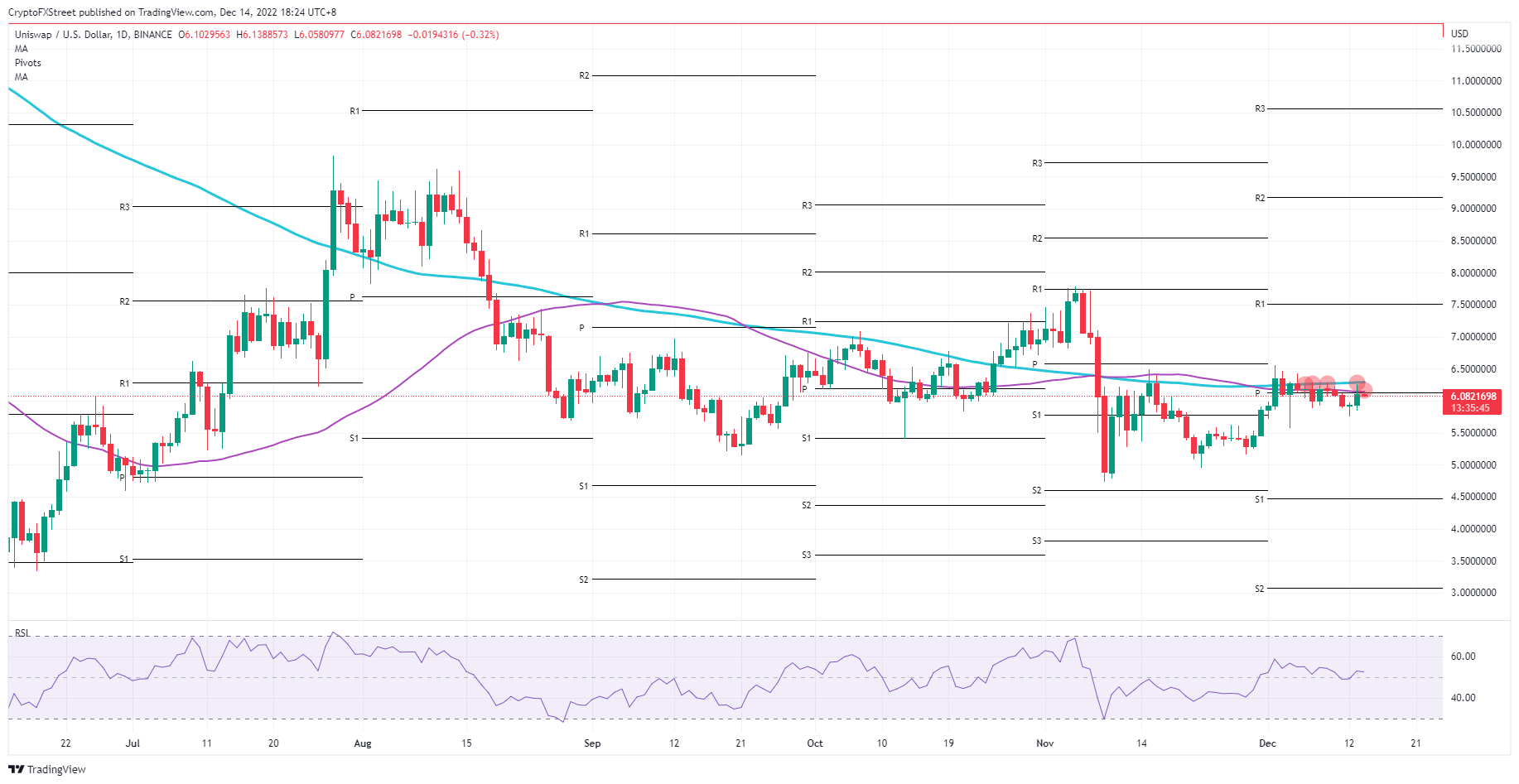
UNI/USD daily chart
The outcome for UNI will be very binary on the back of the Fed rate decision. If Powell delivers a bearish speech and tells markets that more hikes will be needed, possibly throughout 2023, that would mean a big dislocation between what the Fed is saying and what the market expects. The current bull trap would speed up and quickly hit $5.50 to the downside, with another possible sell-off in the coming days toward $4.50.
Author

Filip Lagaart
FXStreet
Filip Lagaart is a former sales/trader with over 15 years of financial markets expertise under its belt.