US Initial Jobless Claims Preview: The trend's the thing
- Unemployment claims expected to drop to 757,000 from 779,000.
- Continuing Claims to decrease to 4.49 million from 4.592 million.
- Despite higher claims in January Nonfarm Payrolls improved.
- Claims are a trend statistics, market will note but not trade.

The end of the lockdown in California and the loosening of business restrictions in New York, Massachusetts and elsewhere may have reversed the rising trend in unemployment claims even as Nonfarm Payrolls turned positive in January.
First time unemployment claims are expected to fall to 757,000 in the week of February 5 from 779,000 prior. Continuing Claims are forecast to drop to 4.49 million in the January 29 week from 4.592 million.
Initial Jobless Claims

FXStreet
Initial Claims and Nonfarm Payrolls
Claims have been the signature statistic of the pandemic lockdowns. The jobless claims that sluiced through the labor market in March made the collapse in payrolls a certainty.
In a similar fashion the 97,000 increase in claims from 740,500 in November to 837,500 in December presaged the swing of more then half-a-million jobs from 336,000 to -227,000 in those months.
Payrolls recovered in January adding 49,000 positions. The final number will not be known until the revision issued with the February payroll on March 5. As December's adjustment subtracted 87,000 jobs and November's added 91,000 a much different result is possible.
Nonfarm Payrolls
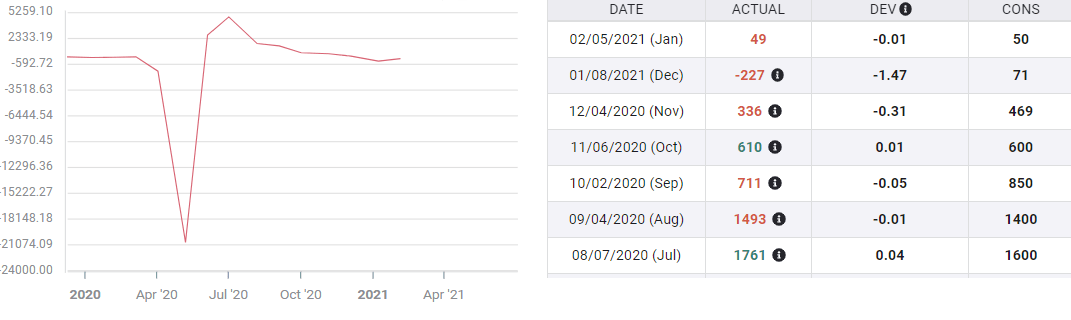
If the forecast of 757,000 for the last recording week of January, statistically six, is correct, the monthly average will drop to 828,700 from 843,000.
Regardless of the final disposition of payrolls and claims in January the rising jobless trend engendered by the California closure has reversed and with it the losses in NFP.
Conclusion
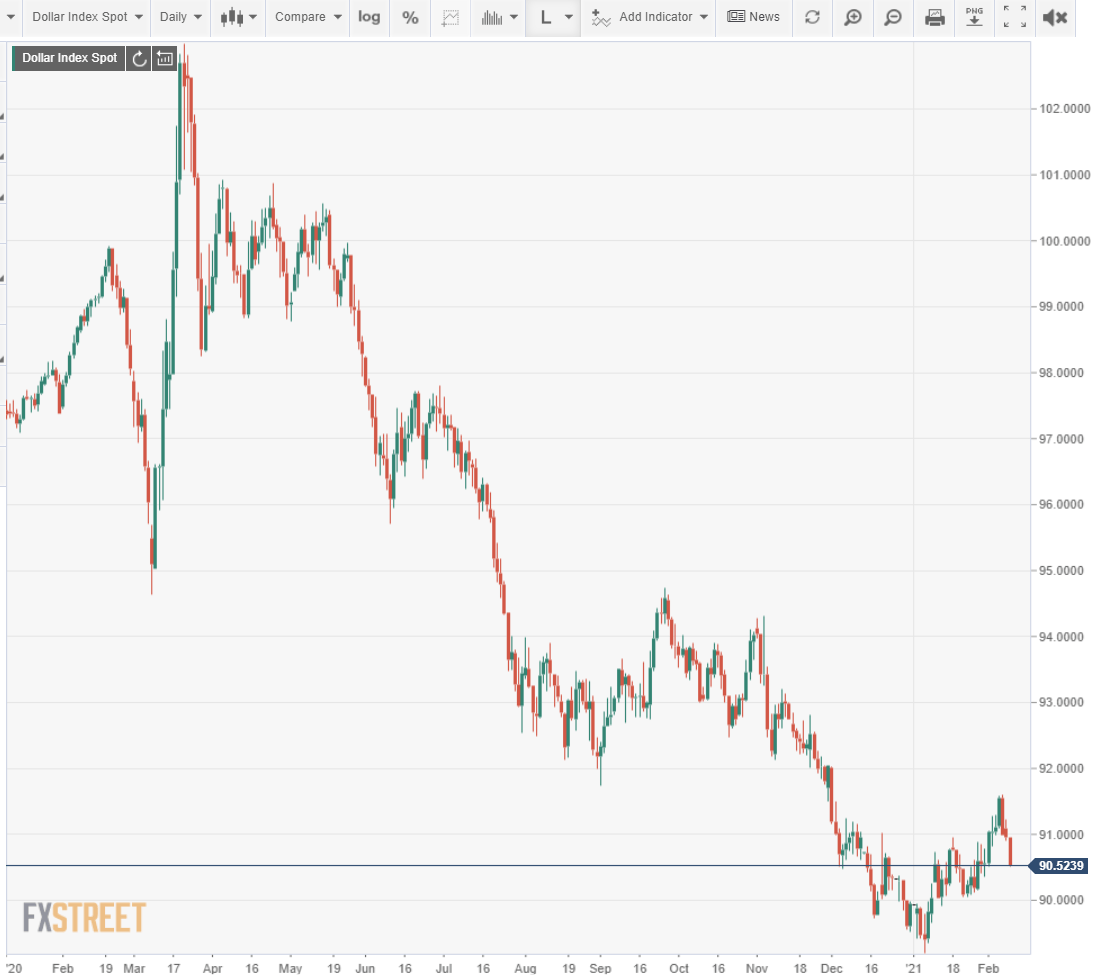
The dollar has had a modestly productive year in a majority of major pairs propelled by the anticipation of better economic growth supported by a massive stimulus package from Washington. Treasury rates have pushed to their best levels since the Fed engineered their all-time lows in March.
As long as the trend in claims is improving so is the rest of the economy. Markets and the dollar will follow where they lead.
Dollar Index
Author

Joseph Trevisani
FXStreet
Joseph Trevisani began his thirty-year career in the financial markets at Credit Suisse in New York and Singapore where he worked for 12 years as an interbank currency trader and trading desk manager.