US inflation reaches a new 30-year high in September as economic growth fades
- Overall PCE Price Index rises at 4.4%, the fastest since 1991.
- Core PCE Prices climb 3.6% as in August, also a generational high.
- Second quarter GDP plunges to 2% from 6.7%, employee costs rise.
- Federal Reserve bond taper may be enabled by rising inflation.

American consumer prices rose at their fastest pace in three decades in September, boosted by rapid gains in energy and food costs.
The Personal Consumption Expenditure Prices Index (PCE) jumped 0.3% last month, bringing the annual increase to 4.4% from 4.2% in August, reported the Commerce Department on Friday. This was the fastest rate of price increases since January 1991.
PCE Price Index
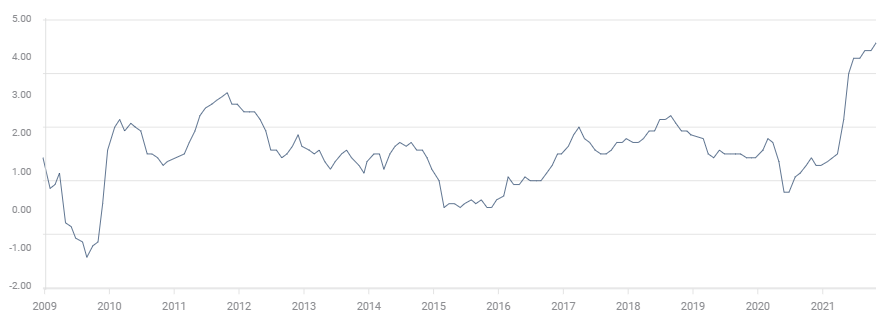
Core PCE inflation, the Federal Reserve’s preferred measure, which eliminates energy and food costs, rose 0.2% on the month and 3.6% for the year. This was the quickest pace of price gains since May 1991.
Overall PCE inflation has been propelled by sharply escalating energy and food prices, up 24.9% and 4.1% respectively in the past 12 months.
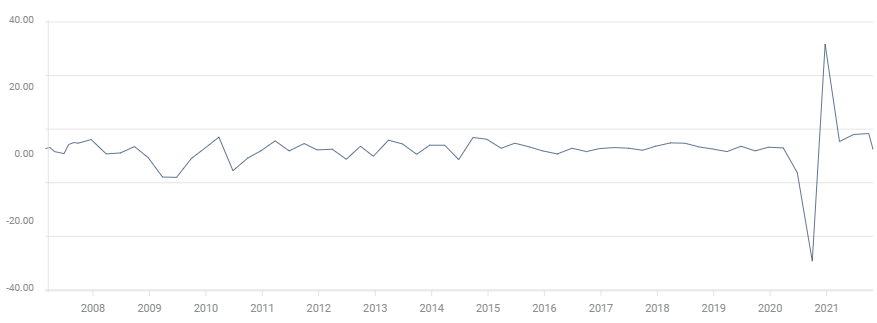
The sustained jump in consumer inflation has coincided with a steep drop in economic growth. Gross Domestic Product (GDP) for the third quarter, reported on Thursday by the Bureau of Economic Analysis, came in at just 2% on an annualized basis, missing the 2.7% forecast and far below the 6.7% pace in the second quarter.
GDP
FXStreet
The Employment Cost Index, which gauges worker compensation changes, climbed 1.3% in the third quarter, bringing the annual gain to 3.6%, for the fastest increase since the second quarter of 2002.
Personal Income, a measure of household earnings that includes dividends, interest and transfer payments, fell 1% in September much more than the -0.2% consensus estimate. Personal Spending rose 0.6%, near the 0.5% forecast.
Market response
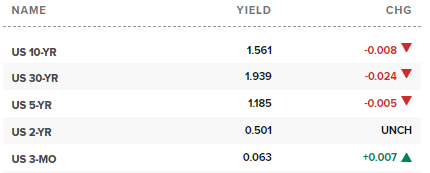
US Treasury yields were slightly lower on the day with the 10-year losing less than a point to 1.561% and the 30-year shedding a little over 2 basis points to 1.939%.
US Treasury rates
CNBC
Equity movement was also limited with the Dow adding 89.08 points, 0.25% to 35,819.50. The S&P 500 rose 8.96 points, 0.19% to 4,605.38.
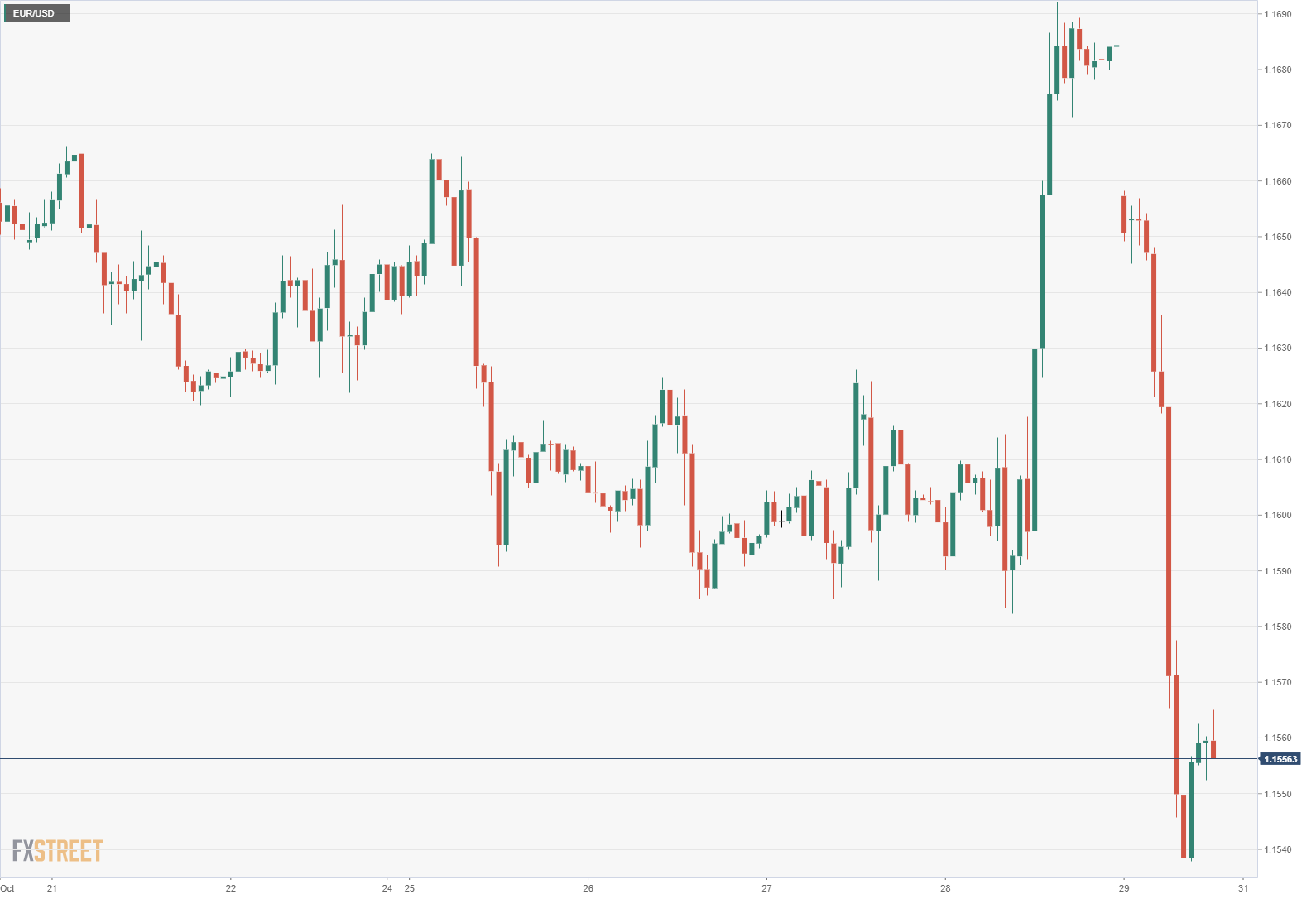
Currencies were the exception. The dollar saw sharp gains as the London FX market headed to its close at noon New York time. The EUR/USD lost more than a figure, opening at 1.1682 and finishing at 1.1556 in New York.
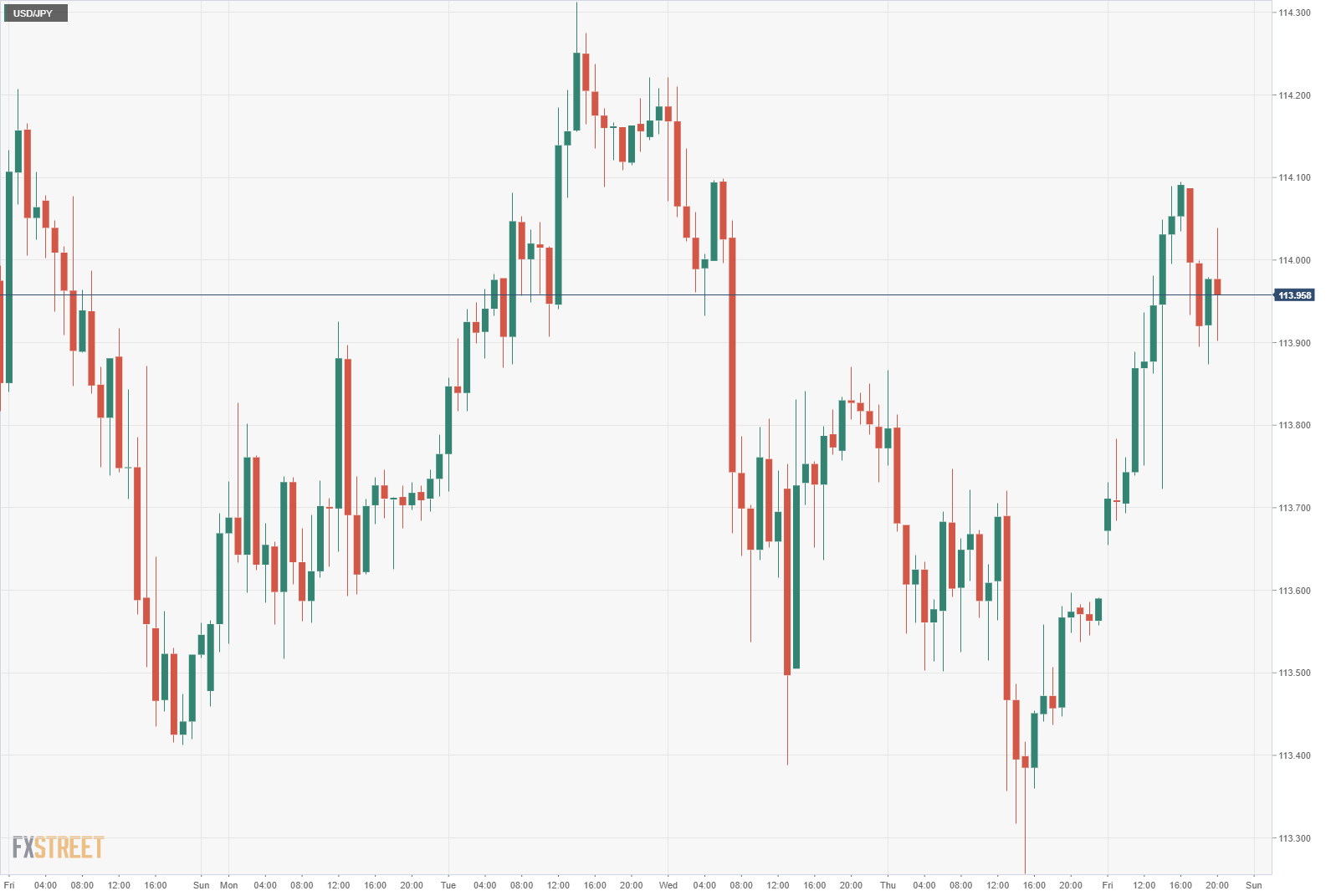
Sterling fell from 1.3789 to 1.3665 and the USD/JPY added 40 points to 113.98.
Conclusion
Although the Federal Reserve has made its intention to announce a reduction in its bond purchase program at Wednesday’s Federal Open Market Committee (FOMC) meeting about as clear as possible, the amount of the cut and the schedule are undetermined.
The central bank is currently buying $120 billion a month of Treasuries and mortgage backed securities. Some portion of that monthly purchase will be eliminated before the end of the year, with $15 bllion a proposed figure.
Although the FOMC has officially discounted inflation as an immediate rate motive with its averaging policy, officials have acknowledged that price increases are likely to be with the economy for some time. The Fed has not completely disavowed the transitory base-effect narrative, but inflation has become a very obvious policy problem.
What better way to defuse critics than to reduce bond purchases by more than anticipated, start them sooner and let the Treasury market and the dollar take on some of the inflation fighting role?
Author

Joseph Trevisani
FXStreet
Joseph Trevisani began his thirty-year career in the financial markets at Credit Suisse in New York and Singapore where he worked for 12 years as an interbank currency trader and trading desk manager.