US ADP Employment Change January Preview: Trade pact revival?
- Private payrolls expected to moderate in January after strong December.
- Job creation and wages remain at steady growth.
- January manufacturing PMI unexpectedly moved into expansion.

Automatic Data Processing (ADP) the US private payroll processing company will issue its National Employment Report for January on Wednesday February 5th at 13:15 GMT, 8:15 EDT
Forecast
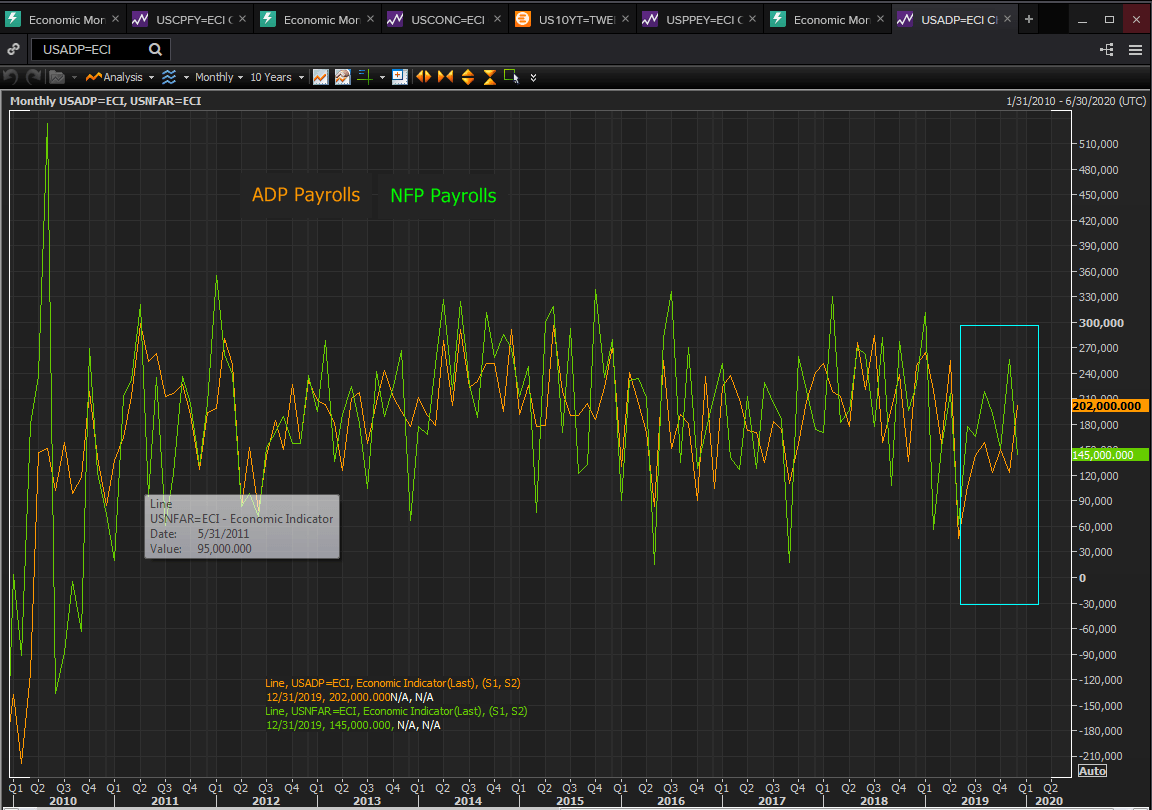
Payrolls for ADP’s clients are projected to have added 156,000 new workers in January after December’s 202,000 increase and November’s 124,000 gain.
ADP and NFP: Labor market trends
Job creation moderated last year from its exceptional performance in 2018. Non-farm payrolls fell by a quarter from 235,000 in the 12-month moving average in January to 174,000 by year’s end. Private payrolls at ADP dropped from 222,000 in April to 163,000 in December, 27%. There were three months well below trend in the ADP reports, May at 41,000, June at 112,000 and September at 93,000. In May there was corresponding weakness in NFP at 72,000.
Weaker NFP figures in the summer, June, July and August averaged 143,000 on initial release, a 40% drop in eight months from January, may have helped convince the Federal Reserve to initiate its 0.75% in cuts at the July FOMC. The then unsettled UK exit from the EU and the flourishing US-China trade war were the threats to US growth and the labor market noted by the Fed that the bank was keen to protect against.
The US labor force adds between 125,000 and 150,000 new workers each month from population growth and immigration.
ADP and NFP: Labor market part and whole
The ADP Employment Change Report is the statistic closest in composition and trend to the central US job metric, the Employment Situation Report from the Bureau of Labor Statistics (BLS). Commonly called non-farm payrolls or NFP for its payroll figures it is the most widely followed and reported US economic statistic.
The BLS report records monthly figures on job creation, unemployment, wages, average work week, labor participation rates and other topics. The ADP lists additions and subtractions to its corporate payrolls and is issued on the Wednesday before the BLS report which is usually on the first Friday of the month.
Over time the correlation between the two sets of statistics is high though individual monthly variation is not uncommon. As noted above, in 2019 the 12-month moving average for the NFP declined 26% and the ADP 26%, (NFP 25.9%, ADP 26.5%).
Reuters
Labor Market actors: PMI and jobless claims
Confidence among business executives had been falling for over a year in the surveys from the Institute for Supply Management (ISM). With the US economy expanding at a steady 2% pace since the first quarter it was concerns about the actual and feared impact of the China trade dispute that managers cited repeatedly as the source of their worries.
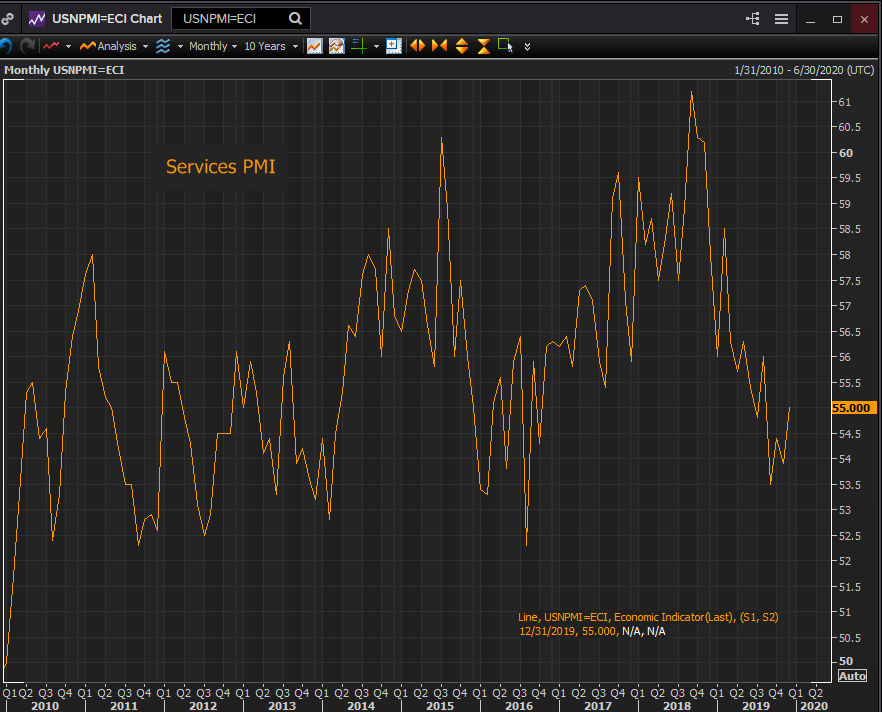
Overall PMI in the service sector fell from 59.7 in February to 52.6 in September and 53.9 in November but recovered to 55 in December and is forecast to be 55.1 when the January figures are issued on Wednesday. Employment PMI bottomed at 51.7 in September and has bounced to 55.2 in December.
Reuters
The impact of the China trade dispute was far more severe in the smaller manufacturing sector, about 12% of US GDP. Overall PMI slipped below the 50 division between expansion and contraction in August and remained there for five months until unexpectedly jumping to 50.9 in January. A smaller and still contractionary rise to 48.5 had been forecast. The employment PMI which had been negative for the same period rose to 46.6.
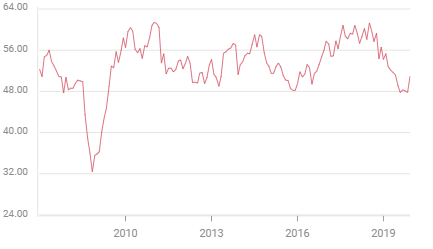
The disparity between the two sectors played out in the labor market. Manufacturing added 264,000 new workers in 2018, last year that plunged to 46,000.
January’s unforeseen rise in factory manager sentiment resulted from the long anticipated US-China trade pact signed in Washington on the 15th and the reduction in trade tensions between the nations.
The ISM survey was conducted throughout January and the threat of China’s health crisis to growth has been in evidence but has not as yet had an appreciable impact on sentiment. It is possible that will change as the impact of the crisis on the Chinese economy becomes evident, (US Manufacturing PM: Factories rebound despite China virus threat).
Initial jobless claims are one of the most reliable indicators of pending trouble in the labor market. The 20,000 rise in the four-week moving average from early October to late December, (213,750 to 233,500), while remaining near five decade lows was a suggestion that times might be changing in the labor market. In fact claims have since returned to their historical lows registering 214,500 in the last week in January.
Conclusion and the dollar
The trade and Brexit worries of the summer have been replaced by the unknown effects of the corona virus on the Chinese economy and the globe. But employment planning for January largely took place before the health crisis reached media saturation, though business executives were certainly aware of the danger if not the actual and unknown economic potential.
There is good indication that the better than anticipated response from manufacturing will be mimicked in the larger and more consequential for hiring, services sector. If so the potential for job creation in the economy improves.
With Federal Reserve rate policy and that of most other major central banks on hold, currencies look to the state of their economies for direction. For the US and the dollar, employment is the most important and ADP will provide the first glimpse into the New Year.
Author

Joseph Trevisani
FXStreet
Joseph Trevisani began his thirty-year career in the financial markets at Credit Suisse in New York and Singapore where he worked for 12 years as an interbank currency trader and trading desk manager.