The Bank of England temporizes on rates, Brexit, Governor Carney’s future
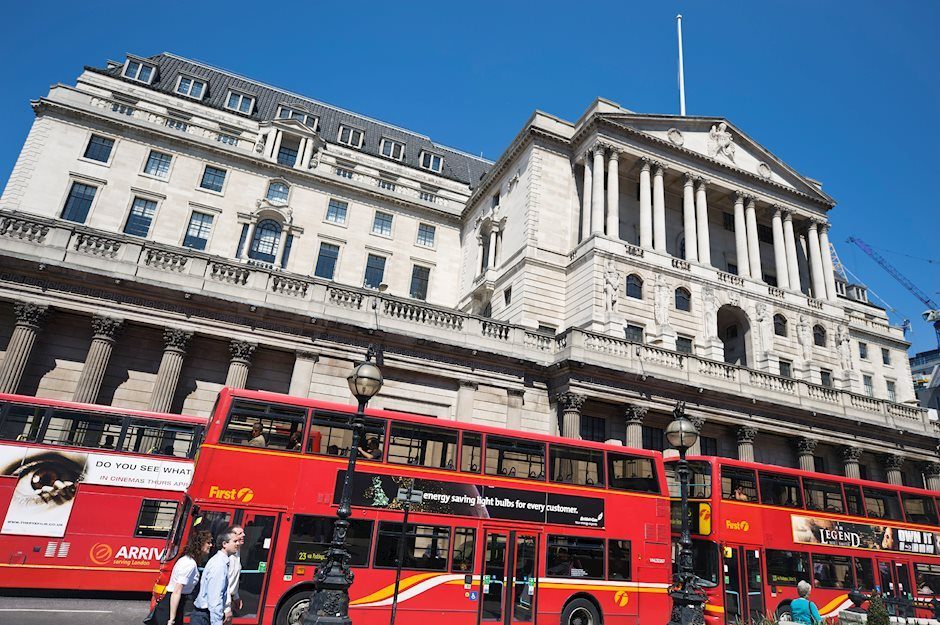

The Bank of England left its base rate unchanged at 0.75% Thursday as widely expected, though two dissenters preferring lower rates were a bit of a surprise that sent the sterling sharply lower.

In his news conference following the announcement Governor Carney repeatedly stressed that the bank and the Monetary Policy Committee (MPC) must base its assessments and projections on government policy.
Given that the current policy on the exit of the UK from the European Union is Prime Minister Boris Johnson’s Brexit deal the bank sees a gradual increase in the UK economy over the next three years, gaining in tempo as Brexit fades into the past.
“The recent UK EU trade agreement [has] created the prospect for a pickup in growth,” he said.
Within that overall assessment the potential scope for policy is essentially unlimited. The bank may, as the Brexit and global futures unfold, find that rate cuts or hikes are the appropriate policy response.
“If global growth fails to stabilise or if Brexit uncertainties remain entrenched, monetary policy may need to reinforce the expected recovery in UK GDP growth and inflation. Further ahead, provided these risks do not materialise and the economy recovers broadly in line with the MPC’s latest projections, some modest tightening of policy, at a gradual pace and to a limited extent, may be needed to maintain inflation sustainably at the target,” said the MPC statement.
With that range of possibilities and a general election in a little over a month that is expected but by no means guaranteed to produce certainty about the British EU exit the governors chose to keep their options wide open.
Mr. Carney refused, when asked, to be drawn into the Brexit argument by judging whether the Prime Minister Johnson’s exit deal or a hypothetical retention of EU membership would be better for the UK economy.
“We do not have the luxury or remit to compare this situation [Brexit] with some parallel situation [without Brexit]…The core of the [MPC] forecast is what happens if this deal continues, if it is implemented,” he noted.
On the topic of his own tenure at the head of the world’s oldest central bank which is scheduled to end on January 31st Mr. Carney would not say if he would stay if asked or even if he had been asked to remain.
When questioned near the end of the press conference how high was the bar for a policy easing with 10 at the top, Mr. Carney laughed and said softly, “I’m so clearly not going to answer that.”
Author
Joseph Trevisani
FXStreet
Joseph Trevisani began his thirty-year career in the financial markets at Credit Suisse in New York and Singapore where he worked for 12 years as an interbank currency trader and trading desk manager.