S&P 500 Index Weekly Forecast: Looking through the vaccine, plenty in play
- US stock rotations between cyclical and tech is in harmony with the coronavirus spread, vaccine sentiment and earnings.
- Corporate results have driven the S&P 500 to fresh highs and the week ahead could be pivotal.
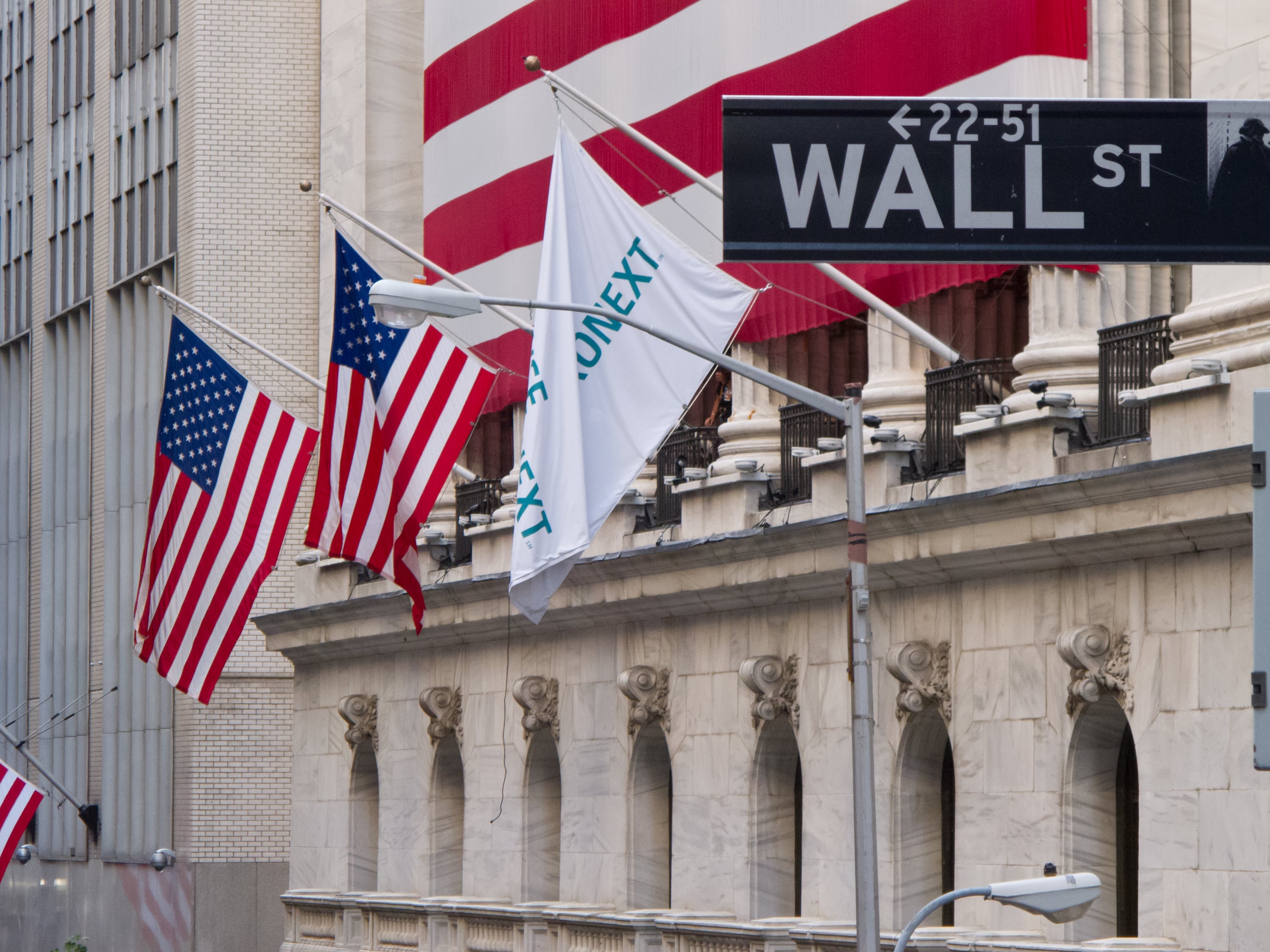
The US wrapped up a volatile week on a high note despite a surge of new coronavirus cases, little prospects of the virus abating over the winter months and, thus, subsequent lockdowns.
Instead, investors have been encouraged on the news of a promising vaccine on the horizon.
However, the real booster for stocks, which helped the S&P 500 notch a record closing high on Friday, comes with the continuation of upbeat earnings reports which have been helping to drive optimism about the economy.
S&P 500 performance to date
- The S&P 500 closed up 1.36% at a new record close for the first time since Sep. 2.
- This week, the S&P 500 closed up 2.16% for its second-straight positive week.
- This year, the S&P 500 is up 10.97%.
Big business is making a lot of money, far more than expected amid the ongoing health crisis. With third-quarter reports released from about 90% of S&P 500 companies, the last quarter was one of the best we have seen in ages.
Very strong earnings announcements from a number of companies have investors hopeful that the economy can continue to recover,
On Friday, Cisco Systems Inc CSCO provided the biggest boost to the S&P500 after its quarterly report showed a work-from-home driven surge in demand.
Coronavirus spreads as vaccine impact fades
Stocks ripped higher last Monday after Pfizer and BioNTech announced trial results that suggested their vaccine candidate could be 90% effective against Covid-19.
The announcement was presumed to mean that the pharmaceutical industry will finally deliver what an optimistic Wall Street was pricing for; A viable way to control a disease that has derailed the US economy for much of 2020 and has killed more than 230,000 Americans.
However, last week, the daily US coronavirus cases also surpassed 150,000 for the first time.
The seven-day average of daily new infections – a measure that investors use to reduce statistical “noise” during any single day – now stands at 131,445, or 32% higher than this time last week, as per an analysis of Johns Hopkins data.
The cumulative US infection count is now 10.55 million and deaths stand at least 242,435.
This is forcing some major parts of the nation back into a lockdown with the local government leaders starting to reintroduce measures to help contain the spread of the disease.
For instance, the New York governor, Andrew Cuomo, has already said that the Empire State’s bars, restaurants and gyms will be required to close at 10 pm each night beginning Friday.
Less than two weeks before many American families celebrate Thanksgiving, New York will also limit indoor gatherings at private residences to no more than 10 people beginning Friday.
The virus situation in the US seems to be completely out of control and the expectations are that the coronavirus will accelerate throughout the winter seasons and before temperatures bottom.
This means that Wall Street will still need to contend with eight long and treacherous weeks ahead despite the positive vaccine news.
Moreover, questions remain.
Firstly, the trial is not complete. In the press release, Pfizer and BioNTech said they had identified 94 cases of COVID-19 among 43,538 trial participants.
The trial will continue until a total of 164 COVID-19 cases are detected, so initial estimates of the vaccine’s effectiveness could still change.
However, the threshold that the US Food and Drug Administration (FDA) says is required for a coronavirus vaccine to be approved for emergency use is just 50% and so far, the trial is proving a 90% success rate.
Meanwhile, we are still uncertain as to the details about the nature of the infections the vaccine can protect against.
The cases of the virus have come in various levels of severities and we are not told whether the vaccine is successful against mostly mild cases of COVID-19 or whether the data also includes significant numbers of moderate and severe cases.
It is also unclear as to whether the vaccine can prevent people who show no or only very mild symptoms of COVID-19 from spreading the coronavirus.
''A transmission-blocking vaccine could accelerate the end of the pandemic. But it will be difficult to determine whether the Pfizer vaccine or others in late-stage trials, can achieve this,'' says Florian Krammer, a virologist at Icahn School of Medicine at Mount Sinai in New York City, who is one of the trial’s more than 40,000 participants.
He argues that it would involve routinely testing trial participants. “You can’t do that with 45,000 people,” he says.
Other matters in question relate to how well the vaccine works in different groups of trial participants, storage, distribution and probably, most importantly, how long the vaccine's effectiveness will last.
“Right now, we need a vaccine that works,” Krammer said, arguing that even if it works for only a few months or doesn’t stop transmission. “That’s what we need in order to get half-way back to normal.”
The rotation to cyclical names
Nevertheless, the markets cheered the vaccine and we have seen a rotation away from tech into cyclical stocks.
The Nasdaq Composite finished in the red for the week as investors ditched technology names stocks that rise and fall with the overall health of the US.
These are known as cyclical stocks and typically include industrials, materials and banks which had paused their rally on Thursday but had begun to outperform again in the premarket session Friday.
These stocks, however, are going to be highly vulnerable in the weeks ahead, considering we still have the worst part ahead of us with regards to the virus spread due to the simple seasonality of such a disease.
''Whether the market will care is another question since the medium-term outlook has obviously brightened due to the vaccine news, but a surging case count over the coming 6-8 weeks and a potential nationwide lock-down in the US surely can’t be seen as good news,'' analysts at Nordea Research have argued.
Politics and the Fed
Meanwhile, earnings season will come to a close this week but it will be pivotal because we hear from some major national retailers and considering the elusive fiscal stimulus package, the Federal Reserve will have a close eye on the US stock market and the economy ahead of December's meeting.
A surprisingly positive story in retail earnings will be a major support for Wall Street which will coincide with Retail Sales economic data for October on 17th November.
Analysts at TD Securities, however, argued that Retail Sales probably slowed in October, even with a boost from Amazon Prime Day—which was in July last year—and the release of a new iPhone—which was in September last year.
''We expect more pronounced weakening in November and December, reflecting the ongoing fading of fiscal stimulus, rising COVID cases and high seasonal adjustment hurdles.''
Besides data, the Fed will be keen to see lawmakers in Washington to finally come up with a stimulus deal before the end of the year to help offset some of the expected additional economic strain from the pandemic.
However, the Trump administration has reportedly offloaded its role in leading stimulus negotiations to Congress which is just leaving Senate Majority Leader Mitch McConnell and House Speaker Nancy Pelosi to re-start discussions after an already months-long impasse.
Battle for the Senate next major catalyst
Meanwhile, although the Trump election challenges have fallen flat in Arizona, Michigan and Pennsylvania, Georgia is heading towards a full manual recount, audit and recanvas.
Georgia also faces a political battle in early January, which could lead to the Democrats taking control of the Senate, not the best news for Wall Street.
Yes, there will be a positive in that, if the Democrats succeed, the likelihood of a huge fiscal stimulus package rises.
However, that then pulls the prospects of an easier Fed for longer rug from under markets and, moreover, you have to wonder what that will mean for corporation taxes and regulation.
Trump’s deregulatory efforts over his term had slashed regulatory and savings reaching into the hundreds of billions according to the White House.
So, with most media outlets predicting a GOP Senate, Wall Street has already shown its preference through the recent gains made in the benchmarks.
However, the Senate race between Democrat Jon Ossof and Republican David Perdue will go to a runoff, NBC News projects, meaning that both seats for the state will be up for grabs in January.
Democrats need to win both races in order to achieve 50 seats and take control of the Senate.
NBC News also called President-elect Joe Biden as the apparent winner in Georgia, while President Donald Trump is the apparent winner in North Carolina.
S&P 500 Index technical analysis
-637410676594014487.png)
From the daily analysis, the air is thin at the top as evident in the daily wicks.
The sellers have filled the bids back to liquidity for a 38.2% Fibonacci retracement and to the support of the 4-hour chart's 21-period moving average:
-637410677811779861.png)
A break below there will open prospects of a run to the 200 4-hour moving average for a full 61.8% Fib retracement.
Author

Ross J Burland
FXStreet
Ross J Burland, born in England, UK, is a sportsman at heart. He played Rugby and Judo for his county, Kent and the South East of England Rugby team.