ISM Services Purchasing Managers' Index December Preview: Business optimism is fine but the dollar needs jobs
- Service sector expansion expected to slow in December.
- Manufacturing PMI was stronger that forecast, employment higher in December.
- Labor economy under pressure from closures, business looks ahead.
- Dollar is tied to the success of job creation.

The US employment recovery is threatening to grind to a halt under the impact of California's strict lockdown and more moderate restrictions in other states but the business community is planning for the expansion that awaits the end of the pandemic.
Purchasing Managers' Indexes (PMI) from the Institute for Supply Management (ISM) are expected to maintain an optimistic outlook in December with the general measure slipping to 54.5 from 55.9 in November. The Employment Index is forecast to drop to 50.7 from 51.5 while the New Orders Index should fall to 54.9 from 57.2. Prices paid will fade to 65.2 from 66.1 in the estimate of economists surveyed by Reuters.
Manufacturing PMI
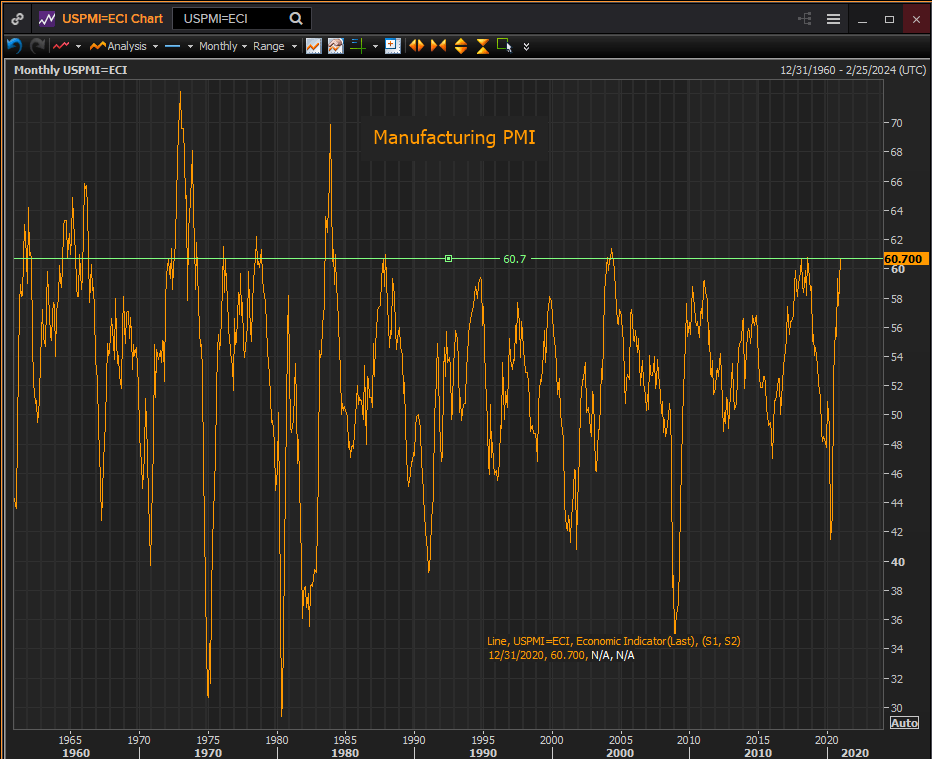
Attitudes among manufacturing executives in December had been expected to drift lower as the pandemic continued to distort the US economy. Surprisingly, every index beat its forecast and improved on the November reading.
The overall index showing business conditions in the entire sector jumped to 60.7 from 57.5 in November, far ahead of the 56.6 prediction. Scores above 60 are extremely rare. In the past 35 years only four months have been higher, 60.8 in August 2018, 61.4 in May 2004, 60.8 in January 2004 and 61.0 in December 1097.
Reuters
The Employment Index rose to 51.5 in December from 48.4, also better than its 50.5 forecast. Except for the 53.2 reading in October, it was the highest level since July 2019.
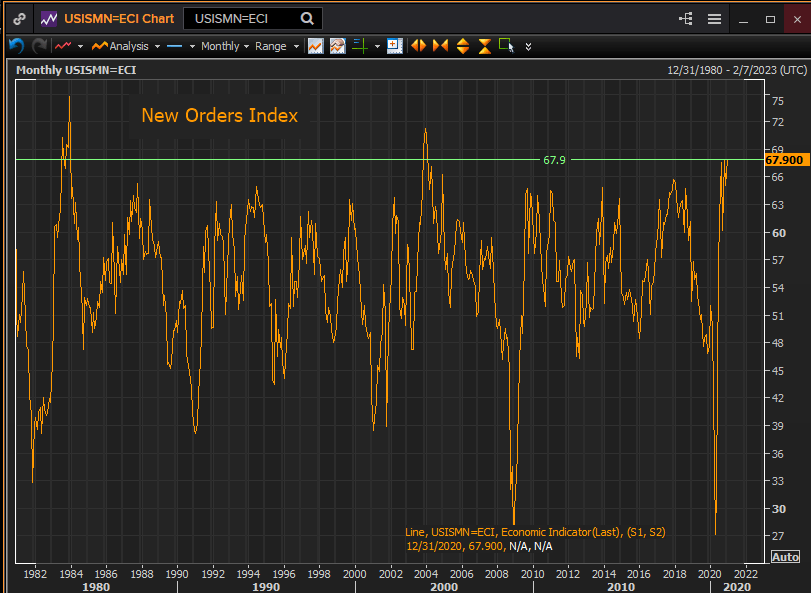
Finally the New Orders Index, a gauge of future business, rose to 67.9 from 65.1, matching the October score and the highest level in 16 years.
Reuters
US labor economy
Hiring and firing in the US economy are heading in the wrong direction as the pandemic restricts business activity in several key states.
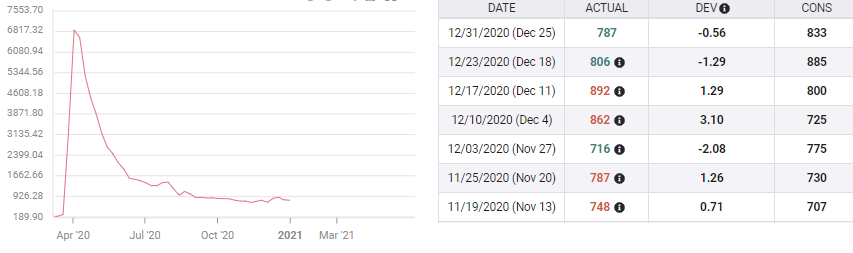
Initial Jobless Claims have climbed almost 100,000 in a month from an average of 740,000 in November to 837,000 in December and are expected to maintain at 833,000 in the first week of January when released on Thursday.
Initial Jobless Claims
Private payrolls in the Employment Change Report from Automatic Data Processing unexpectedly fell 123,000 in December from their 304,000 addition in November, missing the 88,000 forecast by a wide margin.
Nonfarm Payrolls in November at 245,000 were less than half their 661,000 average of the prior two months. Given the performance of other labor market statistics the 100,000 estimate for Friday's December payrolls has to be considered optimistic.
US GDP
Manufacturing executives have a positive attitude because their firms are seeing exceptionally strong new business. This jibes with the economic outlook charted by the Atlanta Fed GDPNow model which estimates an 8.9% annualized pace in the fourth quarter.
Conclusion and the dollar
It has been a grim two months for the US dollar. The EUR/USD rose to its highest level in two-and -a -half years on Wednesday, capping a 6% gain since November 2, as the faltering US labor market punished the greenback.
Wednesday's rise of the 10-year Treasury yield over 1% for the first time since late March combined with the prospect of more stimulus spending from Congress initially gave the dollar a modest boost. The EUR/USD fell 85 points to 1.2265 in New York trading but the dollar rally was short-lived and the pair closed at 1.2329, just points from the day's high.
Since the original collapse in March the labor market has been the key to the US economy and the dollar. That remains true. Business executives may be correct that a recovery is building the next two or three quarters but until robust job creation resumes no PMI figure, no matter how optimistic, will invigorate the dollar.
Author

Joseph Trevisani
FXStreet
Joseph Trevisani began his thirty-year career in the financial markets at Credit Suisse in New York and Singapore where he worked for 12 years as an interbank currency trader and trading desk manager.