Federal Reserve Minutes take pessimistic view of US economy: Is that view already out of date?
- FOMC members at July 28-29 meeting voice concern on depth of virus economic fallout.
- Equities close lower after S&P hits another record, dollar gains slightly.
- Members skeptical about yield curve control, the setting of longer term rates through Treasury purchase and sales.
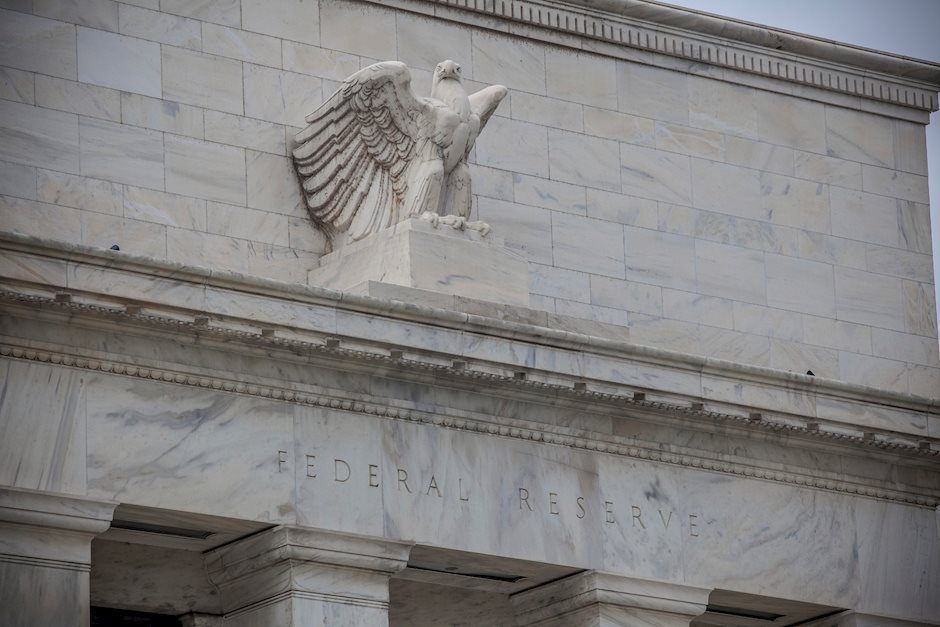

Three weeks are a long time in the current economy. When the FOMC met on July 28 and 29 initial jobless claims had just reversed higher after improving for 16 weeks and rinsing Covid case counts in several states looked likely to send the US back into economic shutdown.
Members were duly pessimistic expressing concerns that the coronavirus would continue to prevent a robust recovery and could possibly present a danger to the financial system. They voted to keep the fed funds rate at its 0.25% upper target and to maintain their purchase and loan programs.
“The information available at the time…suggested that US economic activity had picked up in May and June…but the improvements…were modest relative to the substantial deterioration seen in March and April.”
The first Atlanta Fed GDPNow estimate for second quarter growth released two days after the meeting showed just 11.9% expansion in the third quarter after the 32.9% collapse in the Covid shuttered second.
“Participants observed that uncertainty surrounding the economic outlook remained very elevated, with the path of the economy highly dependent on the course of the virus and the public’s response to it.”
Member noted that although consumer spending had seen a “sizable rebound”, the business sector had seen less improvement in recent months.
Chairman Powell and other Fed officials have said many times since the pandemic began that US banks and financial institutions are in strong shape. Yet some committee members worried that if the virus continued to spread that might produce “more adverse’ scenarios which could put the increased risk on the financial system. A number of members also expressed concern about the rising levels of public debt.
The federal debt is now $26.6 trillion and has climbed $3 trillion since the pandemic began as the government has mandated extensive payments to individuals to and businesses to mitigate the impact of the economic shutdowns.
Economic recovery resumes
Since the late July FOMC meeting new Covid cases and hospitalizations have either dropped substantially in most place or stabilized in a few and economic data has again turned positive.
Initial jobless claims have reversed falling to a pandemic low of 963,000 in the August 7 week. They are expected to drop another 4% to 925,000 when the latest week is released this Thursday.
Initial jobless claims

Business sentiment has also improved markedly with manufacturing PMI rising to 54.2 in July, its best reading since March 2019 with new orders jumping to 61.,5 their highest level since September 2018.
Attitudes were even better in the dominant service sector with the overall outlook reaching 58.1 in July the most optimistic since February 2019 and new orders setting an all-time record at 67.7. Caveat to both were the employment indexes which remained in contraction at 44.3 for manufacturing and 42.1 in services.
Services new orders PMI

Yield curve control
Extending Fed control into the farther reaches of the Treasury market by initiating targets or caps for longer-terms rates, a policy known as yield curve control and to be effected by bond purchases and sales was given a cold shoulder by the members.
Though much discussed in the business media as the next logical step if current interest rate and fiscal policies fail to revive the economy it did not meet with board favor.
“A majority of participants commented on yield caps and targets…as a monetary policy tool. Of those participants…most judged that yield caps and targets would likely provide on modest benefits in the current environment…” and “pointed to potential costs associated with yield caps and targets.”
The Committee’s forward guidance on the fed funds rate “appeared highly credible and longer-term interest rates were already low.” Members noted that “providing greater clarity regarding the likely path of the target range for the federal funds rate would be appropriate at some point.”
Market response
Equities gave up their gains after the FOMC seemed to disallow targeting long-term rates with all three major averages closing in the negative, though the S&P 500 did set another record before retreating.
Treasury yields rose slightly after the release of the minutes with the 10-year closing one point higher at 0.685% and the 30-year adding two points to 1.425%.
The dollar rose modestly on the day with the euro shedding 80 points to 1.1851, the USD/JPY rising 51 points to 105.55 and the USD/CAD finishing at 1.3216 up 47 points from the open.

Premium
You have reached your limit of 3 free articles for this month.
Start your subscription and get access to all our original articles.
Author
Joseph Trevisani
FXStreet
Joseph Trevisani began his thirty-year career in the financial markets at Credit Suisse in New York and Singapore where he worked for 12 years as an interbank currency trader and trading desk manager.