2020 US Elections: Democrats nominate Biden and Harris--Will Trump hatred be enough?
- Democrat’s virtual convention nominates Joe Biden and Kamala Harris.
- Republican’s to choose Donald Trump and Mike Pence August 24-August 27.
- Conventions traditionally mark the start of the fall election campaign.
- Democrats attack Trump on character and performance, promising decency, competence and leadership.

The Democratic approach to the presidential election is defensive.
It is a risky strategy to cap off four years of non-stop opposition to the Trump administration and criticism of the president by presenting Joe Biden as a model of character and leadership and proposing little in the way of new economic and social policies.
Given the peculiarities of the candidate and of Biden’s arrival at the nomination, it may be the Democrats only option.
Speaker after speaker at the convention stressed the imperative that Donald Trump must be defeated. From former President Barack Obama and First Lady Michelle Obama to the master of ceremonies for the virtual production actress Julia Louis-Dreyfus, the need to prevent a second Trump term was the Democrats theme, repetition and rallying cry.
In his acceptance speech Biden offered a standard list of Democratic priorities, protecting the health care system, repealing Trump’s tax cuts, investing in renewable energy and creating jobs, and blamed Trump for the economic collapse from the coronavirus pandemic. Mr. Biden said that his character and experience would heal the country from the divisions of the last four years.
The establishment choice
Joe Biden has been in Washington for 47 years. He was first elected to the Senate in 1973. This is his third run for the Presidency and except for the candidacy of Bernie Sanders it would undoubtedly have ended after his fifth place finish in the New Hampshire primary in February.
Mr. Sanders, the self-proclaimed socialist senator from Vermont, had the most delegates and the strongest momentum and barring the all-out effort by the party organization in the South Carolina primary would have made it to the summer convention in a commanding position for the nomination.
Fearing a repeat of the 1972 McGovern landslide loss to Nixon, an election that also took place in an atmosphere of domestic political turmoil and violence, the party elders essentially awarded the nomination to Biden and convinced Sanders to withdraw and endorse him.
Kamala Harris, the California Senator chosen by Biden as his vice-president had a similarly unsuccessful run at the nomination. Touted by many analysts early in the campaign as the most likely to succeed and granted substantial funding by her supporters, Ms Harris flamed out spectacularly, withdrawing from the race two months before the first vote in the Iowa caucuses.
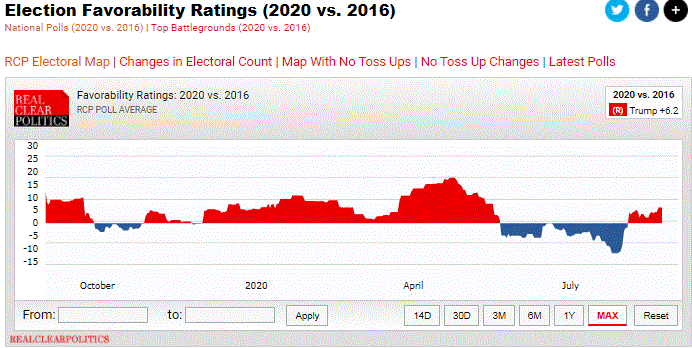
Within their own party’s primary base Biden and Harris elicited little genuine enthusiasm or devotion. Presenting them to the far more diverse and questioning national electorate and hoping for the passion that Obama and Trump routinely generate and often wins elections is a wish of the first order.

Biden in history and politics
Biden is the perfect representative of the DC establishment.
His long history in the capital and five decades of pronouncements on a variety of controversial political topics, from long-ago friendships with segregationist senators to his support of strict criminal laws under Clinton, are likely to dim the enthusiasm of the party’s base and possibly impact the African-American vote essential for Democratic national success. For many of Bernie Sander’s passionate supporters the senator’s economic program and his opposition to the Washington equation between corporations and political power is far more important than removing Trump.
Biden and the Democrats unwillingness to criticize the rioters in Portland, Seattle, New York and other cities who have now taken to marching through suburban neighborhoods at night demanding the residents give up their homes as payment for racism, is a perfect foil for the Trump campaign’s insistence on law and supporting the police.
Mr. Biden and his son Hunter’s questionable financial activity in China and the Ukraine is another vulnerability. His involvement in the Obama administration’s spy operations against the Trump campaign in 2016 being investigated by US Attorney John Durham will be used by the Trump campaign as a blatant plank in their DC corruption scaffold.
The Democratic base is static
Neither Biden nor Harris expands Democratic appeal beyond the party’s existing constituencies.
Biden’s shopworn working-class image is overlaid by five decades in Washington. The working-class Pennsylvania world of his youth has long since been gutted by the economic policies of a generation of DC politicians of both parties.
Harris’s left-wing policy credentials, despite her penchant for long criminal sentences as California Attorney General, are exemplary. Her support for open immigration and the Green New Deal of socialist representative Alexandria-Ocasio-Cortez are not going to win any converts outside of college towns and urban liberals who are already enlisted.
Donald Trump won in 2016 because he brought just enough working-class voters to the Republican Party for the first time with his message of economic nationalism. As surprising as that was to the national media it was not an unexpected gift to the Trump campaign but a deliberate strategy. It was an opening in the electorate that no other candidate and very, very few analysts had seen.
Is Trump hate enough?
The Democrats are virulently anti-Trump, they have been for five years. This is nothing new and except for their base, that message will provide no reason for anyone else to vote for Biden.
The problem for the Democrats is that their disgust for Trump has, in many public instances, become indistinguishable from a far more radical hatred for the country itself. Burning the American flag, rioting and tearing down statues is very poor electioneering.
Convincing the electorate that their candidate will provide a better future may be passé in this overly emotional year, but by eschewing substantive economic and political arguments for Trump-is-evil the Democrats leave almost every other issue that voters care about, employment, crime and political violence in the cities, defunding the police, immigration and the disavowal of American history and heroes as racist, to the untender mercies of the Trump campaign.
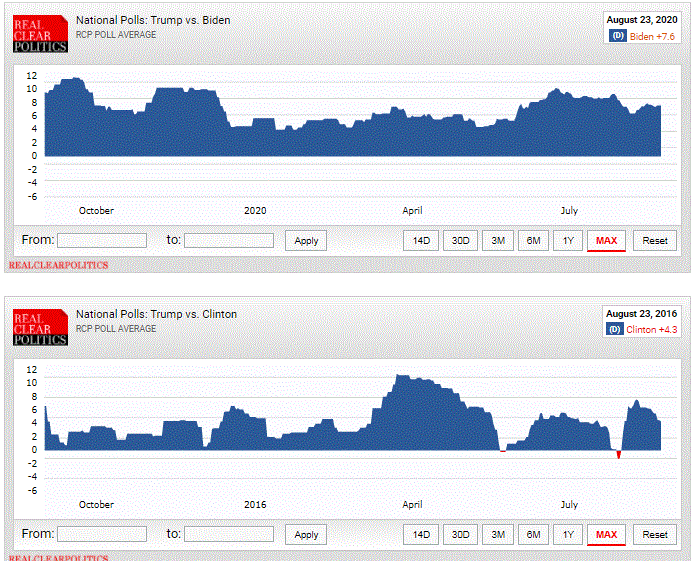
In 2016 Clinton lost because she could not conceive of losing. In thinking that their hatred of Trump is enough to ensure victory, the Democrats of 2020 may be making a nearly identical mistake.
Clinton and Biden vs Trump
Please see our other 2020 US campaign pieces:
2020 US Elections: Kamala Harris set to damage Donald Trump's chances in five ways
2020 US Elections: The economic edge is for the taking
2020 Elections: Trump is losing his economic edge, for three robust reasons
2020 US Elections: See you in September
2020 US Elections: Be careful of judging the campaign before it starts
2020 US Elections: China, Iran and the hope for a Biden presidency
2020 US Elections: China is rooting for Trump, five reasons and market implications
2020 US Elections: Three reasons why Biden's lead over Trump is far greater than Clinton's in 2016
2020 US Elections: Trump loss, split Congress is what markets want, most likely scenario out of four
2020 US Elections: The electorate and the market are a one way street until the Fall
2020 US Presidential Elections: Timetable for trading the political event of the year
Author

Joseph Trevisani
FXStreet
Joseph Trevisani began his thirty-year career in the financial markets at Credit Suisse in New York and Singapore where he worked for 12 years as an interbank currency trader and trading desk manager.
















