WTI trades with modest gains below $79.00 mark, close to over one-month low set on Friday
- WTI attracts some buyers on Monday amid the US politics-inspired modest USD downtick.
- Geopolitical risks also lend support to Oil prices, though China’s economic woes cap gains.
- Friday’s breakdown and close below the 50-day SMA warrants caution for bullish traders.
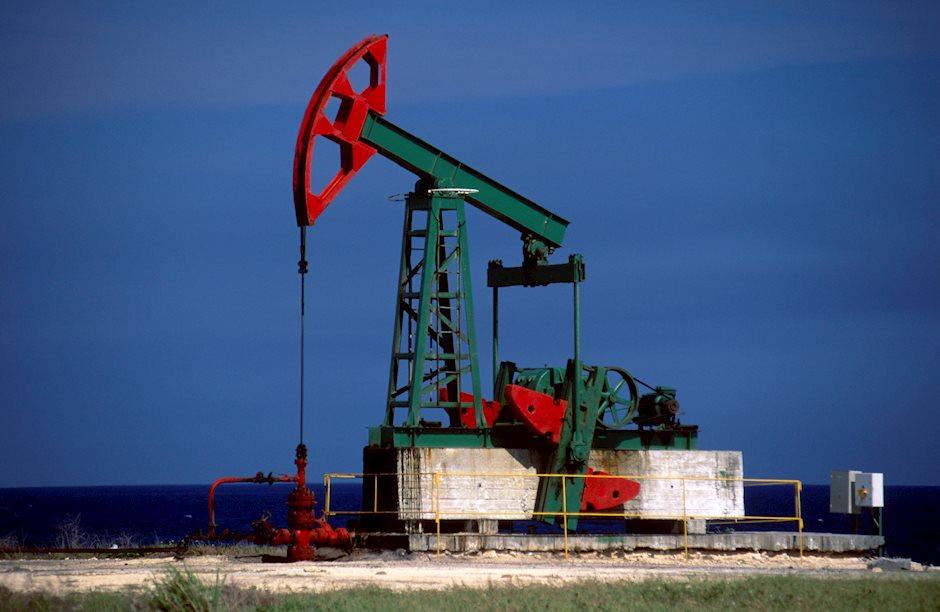

West Texas Intermediate (WTI) US crude Oil prices kick off the new week on a positive note and reverse a part of Friday's heavy losses to the $78.50-$78.45 region, over a one-month trough. The commodity currently trades around the $78.85 region, up nearly 0.50% for the day, though lacks strong follow-through buying.
US President Joe Biden announced his exit from the presidential race on Sunday, prompting investors to unwind trades betting on a Trump victory. This comes on top of growing acceptance that the Federal Reserve (Fed) will begin its rate-cutting cycle in September and caps the recent US Dollar (USD) recovery from a multi-month low touched last week. This, in turn, is seen lending some support to the USD-denominated commodities, including Crude Oil prices.
Apart from this, concerns about supply chain disruption due to the protracted Russia-Ukraine war and the ongoing conflicts in the Middle East further act as a tailwind for the black liquid. Meanwhile, the initial market reaction to the US political development, however, turns out to be limited, which is evident from a modest USD bounce from the daily low. This, along with China's economic woes, should keep a lid on any meaningful upside for Crude Oil prices.
Even from a technical perspective, Friday's close below the 50-day Simple Moving Average (SMA) could be seen as a fresh trigger for bearish traders. Moreover, oscillators on the daily chart have just started gaining negative traction and suggest that the path of least resistance for the commodity is to the downside. Hence, any subsequent move up could be seen as a selling opportunity and runs the risk of fizzling out rather quickly in the absence of any relevant US macro data.
WTI Oil FAQs
WTI Oil is a type of Crude Oil sold on international markets. The WTI stands for West Texas Intermediate, one of three major types including Brent and Dubai Crude. WTI is also referred to as “light” and “sweet” because of its relatively low gravity and sulfur content respectively. It is considered a high quality Oil that is easily refined. It is sourced in the United States and distributed via the Cushing hub, which is considered “The Pipeline Crossroads of the World”. It is a benchmark for the Oil market and WTI price is frequently quoted in the media.
Like all assets, supply and demand are the key drivers of WTI Oil price. As such, global growth can be a driver of increased demand and vice versa for weak global growth. Political instability, wars, and sanctions can disrupt supply and impact prices. The decisions of OPEC, a group of major Oil-producing countries, is another key driver of price. The value of the US Dollar influences the price of WTI Crude Oil, since Oil is predominantly traded in US Dollars, thus a weaker US Dollar can make Oil more affordable and vice versa.
The weekly Oil inventory reports published by the American Petroleum Institute (API) and the Energy Information Agency (EIA) impact the price of WTI Oil. Changes in inventories reflect fluctuating supply and demand. If the data shows a drop in inventories it can indicate increased demand, pushing up Oil price. Higher inventories can reflect increased supply, pushing down prices. API’s report is published every Tuesday and EIA’s the day after. Their results are usually similar, falling within 1% of each other 75% of the time. The EIA data is considered more reliable, since it is a government agency.
OPEC (Organization of the Petroleum Exporting Countries) is a group of 13 Oil-producing nations who collectively decide production quotas for member countries at twice-yearly meetings. Their decisions often impact WTI Oil prices. When OPEC decides to lower quotas, it can tighten supply, pushing up Oil prices. When OPEC increases production, it has the opposite effect. OPEC+ refers to an expanded group that includes ten extra non-OPEC members, the most notable of which is Russia.
Author
Haresh Menghani
FXStreet
Haresh Menghani is a detail-oriented professional with 10+ years of extensive experience in analysing the global financial markets.