|

Pound Sterling Price News and Forecast: GBP/USD faces challenges due to rising risk-aversion sentiment

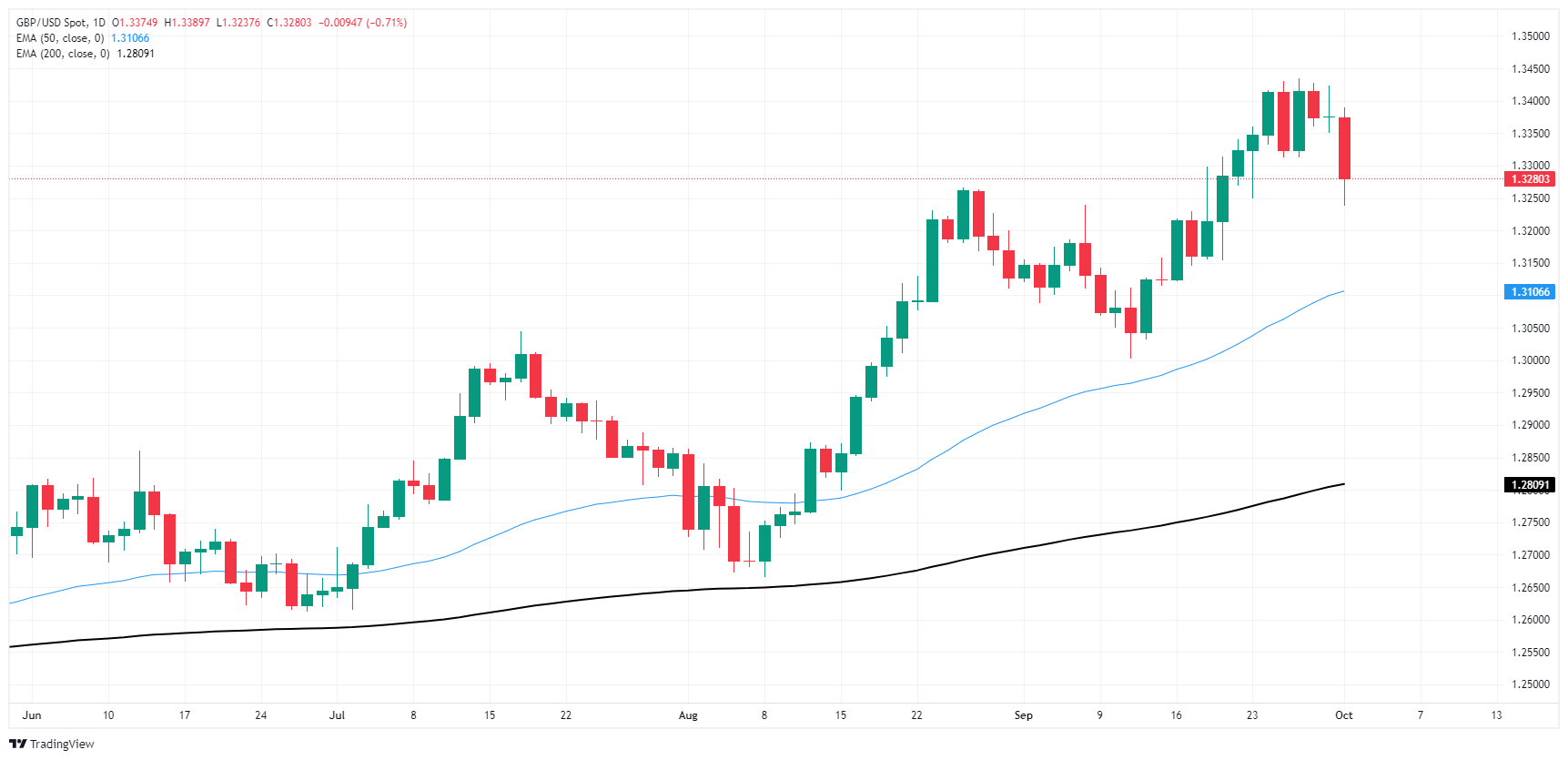
GBP/USD remains below 1.3300 as risk aversion grows due to rising geopolitical tensions

GBP/USD remains tepid following the losses registered in the previous session, trading around 1.3280 during the Asian hours on Wednesday. This downside could be attributed to the risk aversion due to the rising geopolitical tensions in the Middle East, which undermines the risk-sensitive Pound Sterling (GBP) and GBP/USD pair.

Iran launched over 200 ballistic missiles at Israel on Tuesday, shortly after the US had warned that a strike was imminent. The Israel Defense Forces reported that several of the missiles were intercepted, while reports indicated that one person was killed in the West Bank, according to Bloomberg. Read more...

GBP/USD tumbles on war-wary Tuesday

GBP/USD took a tumble on Tuesday, backsliding to its lowest bids in over a week after US ISM Purchasing Managers Index (PMI) figures misfired and broadly missed forecasts. Geopolitical tensions took center stage during the US market session, further plunging risk appetite lower following reports that Iran has fired on Israel in a clear escalation of ongoing Middle East tensions.

The economic calendar remains relatively free and clear on the Pound Sterling side, with GBP traders forced to wait until the Bank of England’s (BoE) Monetary Policy Report Hearings, due early Thursday. On the US side of things, a trickle of meaningful-in-the-aggregate yet individually meaningless economic data litters the landscape on the road to Friday’s Nonfarm Payrolls (NFP), and investors are grappling with middling releases that are routinely missing the mark. Read more...
Author

FXStreet Team

Composed of a group of economic journalists and FX experts, the FXStreet content team produces and oversees all content published on FXStreet. It provides a purely journalistic approach to the Forex market.


More from FXStreet Team
Share:

Editor's Picks

AUD/USD seems vulnerable near 0.6800, 10-month low amid bullish USD

AUD/USD languishes near a 10-month low during the Asian session on Friday, awaiting a break below 0.6800 before the next leg up amid a bullish US Dollar. Firming Fed rate-hike expectations, along with fading hopes for US-Iran diplomacy, help the USD hold gains at its highest level since April 2025. Moreover, the RBA’s dovish tilt undermines the Aussie and backs the case for further losses.

USD/JPY bulls turn cautious near 160.00 amid intervention risks

USD/JPY enters a bullish consolidation phase around its highest level since early September as bulls turn cautious amid intervention risk near 160.00. Meanwhile, the downside seems cushioned as the wide US-Japan interest rate gap keeps the Yen carry trade active. Furthermore, the possibility of a jumbo Fed rate hike and Middle East uncertainties hold the US Dollar near a 19-month top, supporting the currency pair.


Gold struggles below $3,900 ahead of US PPI data

Gold  trims its gains on Friday after briefly climbing above $3,900. The metal fell to $3,852 on Thursday, its lowest level since October 2025. Hawkish remarks from Federal Reserve (Fed) officials have fueled bets on an extended period of monetary policy tightening, lifting the US Dollar (USD) and Treasury yields and leaving the metal down more than 4% so far this week.

Bitcoin just posted five straight losing weeks, and the storm may not be over yet

Bitcoin is struggling to find support, slipping below $70,000 as multiple headwinds threaten to push the Crypto King lower. The much-anticipated “Uptober” rally failed to materialize, with persistent selling pressure and widespread liquidations instead reinforcing the “Rektober” narrative.

Week ahead – Fed Minutes, inflation data and Nvidia earnings to guide investors

Fed minutes may add to hawkish tone as bets of 50-bps hike grow. Nvidia to report earnings as bar to impress high after spy scandal. Trade and geopolitics to be focal point of Trump-Xi summit.

What the US CPI headline doesn’t tell you about inflation

Brent crude has fallen about a third since mid-October on hopes the Iran war is ending, but diesel, freight and fertiliser costs haven't followed. Those costs reach US consumer prices in stages through 2027 and could keep inflation high after gasoline gets cheaper.