NZD/USD kick-starts the week with a gap down to sub-0.5700 zone following RBNZ’s QE
- NZD/USD fails to hold onto recovery gains.
- RBNZ announced the purchase of $30 billion NZGBs.
- Coronavirus continues to spread in the US while situations in Italy and Spain also worsen.
- Fed’s Bullard anticipates Q2 GDP drop to a record 50%, Unemployment Rate might surge 30%.
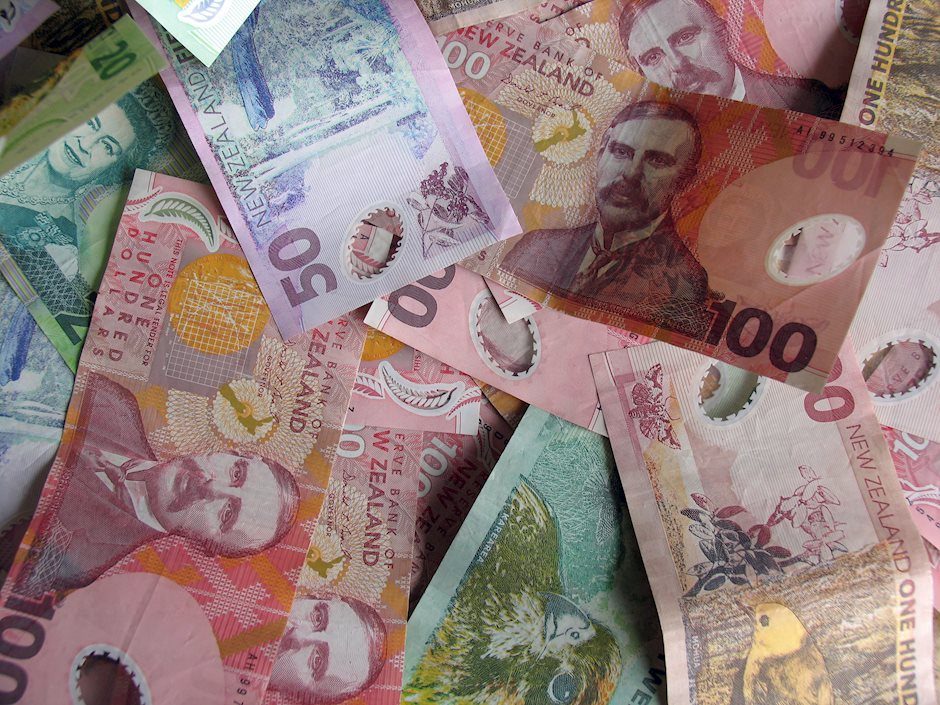

NZD/USD seems to recover losses, currently at 0.5677, after tanking down to 0.5670 as the Asian markets open for trading on Monday. The pair’s initial reaction could be traced to the RBNZ’s stimulus program while the following recovery could have taken clues from the Fed member’s downbeat comments. The Trump administration, including President Donald Trump, is about to start a press conference and any surprises can move the markets.
Read: What you need to know for the open: COVID-19 lockdown and world recession looms
The RBNZ will purchase $30bn of New Zealand Government Bonds (NZGBs) with a range of maturities across the yield curve over the next 12 months, with purchases starting this week.
Although the RBNZ’s Governor Adrian Orr reiterated the calls of no further rate cuts in his NZ media write-up on Sunday, his signals to “act further with more firepower in reserve” already hinted the stimulus during the weekend. Also increasing the odds of such a move was the RBNZ’s Assistant Governor Christian Hawkesby.
While the current stimulus is considered huge as compared to the market expectations of $15-20 billion, this also pushes back the need for further rate cuts and hence strengthening the Kiwi in the short-term.
Also supporting the pair could be the comments from the St. Louis Federal Reserve President James Bullard who expect the second quarter (Q2) GDP to shrink by 50% in addition to the surge in Unemployment Rate to 30% due to the current coronavirus pandemic.
It should be noted that the spike in the cases and the death toll in the US, near 24,000 and 306 respectively, makes it the third most infected nation after Italy and China. The epidemic in the world’s largest economy is already showing signs on the economic figures, with the latest Jobless Claims’ surge.
Read: Coronavirus update: Italy reports almost 800 deaths, Russian army to send military help
The Trump administration earlier signaled to come out with a huge economic response to the deadly virus but so far there is no sign of it. Though, the clues of it being higher than initially thought, last expected around $2 trillion, seems to limit the greenback’s declines.
Global markets are bearing the burden of the coronavirus outbreak and the risk-tone remains heavy. While the RBNZ’s move may offer short-term help to the commodity-linked currency, the virus impact is less likely to be mitigated. Investors will seek clues of the US stimulus for fresh impulse.
Technical Analysis
Despite the latest downtick, the recent candlestick formations on the daily chart suggest sellers’ exhaustion, which in turn can trigger fresh buying once the quote manages to cross an eight-day-old falling trend line, currently near 0.5900. Meanwhile, a sustained downside below 0.5600 will recall the bears targeting the sub-0.5500 area.
Author
Anil Panchal
FXStreet
Anil Panchal has nearly 15 years of experience in tracking financial markets. With a keen interest in macroeconomics, Anil aptly tracks global news/updates and stays well-informed about the global financial moves and their implications.