Nvidia stock recovered on Friday as coming chip curbs on China seem less strict
- Bloomberg reports that new chip curbs on China might be less strict.
- The rules are set to be released next week by the outgoing Biden administration.
- Equipment makers like Lam Research and Applied Materials are said to be less affected.
- NVDA stock rose more than 2% on Friday after falling most of the week.
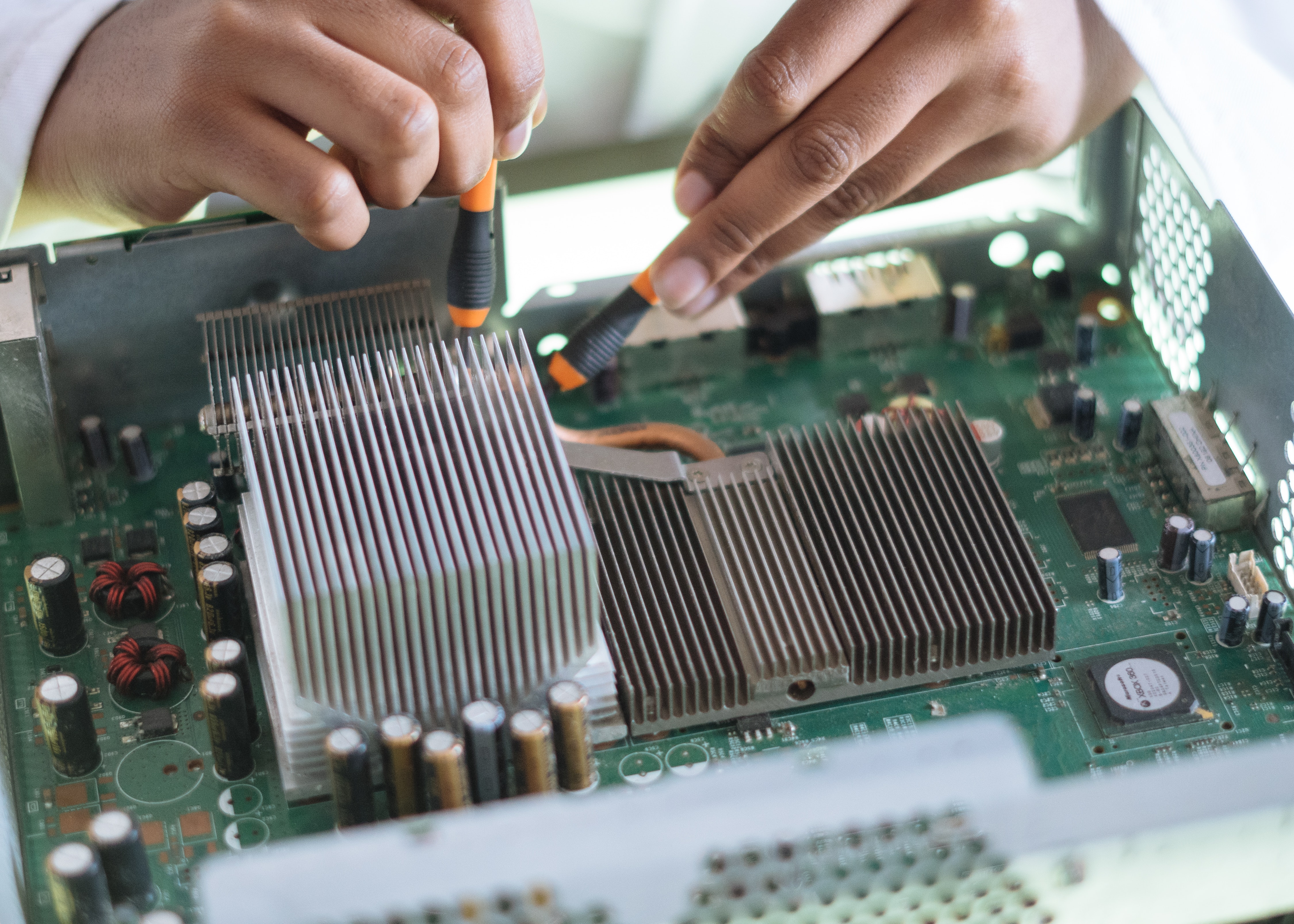
Following a dismal week of trading for Nvidia (NVDA), shares of the leading designer of chips used in artificial intelligence (AI) computing rose more than 2%. The basis for the market’s renewed interest is a Bloomberg article showing that government curbs on advanced chip sales to the Chinese market might be watered down compared with earlier predictions.
The Dow Jones Industrial Average (DJIA), of which Nvidia is a member, advanced 0.42% as the wider market gained ground. This was about half the advance of the NASDAQ on Friday.
Nvidia stock news
A Bloomberg article on Friday reported that Biden administration officials had watered down a harsher earlier version of a final executive order for limiting China’s access to certain chips and equipment used to make those chips.
Originally, a total of six suppliers to Huawei were to be added to a trade restriction list. However, ChangXin Memory Technologies has now been stricken from that list, according to anonymous sources in the Bloomberg story. Others may not make the list either.
ChangXin is working on making AI-enabled memory technologies. Officials in Washington have faced intense lobbying from US chip equipment makers, as well as other important firms in the Netherlands and Japan, according to the article.
Those foreign firms are said to be Tokyo Electron and ASML, but also US firms KLA Corp (KLAC), Applied Materials (AMAT) and Lam Research (LRCX). The latter US firms had said earlier versions of the rules would put them at an unfair disadvantage.
The new rules, expected to be released next week by the outgoing Biden administration, would also place new curbs on Chinese chip equipment makers instead of Chinese chip makers. This would allow the chip makers to continue buying equipment from US manufacturers.
Taiwan’s Foxconn has recently denied that it will face major headwinds from proposed tariffs stemming from the incoming Donald Trump administration. One of the world’s largest contract manufacturers, Foxconn is currently building a large plant in Mexico to fabricate Nvidia’s GB200 AI servers.
President-elect Trump has said he wishes to add 25% tariffs to goods coming from Mexico but then seemed to change his mind after a call with Mexico’s new leader, President Claudia Sheinbaum.
Though it might not be related, Foxconn spent more than $30 million to procure new land and factory buildings in Texas this month.
Nvidia stock forecast
After trending lower most of the week following last week's earnings induced sell-off, Nvidia stock took back some of those losses. NVDA stock lost 2.65% for the week, which was much better than it looked around lunchtime on Wednesday. The previous week they chalked up a new all-time high of $152.89 in the leadup to earnings.
Following Wednesday's Doji daily candlestick, Friday's gains could mean that next week turns into another rally back toward that all-time high. The low $130s now look like support and NVDA is back above the 50-day Simple Moving Average (SMA). If next week sees more weakness, then the 100-day SMA near $126 sits right below for comfort.

NVDA daily stock chart
Author

Clay Webster
FXStreet
Clay Webster grew up in the US outside Buffalo, New York and Lancaster, Pennsylvania. He began investing after college following the 2008 financial crisis.

















