|

AUDUSD Price Analysis: A deceleration opens risk of a break to 0.6650 and below

  • AUDUSD bears are lurking below 0.6750 for the open. 
  • 0.6620 and 0.657 are guarding the 0.6550 target area.

As per the prior analysis heading towards the final sessions for the week, AUDUSD Price Analysis: Bears hold the fort at a 50% mean reversion, the price indeed was held off by the bears for a test into the 0.64 figure and a touch below as follows:

AUDUSD prior analysis
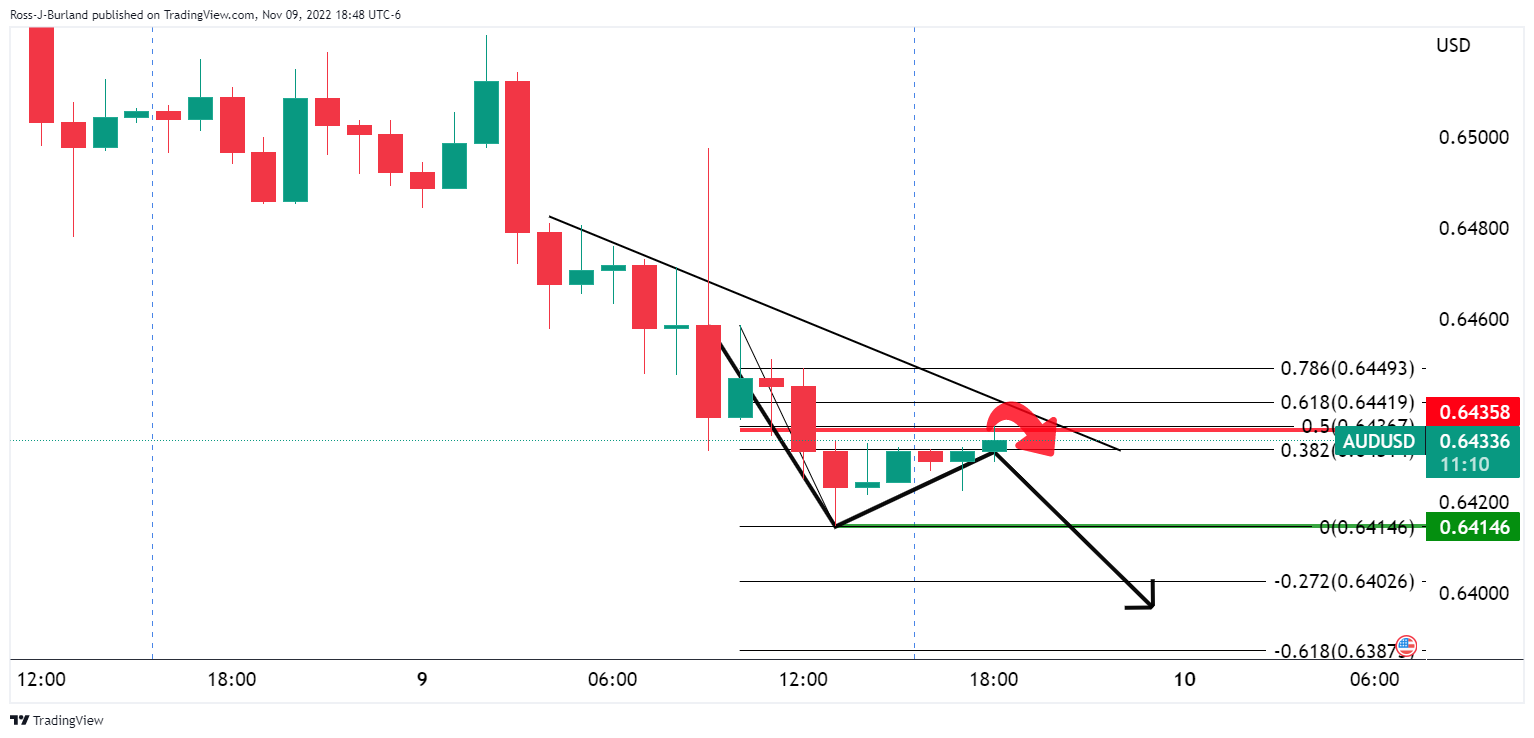
The analysis explained that the bears were still in play on the hourly chart while below the 50% mean reversion level.  There were prospects of a downside extension to test 0.6400 the figure as illustrated above, unfolding as follows:
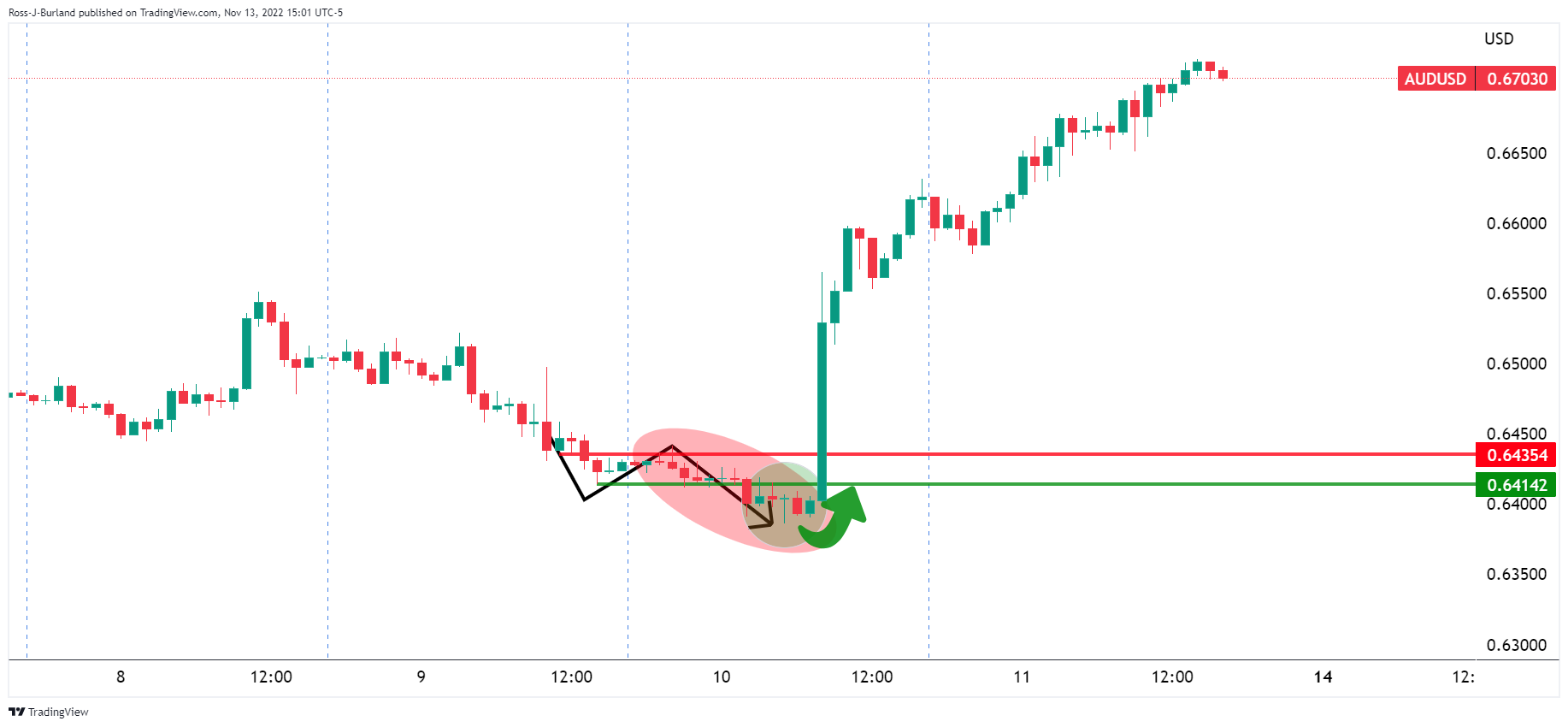
AUDUSD outlook

AUDUSD weekly chart
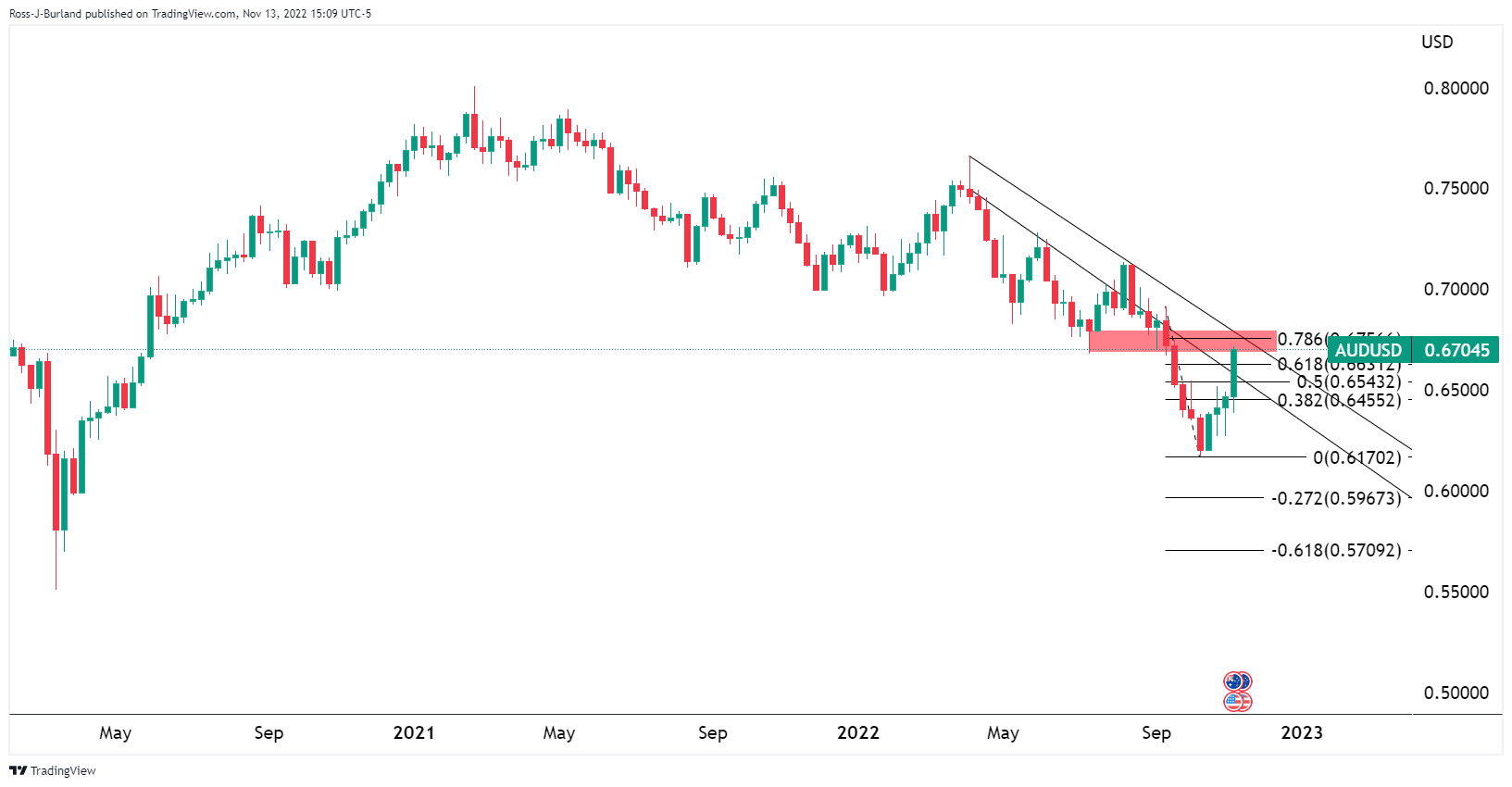
From a weekly perspective, the price is meeting a critical area of resistance and the downside is up for grabs in the open. While there are prospects of a move higher, deeper into the resistance, any deceleration in the correction could be an opportunity for the bears for the opening sessions this week. 

AUDUSD daily chart

With the price in resistance, as it stands, a support zone around 0.6550 is eyed as a downside target while on the front side of the bearish trend. 

AUDUSD H4 chart
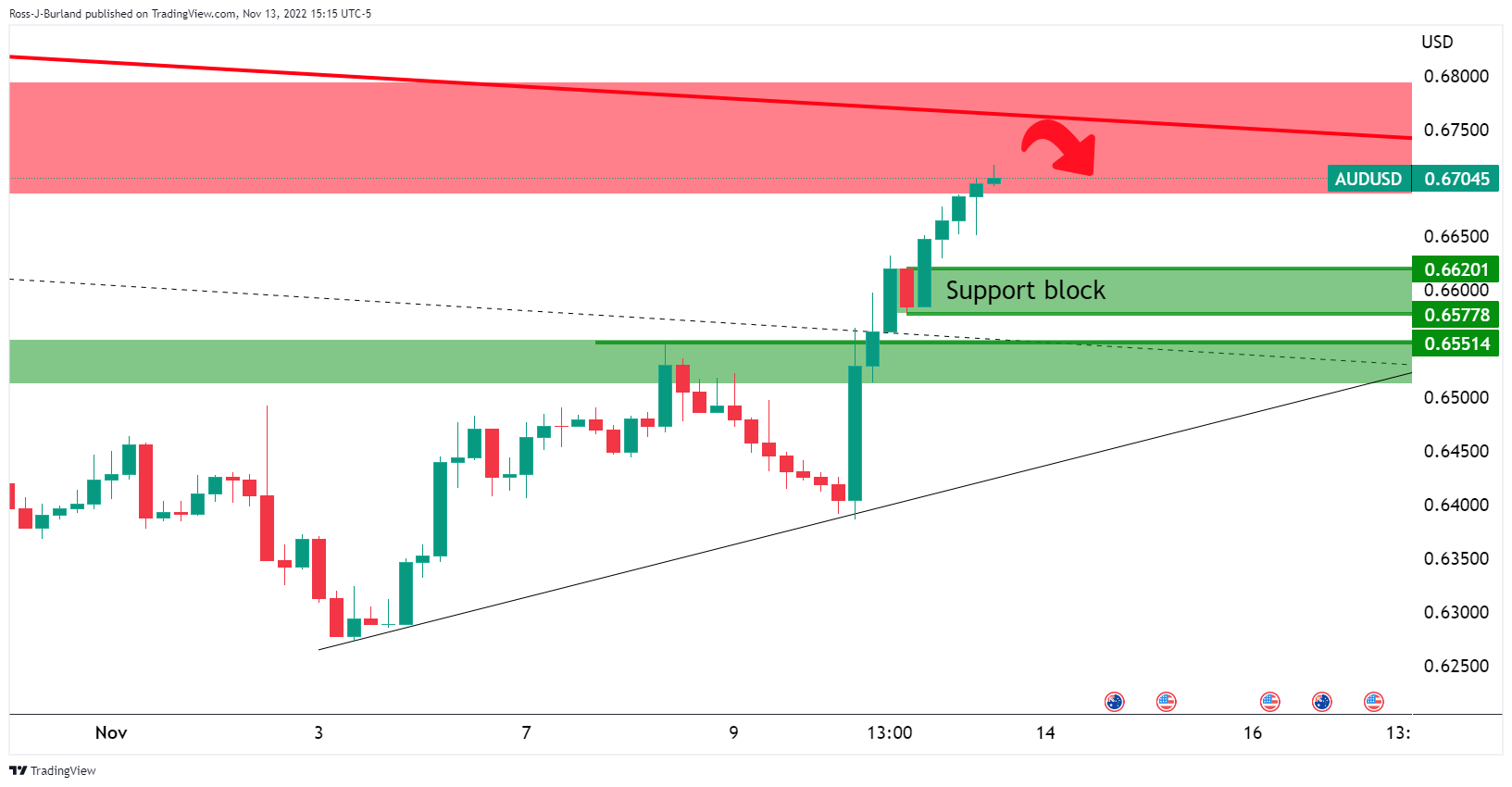
The 4-hour chart shows the support block located at 0.6620 and 0.6577, guarding the 0.6550 target area.

AUDUSD H1 chart
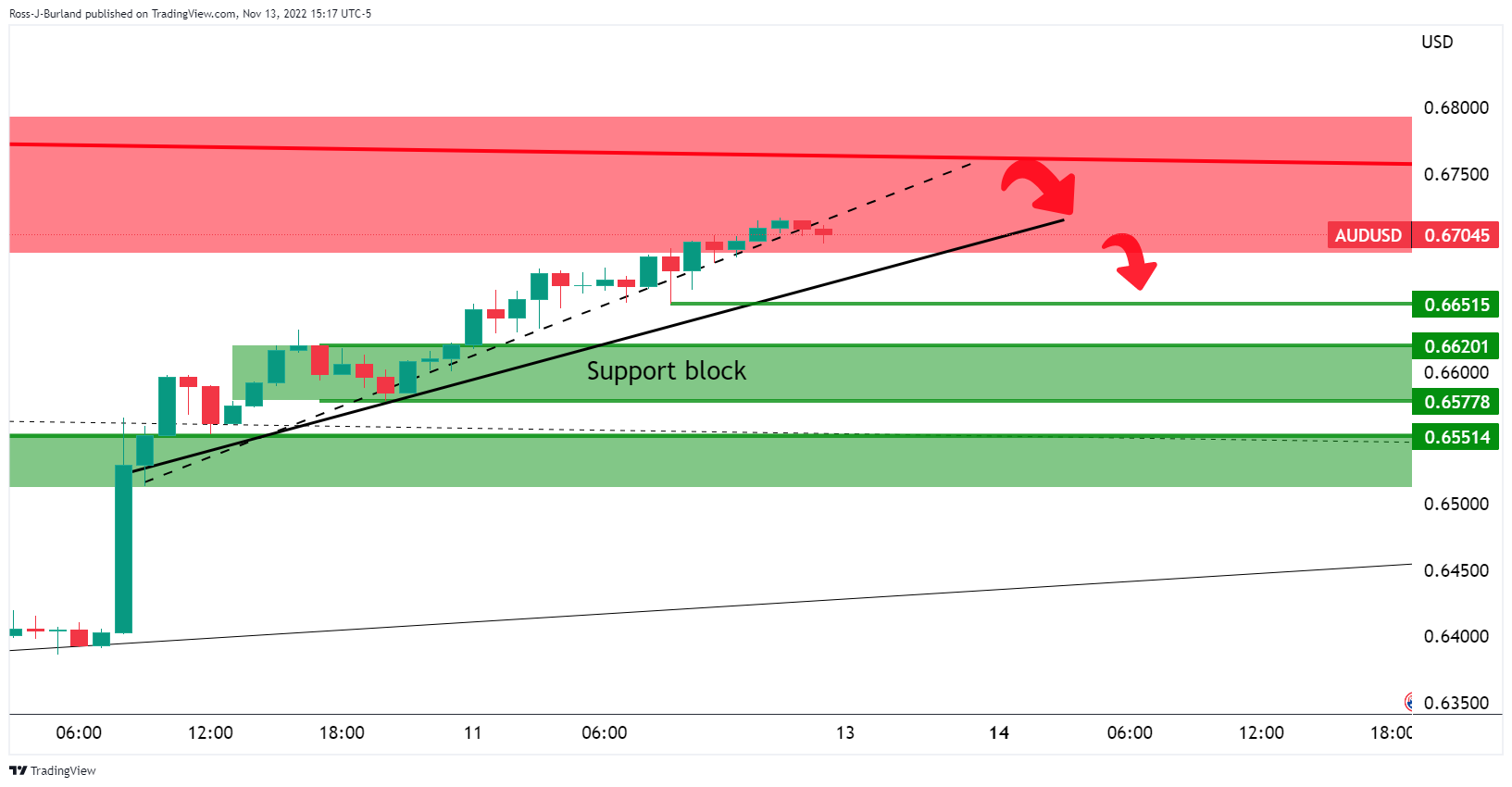
The price is decelerating on the hourly chart on the break of the micro trendline and hourly close below it. However, there is some way to go until the 0.6650s below the next support line, although bears will be lurking in the open this week while the price remains below 0.6750, tempted to face tests above.

Author

Ross J Burland

Ross J Burland, born in England, UK, is a sportsman at heart. He played Rugby and Judo for his county, Kent and the South East of England Rugby team.


More from Ross J Burland
Share:

Editor's Picks

AUD/USD picks up bids above 0.7100 after RBA-speak

AUD/USD picks up bids above 0.7100 in the Asian session on Tuesday, following hawkish comments from RBA Assistant Governor Sarah Hunter and Governor Michele Bullock. However, escalating tensions in the Middle East and the Fed's hawkish outlook remain supportive of the bullish US Dollar undertone, which could limit the pair. The crucial Trump-Xi summit is later this week and remains in focus.

USD/JPY holds small gains near 157.50 as JPY intervention risks loom

USD/JPY posts modest gains while trading near 157.50 in the Asian session on Tuesday as intervention fears help limit losses for the Japanese Yen. However, the BoJ's dovish rate hike to a 31-year high keeps JPY bulls on the back foot. Meanwhile, the US Dollar retains a bullish undertone amid the Fed's hawkish outlook and escalating Middle East tensions, providing tailwinds for the pair.

Gold  battles $4,300 amid hawkish Fed, Iran risks

Gold turns lower for the second consecutive day following a modest intraday uptick, challenging the $4,315 region, or a three-day low in the European session on Tuesday. The US Federal Reserve's hawkish outlook is seen as a key factor driving flows away from the non-yielding yellow metal.

Bitcoin pauses rally as profit-taking reaches yearly high

Bitcoin takes a breather, facing a pullback, trading below $85,500 on Tuesday after surging 6.7% the previous day. Strong institutional demand supports the bullish price action, with spot Bitcoin Exchange Traded Funds recording nearly $1 billion in inflows on Monday and Strategy adding 950 BTC to its treasury.

Energy and risk markets remain in the driver’s seat
US stock markets rallied up 2.26% (Nasdaq) yesterday with AI/tech names leading the advance. The Nasdaq even tested the all-time high reached early June. The likes of the S&P 500 and EuroStoxx50 recovered up to 1.5%. Positive risk vibes and lower energy prices supported consolidation on bond markets following the past month’s heavy losses. European yield curves bull steepened.
BoJ Recap: Not as hawkish as expected

The Bank of Japan (BoJ) raised its short-term interest-rate target to 1.25% from 1.00% in a 7-2 vote, marking another step in the normalisation of monetary policy and widely matching what everyone has been expecting for weeks.