Top 5 meme coins: Dogecoin, Shiba Inu, Pepe, Dogwifhat and Bonk extend losses
- Dogecoin, Shiba Inu, Pepe, Dogwifhat, and Bonk extend losses following Bitcoin's drop to around $58,000.
- Meme coins have observed a decline in on-chain activity.
- Meme coin market capitalization shrinks to $40 billion on Monday.
Meme coins erased 6% of their market capitalization in the last 24 hours, down to $40 billion per CoinGecko data. The shrinking market capitalization reflects the “fear” among crypto traders.
Alternative.me’s Crypto fear and greed index reads 25 on Monday, signaling “extreme fear” among traders. Two market movers are likely driving the changing sentiment, alongside macro factors this week.
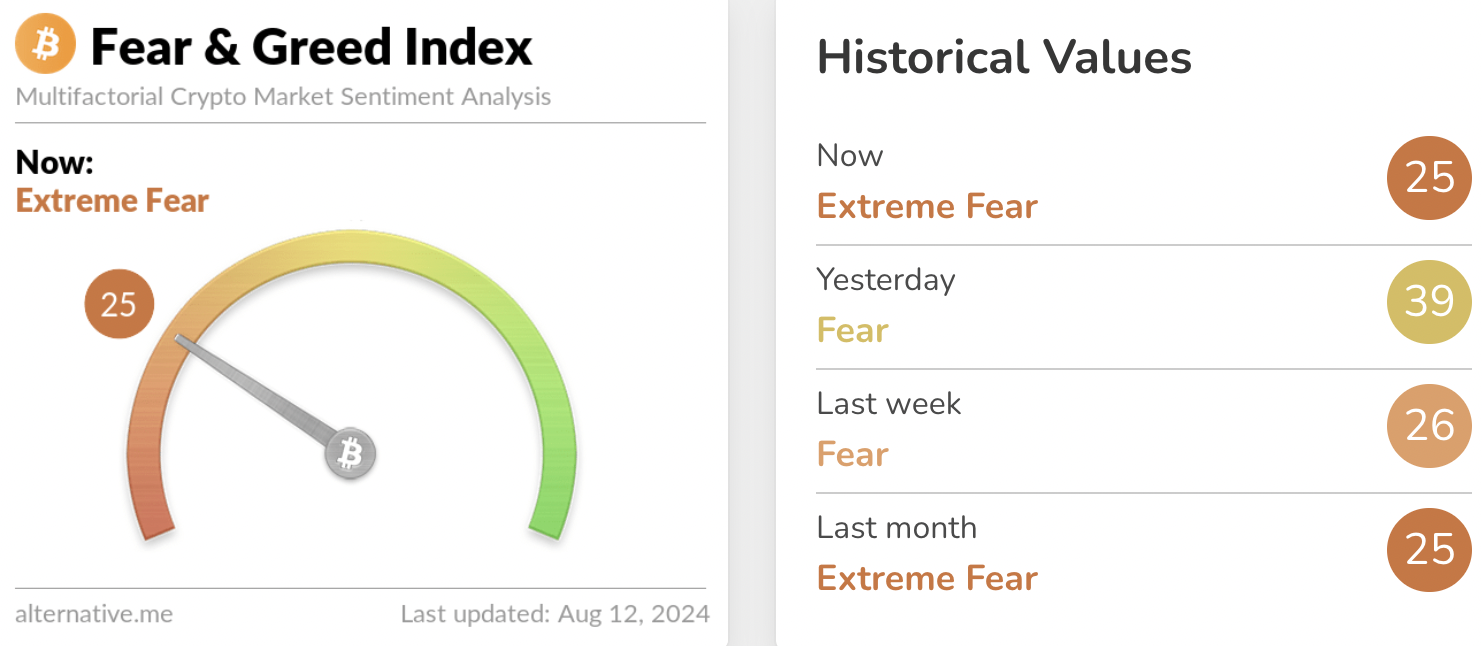
Crypto fear and greed index
Meme coins extend losses on Monday
The top five meme coins ranked by market capitalization include Dogecoin (DOGE), Shiba Inu (SHIB), Pepe (PEPE), Dogwifhat (WIF) and Bonk (BONK). These five tokens erased between 6% and 9% of their value in the last 24 hours, per CoinGecko data.
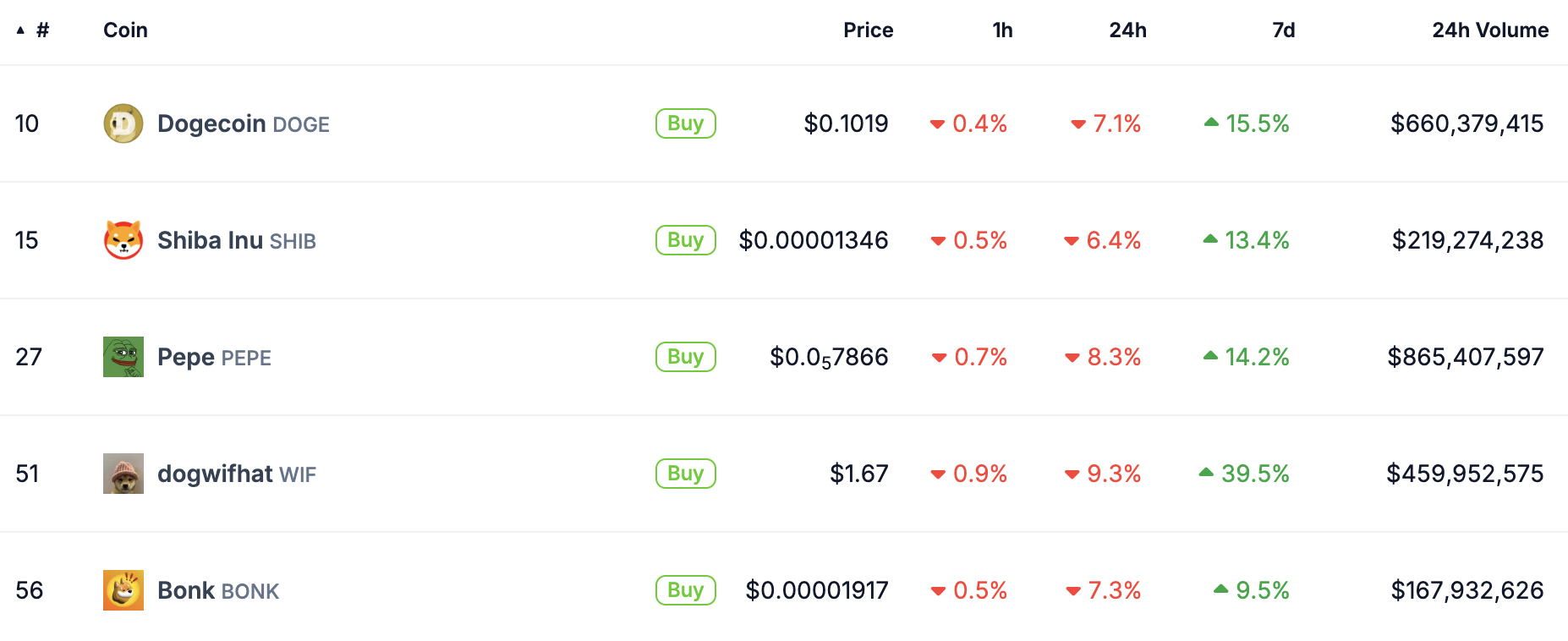
Meme coin price change
Meme coins are the leading narrative in the ongoing market cycle, which has been termed as the “meme coin supercycle. The sector outperformed others consecutively in the first two quarters of 2024.
Meme coin launchpads like Pump.fun and Moonshot have recorded a large number of launches as the asset category gains popularity.
Data from Dune Analytics shows only 0.12% of the meme coin launches on Pump.fun made it past $60,000 in market capitalization (in the last 24 hours) and a listing to the decentralized exchange Raydium. The alarming numbers show the state of meme coins and investments in the category.
1.4% of Pump.fun’s 1.58 million meme coins that have been listed on the DEX since its inception were listed on a DEX. Nearly 99% of the projects failed or ended up in a “pump and dump” scheme. The chart below shows the number of projects launched and the successful ones (that were listed on an exchange.)
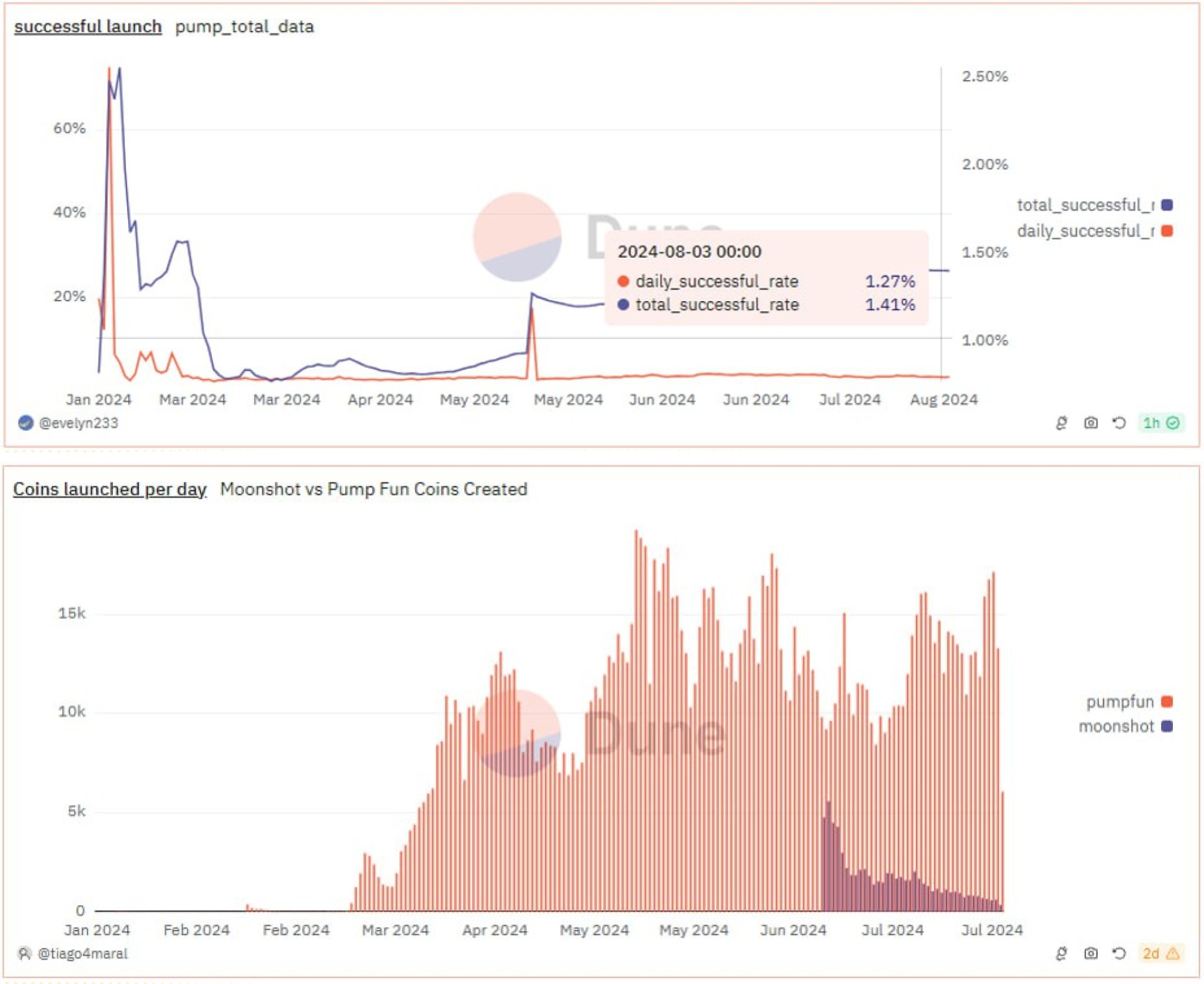
Successful launch and coins launched per day
Declining on-chain activity signals traders’ loss of interest
Santiment data shows that active addresses in the 24 hour timeframe declined in top meme coins. A drop in on-chain activity is a sign of a loss of interest from market participants. This can be attributed to last week’s crypto crash, the drop in Bitcoin’s price under $60,000, and an overall decline in capital inflow to the meme coin category.
 [13.53.33, 12 Aug, 2024]-638590503913055620.png)
Active addresses 24-hour for SHIB, DOGE, and PEPE
At the time of writing, the sentiment among crypto traders is that of “extreme fear”, and Bitcoin ranges below $60,000. On Monday, BTC trades at $58,883, DOGE trades at $0.1038, SHIB at $0.00001376, PEPE at $0.00000817, WIF at $1.730 and BONK at $0.00001967.
Cryptocurrency prices FAQs
Token launches like Arbitrum’s ARB airdrop and Optimism OP influence demand and adoption among market participants. Listings on crypto exchanges deepen the liquidity for an asset and add new participants to an asset’s network. This is typically bullish for a digital asset.
A hack is an event in which an attacker captures a large volume of the asset from a DeFi bridge or hot wallet of an exchange or any other crypto platform via exploits, bugs or other methods. The exploiter then transfers these tokens out of the exchange platforms to ultimately sell or swap the assets for other cryptocurrencies or stablecoins. Such events often involve an en masse panic triggering a sell-off in the affected assets.
Macroeconomic events like the US Federal Reserve’s decision on interest rates influence risk assets like Bitcoin, mainly through the direct impact they have on the US Dollar. An increase in interest rate typically negatively influences Bitcoin and altcoin prices, and vice versa. If the US Dollar index declines, risk assets and associated leverage for trading gets cheaper, in turn driving crypto prices higher.
Halvings are typically considered bullish events as they slash the block reward in half for miners, constricting the supply of the asset. At consistent demand if the supply reduces, the asset’s price climbs. This has been observed in Bitcoin and Litecoin.
Author

Ekta Mourya
FXStreet
Ekta Mourya has extensive experience in fundamental and on-chain analysis, particularly focused on impact of macroeconomics and central bank policies on cryptocurrencies.