PancakeSwap forks Uniswap V3: Are copycats like OHM Forks making a comeback?
- PancakeSwap, a popular DEX, upgraded to its Version 3 on BNB and Ethereum chains through a fork of Uniswap V3.
- Blockchain developers raise concerns of increased vulnerability to attacks, reminiscent of OHM forks.
- UNI is currently rallying, it remains to be seen whether the gains are sustainable in the long-term.

Decentralized exchanges have long practiced “forking” of protocols for easy access and “copy-paste” code to power DEXes in the short-term. PancakeSwap’s Version 3 launch on the BNB and Ethereum chain was powered by a fork of Uniswap V3.
The move garnered criticism from blockchain developers in the community and raised the issue of “security” of DEXs, since duplication exposes multiple platforms to the same threat.
Also read: Ethereum Improvement Proposal EIP-4844 turns experts bullish, will ETH price rally?
PancakeSwap forked Uniswap V3 for Version 3 launch on BNB and Ethereum chain
PancakeSwap, one of the most popular DEXs in the DeFi ecosystem forked Uniswap’s V3 for its Version 3 launch. PancakeSwap V3 was rolled out on BNB and Ethereum chain, and gained $128.86 million in Total Value Locked (TVL) since its launch.
1/14 GM ev3ryone! The anticipated #PancakeSwapv3 is now LIVE on both BNB Chain and Ethereum!
— PancakeSwapEv3ryone's Favourite D3X (@PancakeSwap) April 3, 2023
Upgrade offers:
Lowest fees in the industry
Increased fee earnings for liquidity providers
️New tools for seamless user experience
Read more : https://t.co/l7GQVxqVC3 pic.twitter.com/5G9TnFzxOb
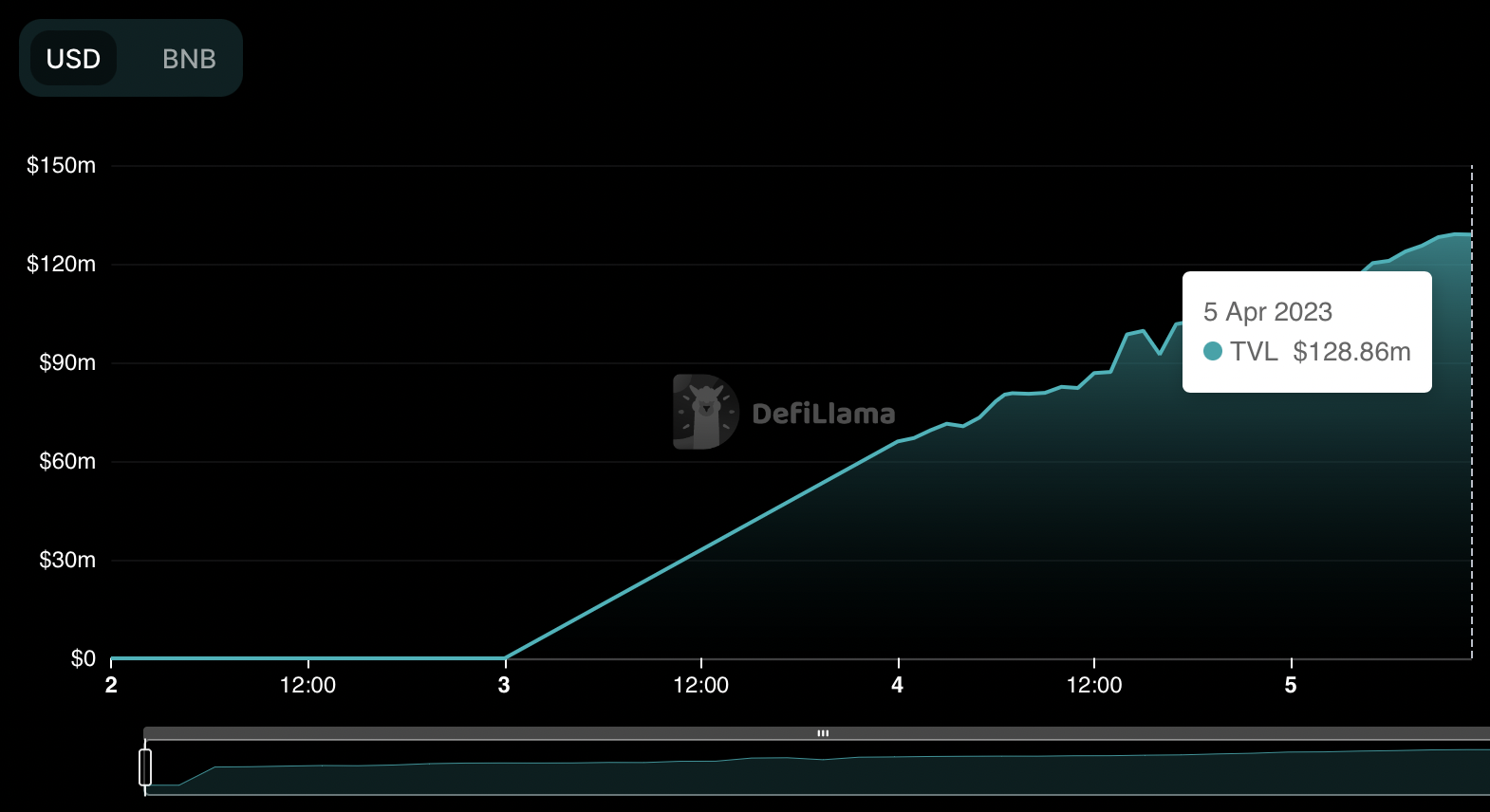
PancakeSwap V3 TVL
PancakeSwap’s forking of the largest DeFi DEX Uniswap reminds experts of the DeFi summer of 2022 and OHM forks, which ended up in rug pulls for several market participants.
There is a good and bad side of PancakeSwap forking UNI’s DEX. Uniswap has over 26,600 daily active users as of January 2023. The number of active users and the DEXs’ functionality could bring benefits to CAKE’s ecosystem.
However, the dark side of “copy-paste” DEXs was the OHM forks of 2022. A copy-paste of the code without essential due diligence could result in security threats and loopholes that malicious actors could exploit.
What were the OHM forks of the past
OHM forks are considered catalysts of DeFi 2.0 and the inspiration for metaverse projects. In 2021-22, forks of Olympus DAO’s codebase were used to obtain the liquidity of the protocol, instead of relying on DeFi’s practice of “yield farming.”
Yield farming is the practice of locking up tokens for a fixed period of time and earning a yield through staking. Olympus DAO’s success made it the focal point of several forked projects that sprung up through the summer.
Some of the most popular OHM forks of the time were Wonderland (TIME), Klima DAO (KLIMA), Rome DAO (ROME), Snowbank (SB), Hector DAO (HEC), Spartacus (SPA), Invictus (IN) and TaiChi DAO (TAC).
Wonderland (TIME), a fork of OHM’s contract, was launched in the Avalanche ecosystem. The project’s contract was sniped at launch, raising questions on whether anything was “inherently wrong” with Wonderland. A group of insiders/ DeFi friends funded the launch and sniped the contract after being part of the core group of TIME.
Several users were rug pulled (lost their funds) in a similar manner, when they picked projects based on lucrative Annual Percentage Yields (APY).
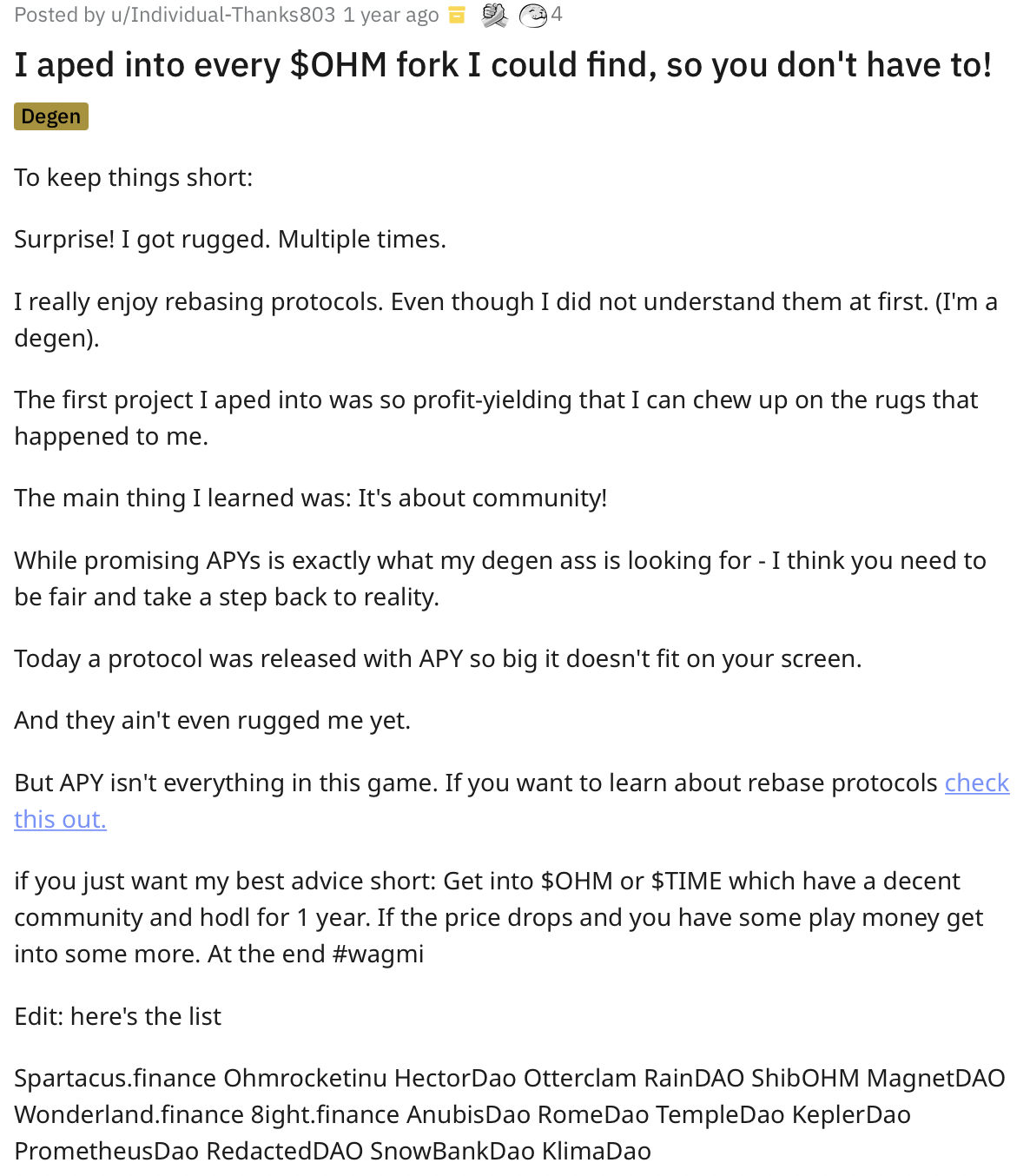
OHM forks that suffered rug pull
Prior to OHM forks, 2020 was filled with the launch of DeFi food-themed protocols like SushiSwap, BurgerSwap, Yam Finance, Bakery Swap, among others. Influencers and analysts warned crypto traders farming for yields on the BNB chain as Bakery Swap resulted in losses for several retail market participants.
1/Reminder to be careful when farming on Binance Smart Chain. As I said, it's managed by only one team & is not decentralized. Built on #BSC, #BakerySwap caused huge losses for many retail investors <12h after mining began, which led to protests against BSC in China & elsewhere. https://t.co/BVvXeANN2s
— OKX Intern (@okx_intern) September 15, 2020
Binance CEO CZ commented on the trend in DeFi in a recent tweet, addressing Uniswap’s fork by PancakeSwap’s team.
We need more DEXs. Pancake has most of the users. Uni has most of the TVL. That's still "too centralized"... (I know, imagine that coming from me. ) Need more options.
— CZ Binance (@cz_binance) April 5, 2023
PancakeSwap v3 Now Live on BNB Chain, Ethereum https://t.co/tARoeCCr4m
Is PancakeSwap’s V3 launch the start of a new trend?
DeFi’s food-themed projects in 2020, OHM forks of 2021-22 and now Uniswap V3 forks is likely the new trend in Decentralized Finance. CAKE price witnessed a correction and started its recovery soon after. The launch of PancakeSwap V3 turned out to be a “non-event” for CAKE holders, unlike the V2 launch, which was a “sell-the-news.”
Uniswap’s UNI token continued rallying, yielding nearly 5% gains for holders since April 5, as the protocol got forked by PancakeSwap. It remains to be seen how sustainable UNI’s gains are in the long-term.
Author

Ekta Mourya
FXStreet
Ekta Mourya has extensive experience in fundamental and on-chain analysis, particularly focused on impact of macroeconomics and central bank policies on cryptocurrencies.