New lawsuit claims Solana’s SOL is an unregistered, centralized security
- A class-action lawsuit was filed against Solana in the Northern District of California claiming SOL is an unregistered, centralized security.
- The lawsuit’s outcome is expected to have a significant implication on Solana and the broader crypto ecosystem.
- Solana announced its Breakpoint Conference 2022, in association with Jump, calling developers and community to build on its blockchain.

Solana has been slammed with a lawsuit claiming SOL is an unregistered security. The plaintiff claimed that Solana’s SOL token is a centralized security and insiders profited immensely while retail traders suffered losses. Despite news of the lawsuit, Solana announced its largest event of 2022, the Solana Breakpoint Conference, is now scheduled for November.
Also read: Solana steals spotlight from Ethereum, leads way in DAOs, NFTs
Solana hit by class-action lawsuit for sale of unregistered securities
A California resident, Mark Young, is bringing a class-action lawsuit for the sale of unregistered securities against Solana. The lawsuit was filed on July 1, 2022, in a district court for the Northern District of California by law firms Roche Freedman LLP and Schneider Wallace Cottrell Konecky.
The lawsuit targets Solana Labs, the Solana Foundation and Solana co-founder Anatoly Takovenko, Multicoin Capital Management and co-founder Kyle Samani, and FalconX. These entities and individuals are accused of selling unregistered securities in the form of SOL from March 24, 2020.
Defendants made enormous profits through the sale of SOL securities to retail investors in the United States in violation of the registration provisions of federal and state securities laws, and the investors have suffered enormous losses
according to the plaintiff’s lawsuit.
The lawsuit accuses Anatoly Yakovenko of lending over 11.3 million SOL in April 2020 and failing to disclose this information to the public. Solana Labs informed investors that SOL supply would be reduced by this amount but burnt only 3.3 million tokens. This is considered a “deliberately misleading statement.”
Lawsuit claims Solana is not decentralized
The lawsuit filed against Solana Labs, co-founders and associated institutions and firms argues that as of May 2021 insiders held 48% of SOL supply. The Solana network is, therefore, highly centralized.
With over 1,000 validators, Solana is considered highly centralized when compared to blockchains like Ethereum.
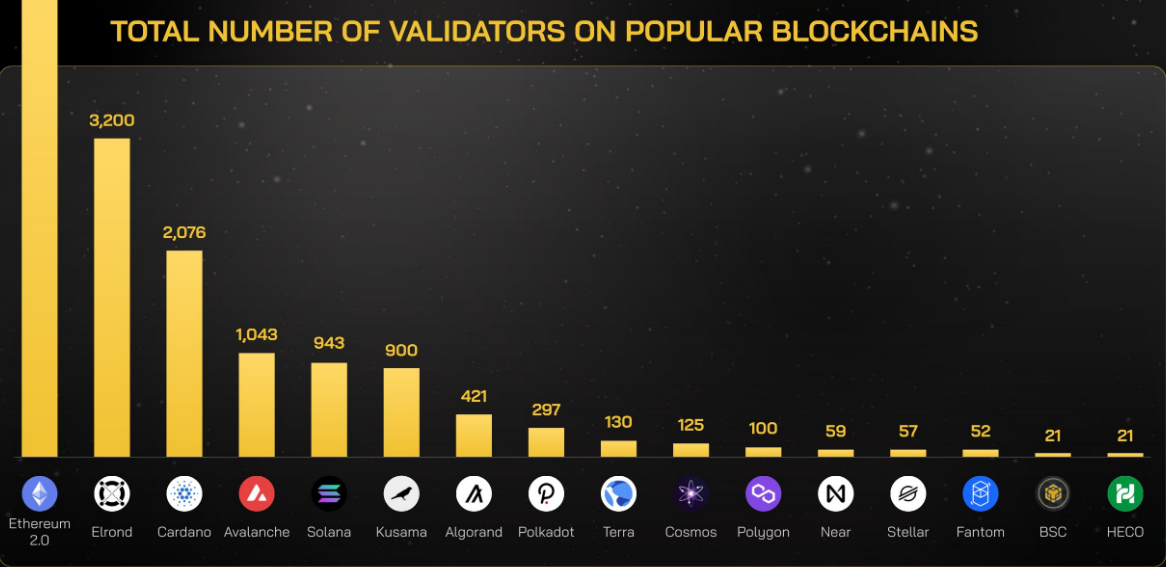
Total number of validators on popular blockchains as of May 2022
Solana announces Breakpoint Conference 2022 and Hacker House events
Solana has come together with Jump to organize Hacker House events worldwide ahead of the Breakpoint Conference on November 4-7 in Lisbon, Portugal. Solana invites the community of holders, builders and developers to come together, host and attend meetups to get involved in the next phase of development on the blockchain.
Solana’s Hacker House events have given birth to several projects that are busy building solutions on the Ethereum-killer’s blockchain. The Breakpoint Conference will host talks about the future of Solana and where the altcoin is headed.
1/ It’s time to get back on the Road to #SolanaBreakpoint — by building.@Solana x @Jump_ Hacker Houses are doing a new tour in the lead up to @SolanaConf this fall. Learn, network, and build on the road!
— Solana Hacker House | Paris July 15-19 (@hackerhouses) July 7, 2022
The road goes through... https://t.co/ifGZmyL3y6
Analysts believe Solana price could rally to $50
Analysts at FXStreet believe Solana price started a large move after recovering from the slump. Solana price is targeting $50, and analysts predict a continuation of the altcoin’s uptrend. Solana price is up 15% over the last week, and the altcoin is likely to continue its climb.
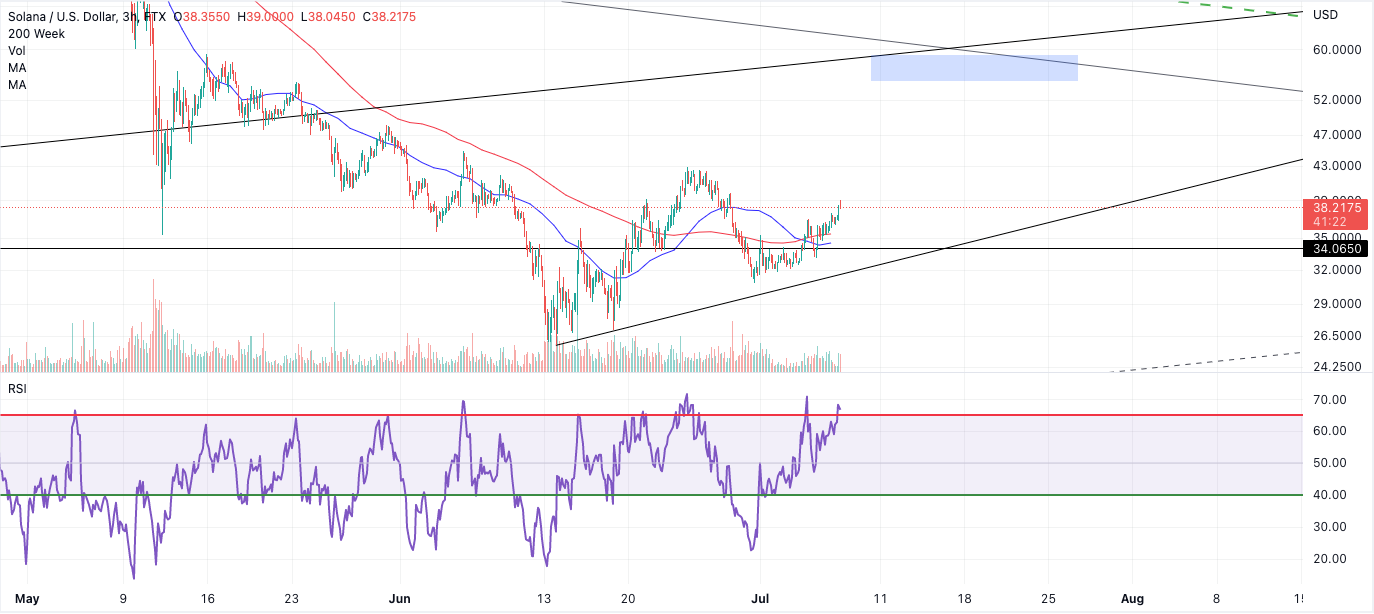
SOL-USD price chart
For key price levels and targets in Solana’s uptrend, check this video:
Author

Ekta Mourya
FXStreet
Ekta Mourya has extensive experience in fundamental and on-chain analysis, particularly focused on impact of macroeconomics and central bank policies on cryptocurrencies.