FTX demands intervention from bankruptcy court over $440 million Robinhood shares
- FTX lawyers asked the judge overseeing its insolvency to block creditors’ access to Robinhood’s shares.
- BlockFi and another FTX creditor have been attempting to seize control over these assets.
- FTX former head, Sam Bankman-Fried, was also attempting to control the shares before being arrested.

FTX, led by the current CEO, John Ray, is working with the bankruptcy court but not without facing any troubles. The latest in the mix is the ownership over the Robinhood shares tied to Alameda Research, FTX’s sister company.
FTX claims Robinhood shares
FTX, in a court filing on Thursday, demanded intervention from a US bankruptcy court over the ownership of $440 million worth of Robinhood shares. Since the exchange’s bankruptcy, the shares that are attached to Alameda Research have been eyed by multiple entities, including FTX’s creditors.
BlockFi, along with another FTX creditor, has been trying to get their hands on these shares in a separate court filing in New Jersey and Antigua. Both of these entities have been claiming entitlement over the shares in order to recover their debts.
In addition, Bankman-Fried also attempted to take control of the 56 million shares in total. However, he was arrested on fraud charges by the Bahamian authorities on December 11 before his plans could go any further. According to FTX, the former CEO’s request in the Antigua court for the Robinhood shares has been made to help in paying his legal bills.
Thus, FTX lawyers requested the bankruptcy court judge overseeing the exchange’s insolvency to block creditors’ access to the Robinhood shares until the true ownership is determined, which FTX claims is theirs.
FTT price spikes from all-time low
FTT price noted an uptick on Thursday after slipping below the $1 mark to form a new all-time low at $0.832. Rising by 17.03% in 24 hours, FTT could be seen trading at $0.973 at the time of writing.
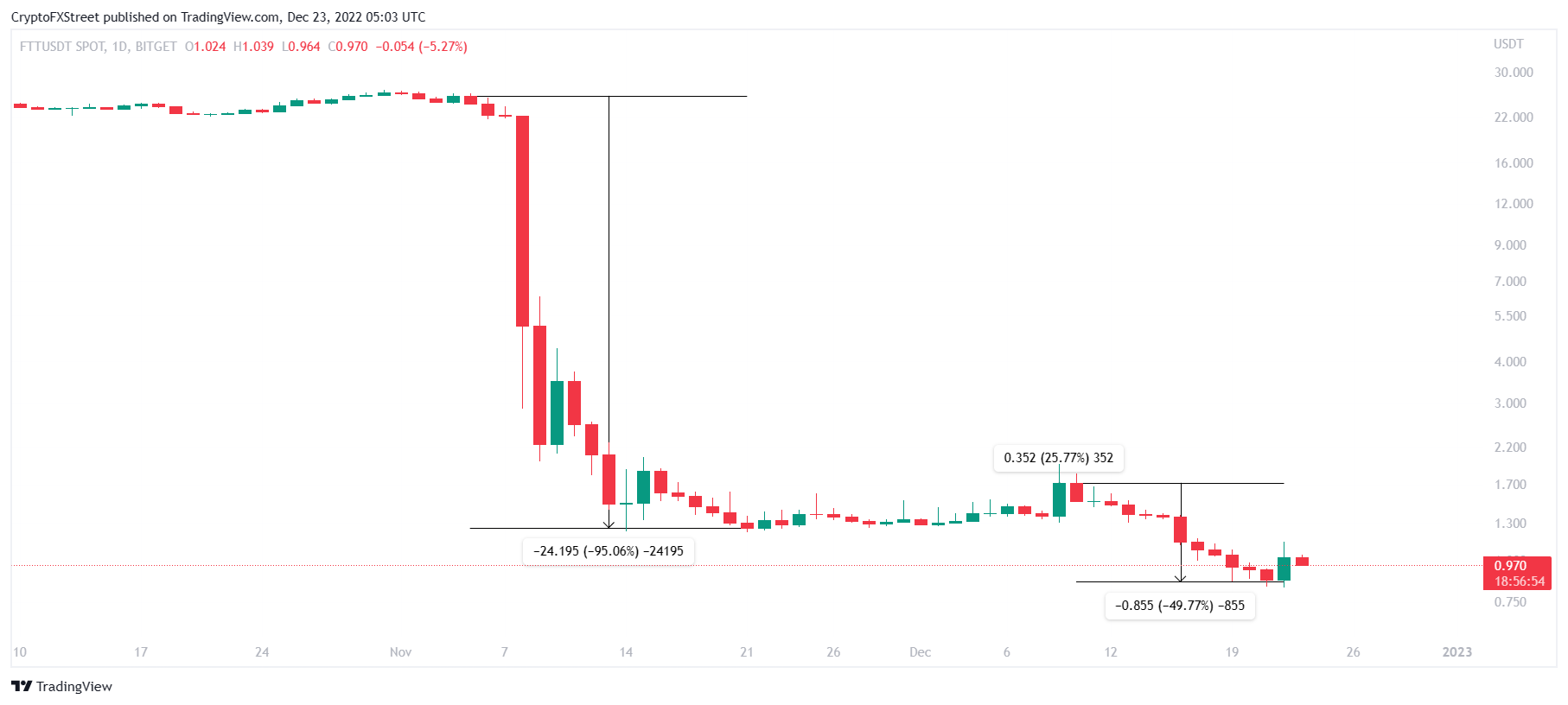
FTT/USD 1-day chart
While the rise in price might appear to be a good sign, December 22 was the first green candle in almost two weeks, making no dent whatsoever in the almost 50% decline noted by FTT. In order to recover these losses, FTT would need to shoot up by at least 77%, which is highly unlikely at the moment.
Author

Aaryamann Shrivastava
FXStreet
Aaryamann Shrivastava is a Cryptocurrency journalist and market analyst with over 1,000 articles under his name. Graduated with an Honours in Journalism, he has been part of the crypto industry for more than a year now.



