|

USD/JPY Forecast: Pressure ease but bullish potential limited

USD/JPY Current Price: 107.20

  • US April’s unemployment rate may be at around 19% according to a White House Advisor.
  • USD/JPY recovered the 107.00 level but lacks follow-through.
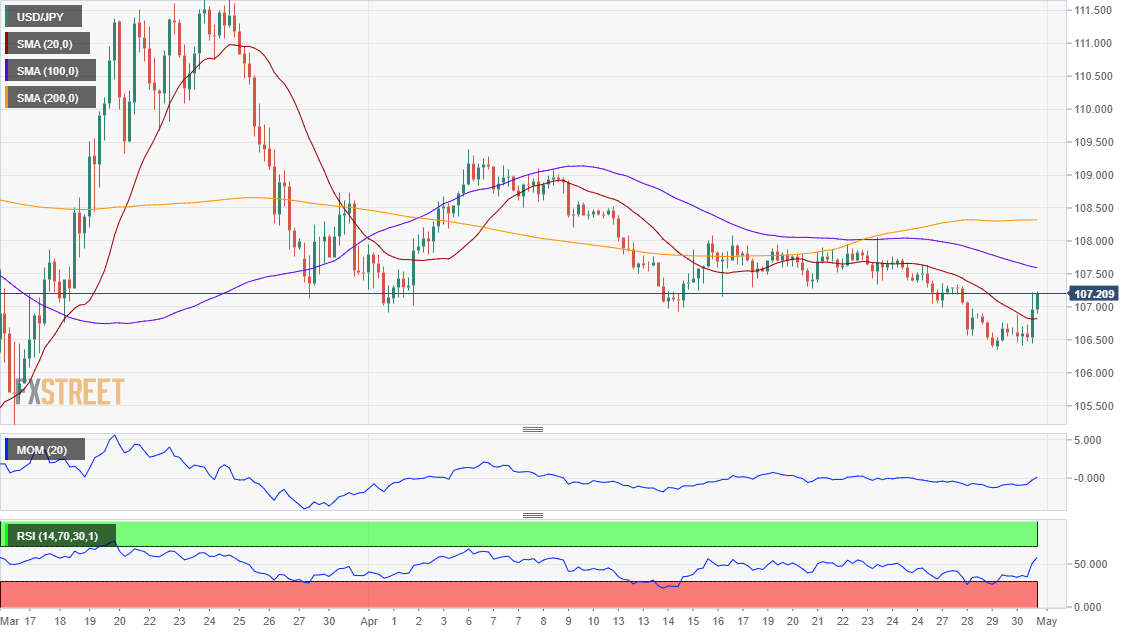
The USD/JPY surged to 107.21 to settle around the 107.00 figure. The pair surged from its latest comfort zone around 106.60, at the same time the greenback fell against its European rivals, as part of month-end fixing. The yen fell despite sentiment deteriorating post-ECB, with equities turning red in the region and dragging Wall Street lower. This last was also affected by US employment data showed that over 3.8 million people filed for unemployment last week. White House Adviser Hassett later said that he expects April’s job report to show an unemployment rate of around 19%.

Japan released at the beginning of the day March Retail Trade figures, which were down by 4.5% in the month and by 4.6% when compared to a year earlier. Large Retailers’ Sales plunged by 10.1%, while Industrial Production was down by 3.7%. Meanwhile, April Consumer Confidence fell to 21.6 from 30.9 previously. The country will release this Friday, April Tokyo inflation, seen up by 0.4% YoY and the April Jibun Bank Manufacturing PMI, previously at 43.7.

USD/JPY short-term technical outlook

The USD/JPY pair is holding above the 107.00 level, but further gains are still unclear. The 4-hour chart shows that it’s developing above a mild-bearish 20 SMA, but still below the larger ones, with the 100 SMA heading south around 107.70 a former relevant resistance. Technical indicators entered positive territory, but lack follow-through beyond neutral levels, with the RSI partially losing their bullish strength.

Support levels: 106.95 106.50 106.10  

Resistance levels: 107.30 107.70 108.05

View Live Chart for the USD/JPY

Author

Valeria Bednarik

Valeria Bednarik was born and lives in Buenos Aires, Argentina. Her passion for math and numbers pushed her into studying economics in her younger years.


More from Valeria Bednarik
Share:

Editor's Picks

GBP/USD flirts with tops near 1.3470

GBP/USD manages to regain composure and challenge the area of daily highs around 1.3470 on Friday. Cable picks up pace despite marginal gains in the Greenback in a context of swelling geopolitical tensions and rising global oil prices.

Gold remains below $4,100 despite receding Fed hike bets, weak USD

Gold opens with a bullish gap at the start of a new week amid receding Fed rate-hike expectations and a bearish US Dollar. Oil prices tumbled after Trump canceled an attack on Iran and said that a deal is near, easing inflation fears. This forces traders to dial back bets on extreme Fed tightening and drags the USD to a fresh low since June 17, which, in turn, is supporting the non-yielding bullion. However, the recent repeated failures to find acceptance above $4,100 warrant caution for XAU/USD bulls.

Gold: The $4,000 mark holds the downside for now

Gold faces renewed selling pressure, falling sharply toweard the $4,000 mark per troy ounce as the US Dollar regains momentum. Escalating US-Iran tensions are keeping inflation concerns and expectations of further Fed rate hikes alive, weighing further on the yellow metal.

Week ahead: US payrolls report and AI earnings to keep investors on edge

After the Fed decision, NFP report awaited for more rate hike clues. Employment also on the agenda in Canada and New Zealand. Chinese trade and Japanese wage data to be watched too. But Iran and AI headlines to remain in driver’s seat for risk sentiment.

Middle East War updates: Trump holds off Iran strikes on pledge Hormuz deal is close

Here’s a brief recap of the key developments in the Middle East war that occurred over the weekend, which are expected to have a significant impact on markets in the upcoming week. Risk sentiment improves on Monday, undermining demand for the US Dollar Index and drag crude oil prices lower.

9-3: Is the Federal Reserve’s vote tally Warsh's new forward guidance?
The rate did not move. Neither did the statement, and that’s the more interesting fact. Set the July 29 Federal Open Market Committee (FOMC) statement beside the one issued on June 17, and the two documents are identical apart from a single verb and a paragraph at the bottom naming three dissenters.














