US Conference Board Consumer Confidence Preview: The FOMC is watching the consumer
- Confidence projected to rise in October toward the two year mid-point.
- Retail sales and durable goods weakened in September.
- Labor market remains strong for jobs and wages but may be reaching an inflection point.

The Conference Board a private non-profit business organization will issue its October Consumer Confidence index on Tuesday October 29th at 14:00 GMT, 10:00 EDT.
Forecast
The Consumer Confidence Index is predicted to rise to 127.4 in October from 125.1 in September. The Present Situation Index dropped to 169.0 in September from 176.09. The Expectations Index fell to 95.8 in September from 106.4.
The US labor market
The American consumer has profited from the best labor market in a generation for the past three years. Job creation, wages, the unemployment rate have all performed exceptionally well, with unemployment reaching and sustaining five decade lows.
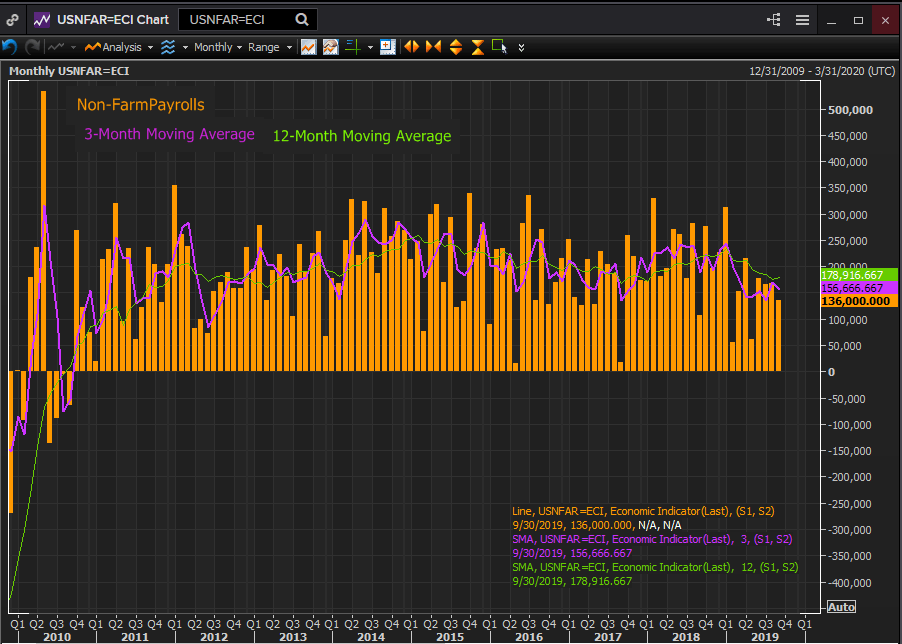
Despite the slowdown in economic growth from 3.1% in the first quarter to 2.0% in the second and estimated 1.7% in the third, hiring has remained healthy. The three month moving average in September of 156,000, combined with the backlog of unfilled position from the last two years has kept the pressure on wages. The 2.9% annual gain in September was the first month in 13 that had not received at least a 3% increase.
Reuters
Nonetheless the decrease in the three-month average from 245,000 in January and the drag from the sharp decline in manufacturing hiring and business investment may be reaching critical levels.
October payrolls to be released this Friday November 1st are forecast to be 90,000. If accurate that would drop the three-month average to 131,000 and the six-month to 136,000 bringing them for the first time in two years below the estimated number of new workers entering the labor force each month.
Optimism in the labor market has been the backbone of consumer sentiment and the current economic expansion.
Consumer Confidence and Sentiment
Attitudes in American households whose spending makes up about 70% of US economic activity have been volatile this year.
The Conference Board’s confidence numbers have varied from a two year low to the second highest of the past two decades. The continual monthly variation speaks to both confidence and unease.
Sources for the disquiet are not hard to find. Labour market inputs, jobs, wages and disposable income are the best figures since the recession. External factors are another story. The China trade dispute has taken a serious toll on business outlook and combined with the pending British exit from the European Union have damaged growth and outlook around the globe.
The ISM manufacturing index slipped into contraction in August and September and factory hiring has fallen substantially. While the direct impact on consumer prices of the China trade war has been limited, the known distaste of Americans for Washington instigated political turmoil may be affecting consumer outlook, much as the limited government shutdown did early in year.
It is too soon for the trade agreement announced by the US and China on October 13th to have had any beneficial effects, positive impact would likely wait for the signing of the accord in November.
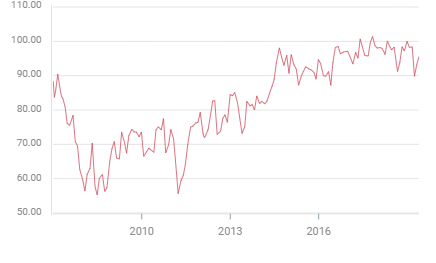
The Michigan Survey of Consumer Sentiment has shown similar volatility. This year has seen the third highest score of the past three years and also the lowest. There have been two sharp one month declines, one recovery and one partial.
Consumer sentiment and the Federal Reserve
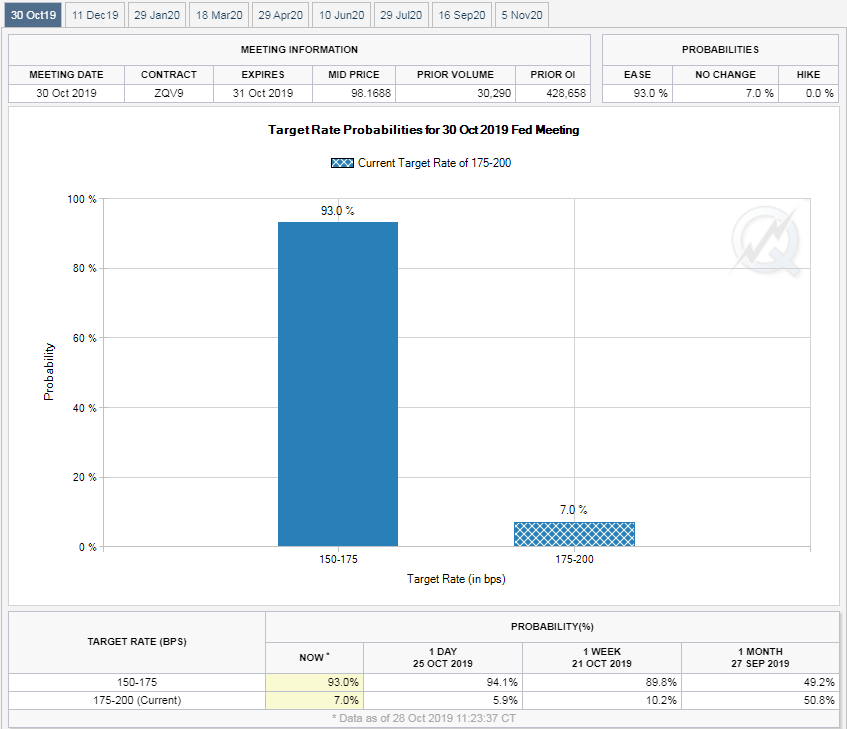
The US central bank is expected to reduce its base rate by 25 basis points for the third time this year at Wednesday’s meeting. The futures markets rate the odds of a cut at 93.0%.
CME Group
One of the stated goals of the FOMC and Chairman Powell has been to sustain the current economic expansion and to prolong the advantages the strong job market has delivered to US workers.
For the past two quarters the mainstay of the US economy and growth has been consumption, the purchases of American consumers. Business spending has stalled awaiting the outcome of the US China trade dispute. Consumer spending has been facilitated by the recurring optimism of Americans responding to the best job prospects in two decades.
Were that sentiment to falter, from the slippage in the job market, the infections of global problems or simple fatigue, consumer spending would follow.
Consumer attitudes are in the center of the Fed’s concerns about the US economy. If they drop the odds of further rates cuts this year and next will rise.
Author

Joseph Trevisani
FXStreet
Joseph Trevisani began his thirty-year career in the financial markets at Credit Suisse in New York and Singapore where he worked for 12 years as an interbank currency trader and trading desk manager.

















