The Contrarian Trading Trap - When you mistake Sentiment for Positioning

George Soros writes, "When I see a bubble, I rush in to buy it."
Examining Soros's words helps to understand what traps a contrarian trader.
But first, why the contrarian view? There is undeniable evidence that most speculators lose. So it stands to reason that as a trader, you want to distance yourself from the majority/crowd.
And in your investing lifetime you've witnessed bubbles that eventually burst, right? "Bubble" and "burst" describe an asset's or market's value that increases rapidly, far beyond its intrinsic value, then suddenly decreases, often resulting in a significant loss of value.
Add a third characteristic of markets described as "up by the stairs and down by the elevator" and it's easy to see how contrarian views evolve. But trading on these three points alone is a contrarian trading trap. You'll see why in a minute.
Right now you can gauge many on Social Media as having a bearish view of US equities. But the sentiment is different from who's holding what (bag). You don't lose a dime having an opinion or view. You can only lose when you have a position.
As George Soros writes, "it takes time for the investment community to adapt to a new way of thinking.... as the new trend gains adherents, an increasing number of investors learn to believe in it." And with that belief comes taking a position. Right?
An easy way to think of positioning is fuel. Fill the car with gas, and it goes and goes until the tank runs dry. Same with the market. The buying fuel tank needs to run dry before the market can aggressively rollover.
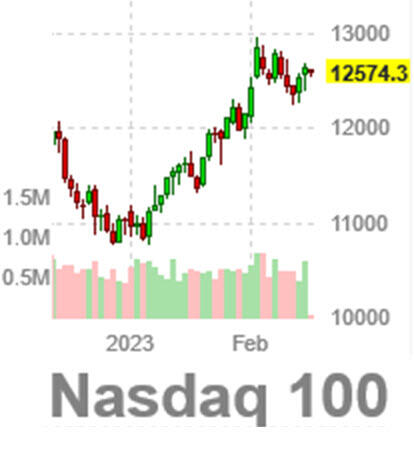
NASDAQ in 2023 trending up + negative sentiment towards US equities tells you there's still plenty of fuel on the sidelines. While that's the case, those who fight the current "paradigm" get burned. Stay with me as we step this up a gear.
What trend faders fail to realize is: when you fight a trend, you're fueling its continuation. The areas to focus on in your trader development are to include how to calculate net positioning across numerous time frames to take advantage of speculators who lose due to:
- Fighting trends, hence fueling move continuation.
- Entering too late into moves when the fuel has all but run out.
Author

Adam Fiske
Boss Trading
Adam is an industry-trained trader with 19 years of professional trading experience.