|

So how about a ‘K’ shaped recovery?

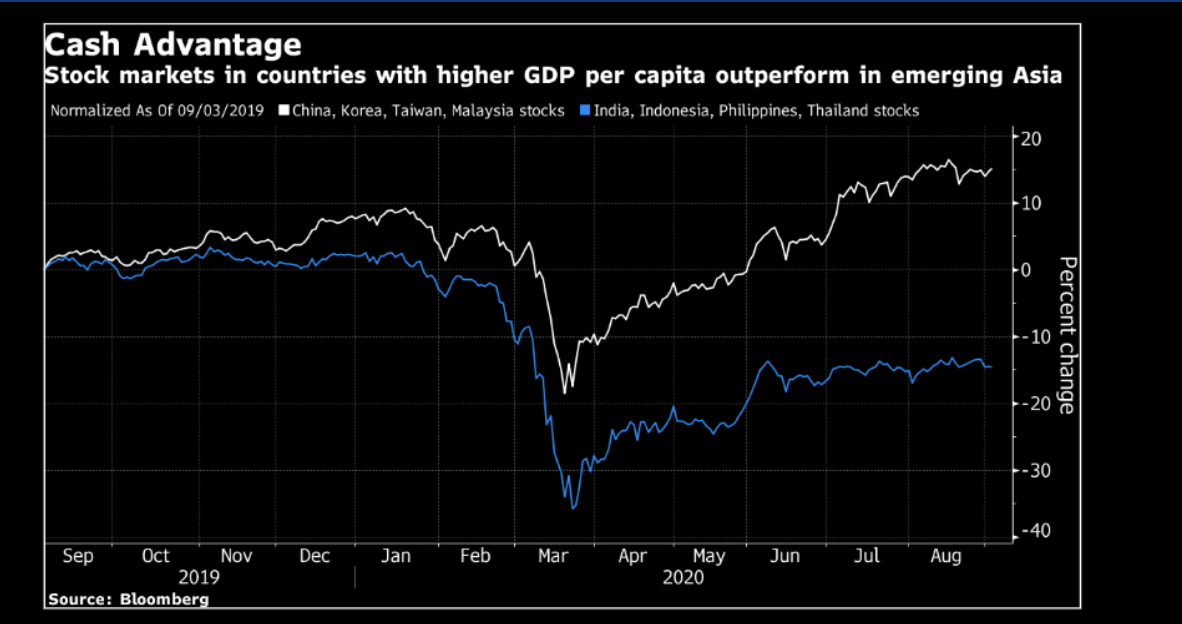
Bloomberg had an informative post-mid-week that replaced the idea of the dialogue between a ‘V’ or ‘U’ shaped recovery with the idea of a ‘K’ shaped recovery. The piece was highlighting that there is a two-tier recovery going on at the moment. This ‘two pathway’ road to recovery has a higher rate of recovery for the richer nations than the poorer ones. A Bloomberg study found that the stocks and currencies from wealthier nations are actually outperforming poorer emerging market peers as nations attempt to cope with COVID-19. It is a classic example of the ‘haves’ vs the ‘have nots’ in the global economy.

A Bloomberg study made up of 17 emerging markets found that there was a correlation of 42% between GDP per capita and stock performance since the risk sell-off began in January of this year. The study found that the correlation between GDP per capita and currency returns was 31%. In simple terms, the wealthier nations are recovering at a quicker pace than the less wealthy nations.

Take a look at this Bloomberg chart below as this illustrates the point visually:
Chart

Furthermore, the rich and poor divide was found to be most pronounced in Asia. The stock returns from the four economies per capita GDP above $10000 last year (China, S.Korea, Taiwan, and Malaysia) are 20% above that of other nations that fall below that level including India, Indonesia. The Philippines, and Thailand. Part of the reason for this divergence is also due to the presence of more tech companies in the first list of countries. However, it has also been down to other factors. Such as the fact that more affluent countries have had the benefit of being able to use advanced technologies, have strong governance, and can access a wider range of policy options to cope with the crisis.

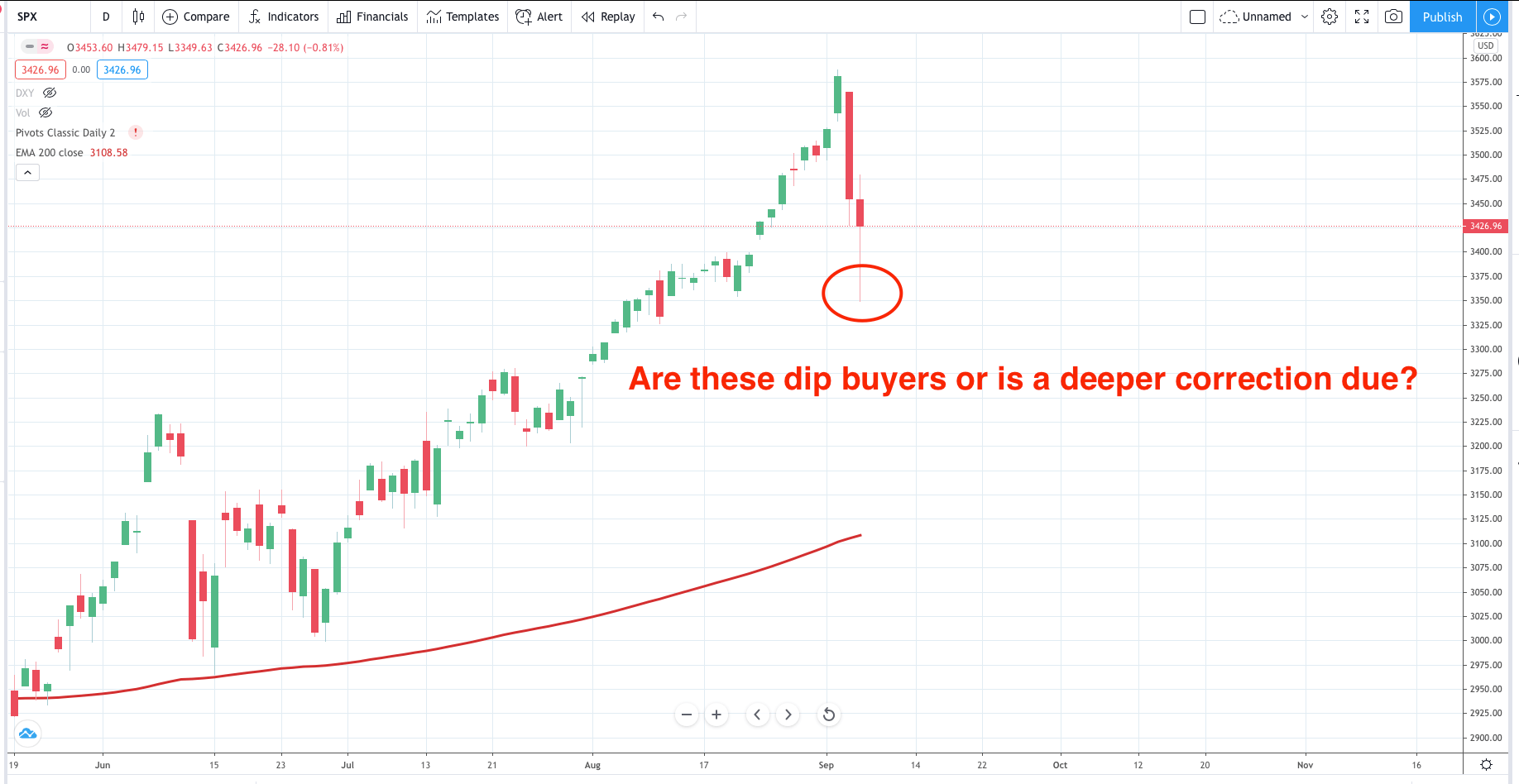
Will this mean that the most developed nations will witness buying on the dips on any stock falls?
chart

Learn more about HYCM

Author

Giles Coghlan LLB, Lth, MA

Giles is the chief market analyst for Financial Source. His goal is to help you find simple, high-conviction fundamental trade opportunities. He has regular media presentations being featured in National and International Press.


More from Giles Coghlan LLB, Lth, MA
Share:

Editor's Picks

AUD/USD holds the bounce near 0.7050 ahead of China trade data

AUD/USD is holding the bounce from two-month lows, retesting 0.7050 in the Asian session on Tuesday. Easing tensions in the Middle East keep the US Dollar on the defensive, supporting the pair ahead of China's trade data.

USD/JPY consolidates above 160.00 amid intervention fears, Israel-Iran ceasefire

USD/JPY holds steady above 160.00 during the Asian session on Tuesday as expectations that authorities will step in again to prop up the Japanese Yen hold back bulls from placing fresh bets. Moreover, a de-escalation of tensions between Israel and Iran undermines the safe-haven US Dollar, capping the currency pair. Traders also seem hesitant and opt to wait for the release of the latest US inflation figures on Wednesday and Thursday.

Gold rebounds but not out of the woods yet

Gold holds the rebound above $4,300 early Tuesday after hitting three-month lows at $4,269. The US Dollar eases amid doubts over the Mideast truce situation, traders cash in ahead of Wednesday’s US CPI. Downside risks remain intact for Gold whilst below the 200-day SMA and amid bearish daily RSI.

Ethereum: BitMine makes largest ETH purchase in 2026 amid price decline

Ethereum treasury firm BitMine Immersion Technologies acquired 126,971 ETH last week following the top altcoin's decline toward the $1,500 region. The purchase, which represents its largest weekly ETH acquisition in 2026, has pushed the company's holdings to 5.54 million ETH.

The market dodged the Oil shock, but the rate trap is still set

Monday’s bounce was relief, not confirmation. Oil backed away from the geopolitical cliff, tech found a bid, and risk assets stabilized, but the late-day fade showed that conviction remains thin. The real threat is no longer just Middle East escalation.

The US economy defies the rules: 100 days into the Oil shock and the recession signal is still missing

More than three months after the start of the Iran war and the resulting disruption to global energy markets, the US economy continues to display remarkable resilience. The conflict has triggered a sharp rise in Oil prices, reignited inflationary pressures and fueled widespread concerns about a potential economic slowdown.















