Yen slides as IMF cuts Japan’s growth estimate

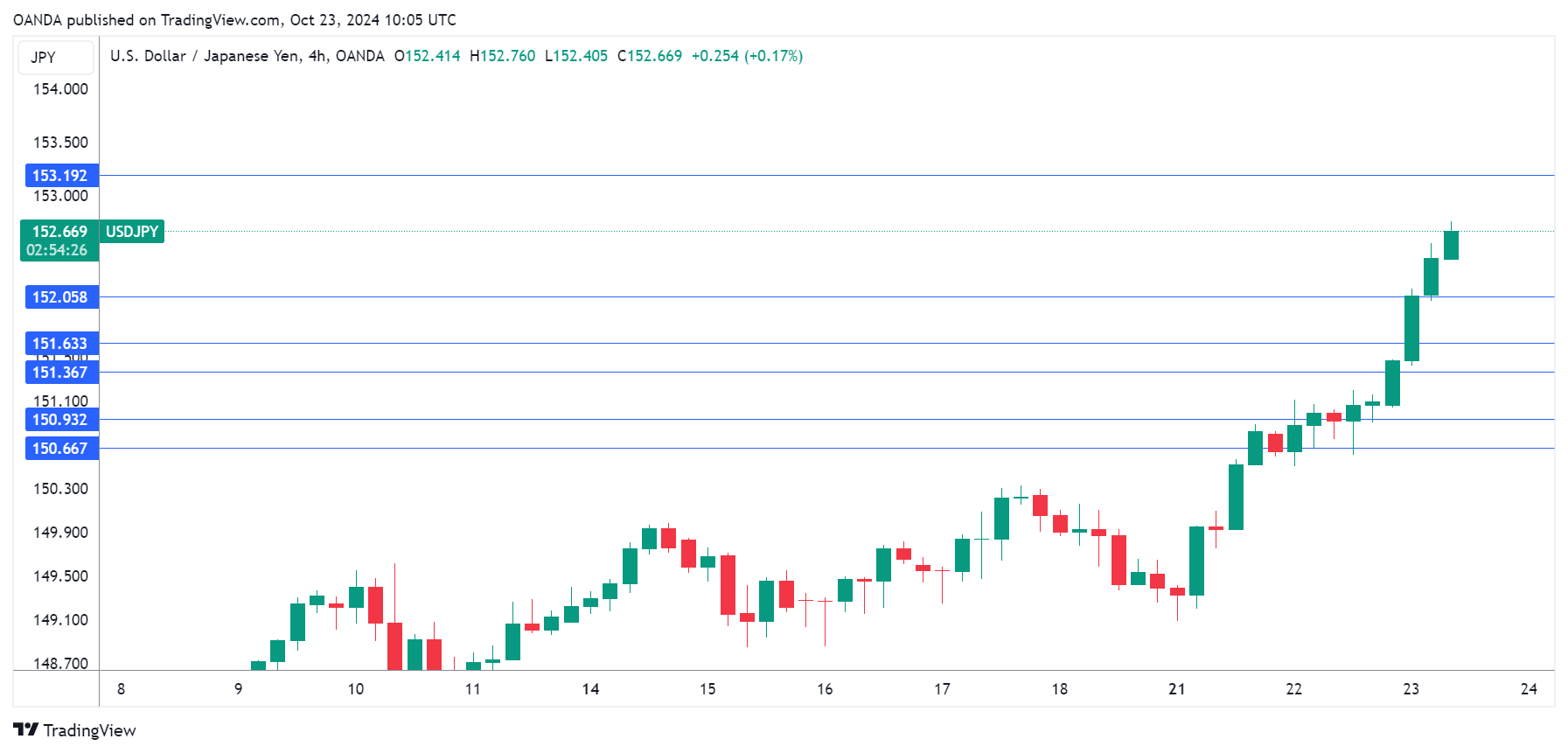
The Japanese yen has posted sharp losses on Wednesday. In the European session, USD/JPY is trading at 152.67, up 1.06% at the time of writing. The yen is down 2.1% this week and has plunged 6.3% in October.
IMF slashes Japan’s growth forecast
The International Monetary Fund slashed its 2024 growth forecast for Japan to just 0.3%, down sharply from the 0.7% forecast in June. This is the lowest estimate since 2020, during the Covid-19 pandemic which severely impacted the economy. The IMF highlighted the “fading of a one-off boost” in tourism and disruptions in auto supply chains. Japan’s economy grew 1.7% in 2023, aided by a strong increase in tourism.
The IMF said it expects the economy to rebound in 2025 and expand 1.1% as private consumption and wage growth improve, assuming that the Bank of Japan continues to raise rates “toward a neutral setting of about 1.5%.”
The BoJ raised interest rates out of negative territory in July to the current rate of 0.25%. The markets are expecting further hikes but the central bank has been very cautious and wants to see evidence of sustainable inflation at 2% before making additional hikes. This has made the BoJ an outlier among major central banks, most of which are in a rate-cutting cycle in response to falling inflation. Japan releases Tokyo Core CPI, a key inflation indicator, on Thursday. The indicator is expected to ease to 1.7% in September, down from 2% in August.
The BoJ meets on Oct. 30-31, right after a general election on Oct. 27. The Bank will likely maintain policy settings but the markets will be keeping a close eye on the quarterly projections for inflation and growth.
USD/JPY Technical
-
USD/JPY has pushed above several resistance lines today and the next resistance line is 153.19.
-
150.93 and 150.66 are providing support.
Author

Kenny Fisher
MarketPulse
A highly experienced financial market analyst with a focus on fundamental analysis, Kenneth Fisher’s daily commentary covers a broad range of markets including forex, equities and commodities.