BRICS Russia summit begins with false claim the bloc has larger GDP than G7
- Russian President Putin inflates BRICS GDP at a Business Forum for the bloc only days before annual summit in Kazan.
- Putin states the bloc has a GDP of $60 trillion – well above the $27 trillion estimate based on official data.
- Putin’s figures even contradict those of co-BRICS leader President Cyril Ramaphosa of South Africa.
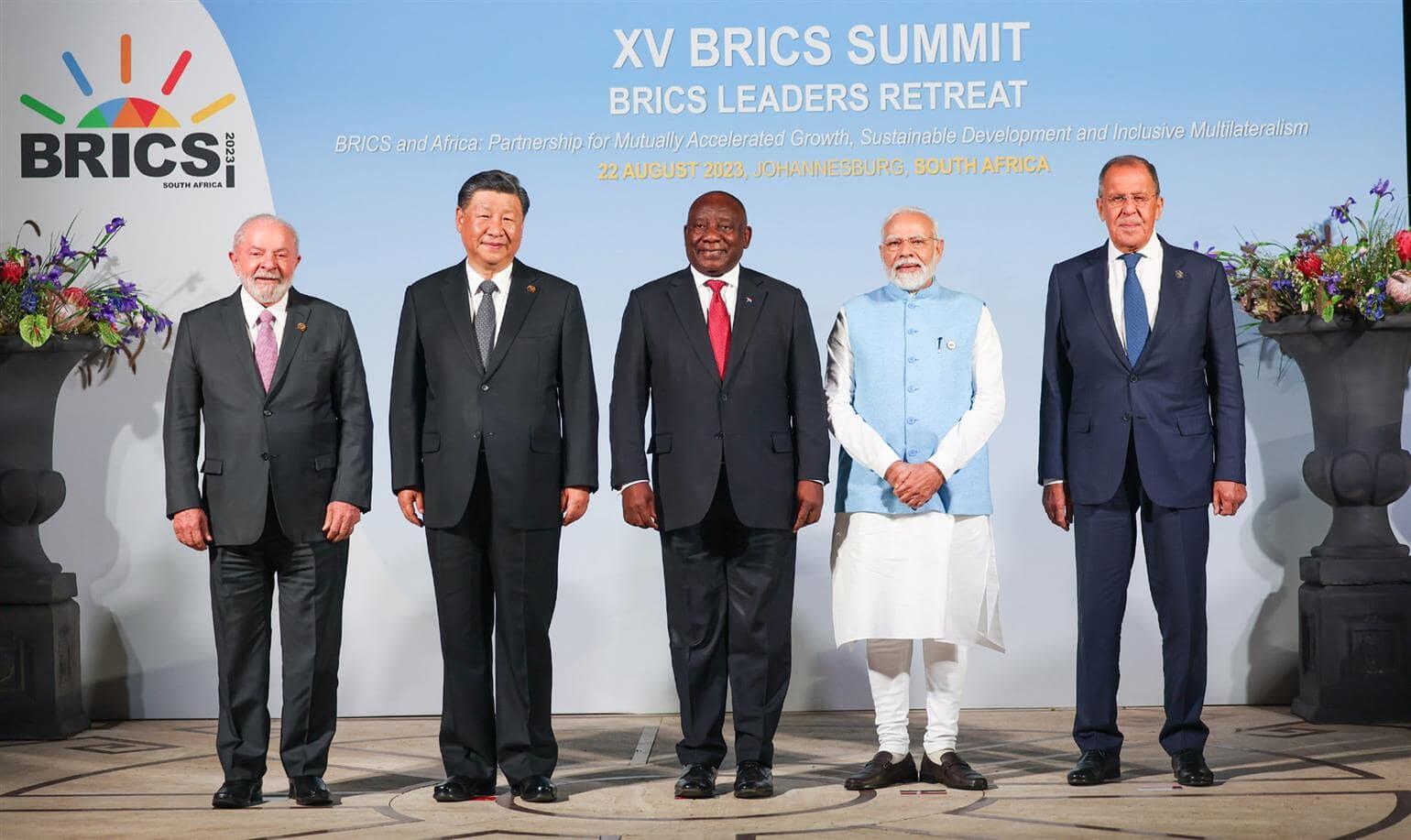
Russian President Vladimir Putin should check his facts. In a speech at the BRICS Business Forum in Moscow on October 18, the Russian President came up with some interesting fantasy statistics about the size of the association’s Gross Domestic Product (GDP).
In front of a packed auditorium, the Russian President said, “The (BRICS) association’s total GDP exceeds $60 trillion, and its overall share in global GDP easily surpasses that of the so-called G7, and it continues to grow.”
The facts say different, however. The total GDP of the BRICS nations adds up to only $27.38 trillion in 2023, not $60 trillion as stated by President Putin, according to data from Trading Economics, which draws its information from official sources. This is under half of Putin’s estimate. It is also actually well below that of the G7, which sums to $46.80 trillion in total.
Putin also stated that the BRICS GDP represents 37.4% of world GDP, which is estimated at close to $105 trillion in 2023. However, this would make it $39.27 trillion, which is well above the $27.38 trillion figure. So, there again Vladimir’s figures seem inflated.
These figures are based on Nominal GDP data but there are other ways to calculate GDP, such as using Real GDP which adjusts for inflation. Is it possible Putin may have been refering to Real GDP instead?
Unlikely, the aggregated Real GDP of the BRICS association adds up to an estimated $14.06 trillion based on October 22 exchange rates, which is even lower than the Nominal GDP figure, and compares even more poorly to the $31.61 trillion Real GDP of the G7.
Vladimir Putin used the facts to inflate the reputation of the BRICS in a speech at the BRICS Business Summit in Moscow prior to the BRICS Summit, currently being held in the city of Kazan in Russia.
In front of a packed auditorium, Putin said: “The BRICS partners’ joint efforts aimed at accelerating socioeconomic growth and ensuring sustainable development bring concrete, tangible results.. The numbers speak for themselves. I am sure you are generally aware of most of the figures, but I will allow myself to cite a few of them,” according to the Kremlin's official website for the President of the Russia.
Putin then went on to compare the two blocs’ GDPs as stated above, adding: “I have already stated this publicly when meeting with your Russian colleagues, but I will repeat it once again here, in this hall and in your presence. In 1992, the G7 accounted for 45.5% of global GDP and BRICS countries accounted for 16.7%. In 2023, our group of countries accounted for 37.4% while the G7 for 29.3%.”
His facts also contradict those of fellow BRICS leader President Cyril Ramphosa of South Africa, who stated in an opening speech at the BRICS Summit that, “The group together accounts for 27% [of] global GDP and a fifth of world exports.” A figure that is over 10 percentage points less than that stated by Putin.
BRICS FAQs
The BRICS is the acronym denoting the grouping of Brazil, Russia, India, China and South Africa. The name was created by Goldman Sachs’ economist Jim O’Neill in 2001, years before the alliance between these countries was formally established, to refer to a group of developing economies that were predicted back then to lead the global economy by 2050. The bloc is seen as a counterweight to the G7, the group of developed economies formed by Canada, France, Germany, Italy, Japan, the United Kingdom and the United States.
The BRICS is a bloc which intends to give voice to the so-called “Global South”. The alliance tends to have similar views on geopolitical and diplomatic issues, but still lacks a clear economic integration as the governing systems and cultural divergence between its members is significant. Still, it holds yearly summits at the highest level, coordinates multilateral policies and has implemented initiatives such as the creation of a joint development bank. Egypt, Ethiopia, Iran and the United Arab Emirates joined the group in January 2024.
The five founding members of the BRICS alliance account for 32% of the global economy measured at purchasing power parity as of April 2023, according to data from the International Monetary Fund. This compares with the 30% of the G7 group.
There has been increasing speculation about the BRICS alliance creating a currency backed by some sort of commodity like Gold. The proposal is meant to reduce the use of the dominant US Dollar in cross-border economic exchanges. In the BRICS’ 2023 summit, the group stressed the importance of encouraging the use of local currencies in international trade and financial transactions between the members of the bloc as well as their trading partners. The group also tasked finance ministers and central bank governors “to consider the issue of local currencies, payment instruments and platforms” for this purpose. Even if the bloc’s de-dollarization strategy looks clear, the creation and implementation of a new currency seems to have a long way to go.
Author

Joaquin Monfort
FXStreet
Joaquin Monfort is a financial writer and analyst with over 10 years experience writing about financial markets and alt data. He holds a degree in Anthropology from London University and a Diploma in Technical analysis.