RBA: Hawkish hold as inflationary pressures rise

The RBA has recognised that it may need to be less ‘patient’ over increasing interest rates due to rising inflationary pressures in Australia. One of the strange things from the RBA has been the fact that even before this last meeting it projected inflation to be within their 2-3% band for the next 2 years. In this last meeting, it appears willing to concede that these inflationary pressures may become more ingrained.
Inflation transitory?
The RBA identifies the main drivers for inflation as supply-side problems and Russia’s actions in Ukraine combined with strong demand as economies recover. However, the RBA remains uncertain whether these factors will resolve and how quickly or slowly that could be. This is the key to its uncertainty over whether inflation is transitory or more longer term. However, labour data is the RBA’s key to knowing whether to act or not.
The labour factor
The one area in which the RBA really wants to see increases before hiking rates is the labour market. The RBA recognises that wage growth has picked up, but still sees it as still around the relatively low rates that were around before the pandemic. The next wage price index print comes in around the middle of May. If wage prices grow to 3% y/y that would essentially be seen as the green light to hike rates for the RBA. It is the only piece of the jigsaw that the RBA wants to see falling into place.
The takeaway
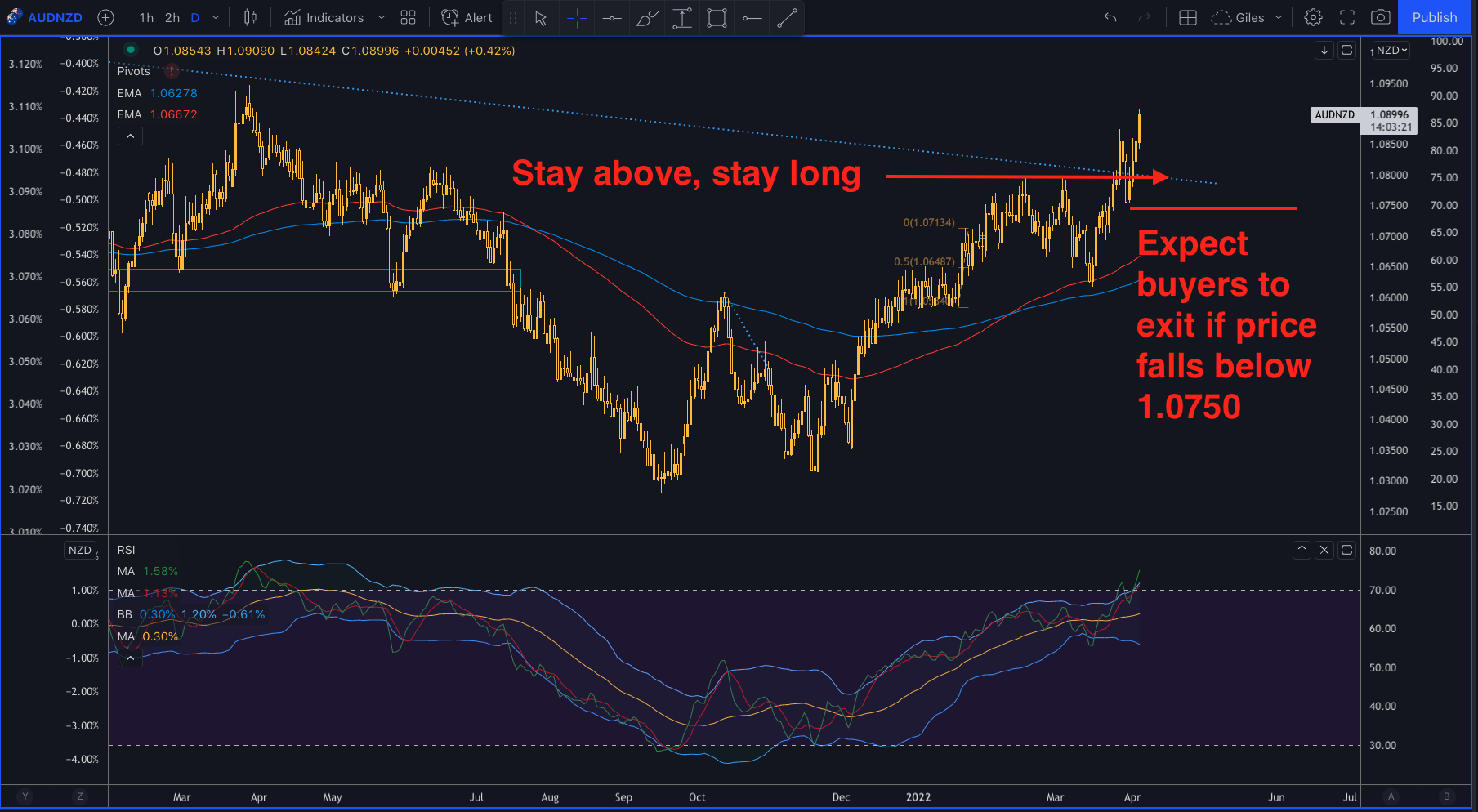
One of the best pairs to trade the interest rate differentials between the RBA and the RBNZ is the AUDNZD currency pair. There is a very simple trendline that can be used to define risk. Stay above the trendline and stay with the trade. Get below and you can get out.
The seasonals
Seasonally you can see that the AUDNZD pair tends to see gains around this time of the year and this is worth bearing in mind.

The risks to this outlook revolve around any further shifts in RBA/RBNZ policy as well as any growth shocks coming from China.
Author
Giles Coghlan LLB, Lth, MA
Financial Source
Giles is the chief market analyst for Financial Source. His goal is to help you find simple, high-conviction fundamental trade opportunities. He has regular media presentations being featured in National and International Press.