|

Last chance to turn bullish on China?

The case for being bold on China has been around for some time. However, it is interesting to note the reasons a Chinese fund manager has for turning bullish on Chinese equities. Bloomberg report that Zhao Yuanyuan’s fund at the Shenzhen Qianhai JianHong Times Asset Management Co has returned 138% so far this year on the falling Chinese equity market. Now, Zhao has shifted from neutral to bullish, and here are the reasons.

  • Growth lifting stimulus is boosting sentiment,

  • Shanghai is easing its week-long lockdown,

  • US inflation expectations are edging lower.

The key risks Zhao sees for this outlook are:

  • Further China Covid flare-ups,

  • Zhao will be keeping an eye on daily trucking traffic levels,

  • A change in Covid policy,

  • Ukraine & Russia conflict.

Analysis

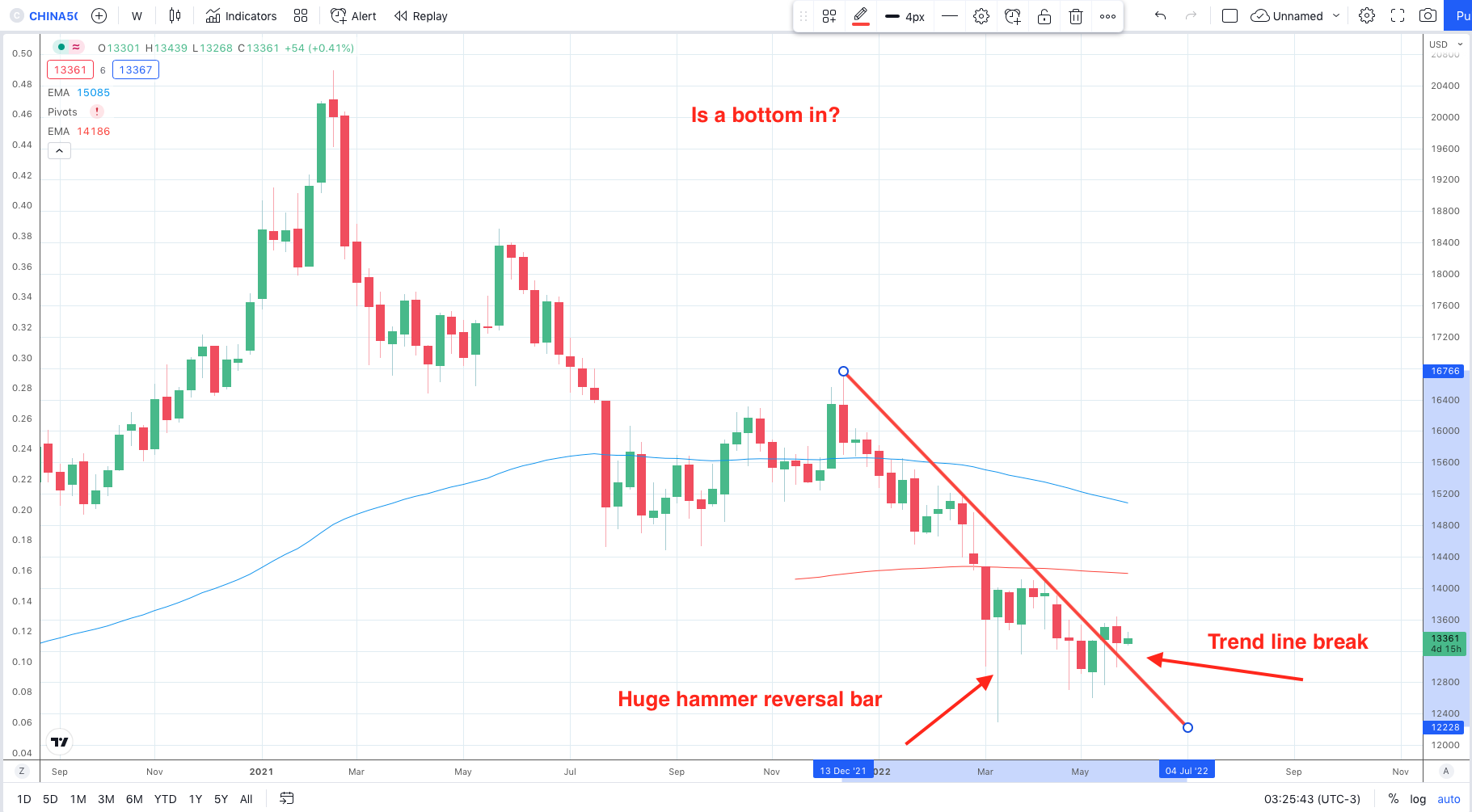
Zhao’s outlook is very logical and the Covid risks she has identified are ones that helped her fund outperform on the way down. So, this is someone with a good sense of timing. The fact that US inflation has shown signs of pulling lower is key to this outlook in the near term. The key driver for the Fed’s hiking actions is inflation. If inflation pressures fade then the Fed can relax on hiking. After all, the US economy is in a state where the Fed considers it able to withstand rate hikes rather than the economic growth demanding them. Questions marks do remain too over whether China can exit its Covid Zero plan. However, risk can be easily managed and markets are starting to show signs of turning around. Check out China’s 50 index chart for the technical signs a bottom is in.
China

Learn more about HYCM

Author

Giles Coghlan LLB, Lth, MA

Giles is the chief market analyst for Financial Source. His goal is to help you find simple, high-conviction fundamental trade opportunities. He has regular media presentations being featured in National and International Press.


More from Giles Coghlan LLB, Lth, MA
Share:

Editor's Picks

GBP/USD remains slightly bid near 1.3300

GBP/USD now advances marginally and manages to dispute the 1.3300 region on Tuesday. Indeed, Cable regains some balance on the back of the lacklustre performance of the Greenback, all preceding the Fed’s meeting on Wednesday and the BoE’s gathering on Thursday.

EUR/USD recedes from tops, back below 1.1400

EUR/USD manages to set aside part of the recent weakness and clinches decent gains on Tuesday. Indeed, spot keeps the trade below the 1.1400 mark amid acceptable losses in the US Dollar, all following rising optimism of a US-Iran deal and steady caution prior to the FOMC gathering on Wednesday.

Gold bounces on poor US data

Gold remains under marked downside pressure on Tuesday, although the $4,000 zone per troy ounce emerges as a decent support for now. The precious metal’s pullback comes despite the modest losses in the US Dollar in a context of easing geopolitical tensions ahead of the key Fed event on Wednesday.

Australia CPI could boost Aussie if inflation arrives above 4%

The Australian Bureau of Statistics will publish the June Consumer Price Index on Wednesday at 01:30 GMT. The report is expected to show that inflation rose 4% from a year earlier, matching the May reading. The monthly CPI is foreseen at 0.2% following the -0.7% print from May. The ABS will also release the Trimmed Mean CPI, the Reserve Bank of Australia’s favorite inflation gauge.

Indian Rupee outlook: Downtrend set to persist – Just at a slower pace

The Indian Rupee just endured its most brutal six-month stretch in years, battered by a perfect storm of global shocks. From United States-India trade uncertainty to surging Oil prices and the significant outflow of Foreign Institutional Investment from the Indian stock market, every event brought nothing but pain for the Indian currency.

US Dollar mid-year outlook: Exceptional currency, exceptional risks?
The US Dollar enters the second half of 2026 in a markedly different position from a year ago. The King currency has recovered, reflecting persistent US inflation, changing expectations for Fed policy, geopolitical tensions and renewed demand for defensive assets.