Jackson Hole - silence is golden
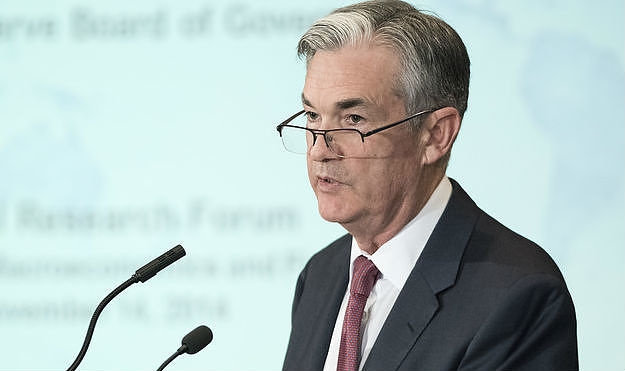

Today's Jackson Hole speech highlights an important point in central banking - sometimes, it is best to say nothing...that's not what we are going to get though
A time to speak, and a time to be still, this is the latter
I'm not one to mince my words, which has got me into trouble on more than one occasion. I hope this won't be another. But mincing your words, pulling your punches, or any one of a number of mangled metaphors to suggest not saying exactly what you really think could be something Jerome Powell, should consider for his scheduled speech today at the Jackson Hole symposium. Either that, or he might consider turning up and sheepishly telling the audience that a dog ate his speech on the way into the auditorium. "Would they rather see some slides from his recent vacation?"
Why? Well, here's the thing. We (most of us anyway) hang on every word of central bankers as if they were some kind of divine visionary with enormous power and unlimited foresight. The reality is that although often well staffed with some very bright people, their record in calling the economic cycle is not often a good one. Certainly, it does not compare favourably to the collective wisdom of markets. It doesn't even do well compared to the dubious intellect of the economics consensus, of which I happen to be a reluctant part.
So listening to a central banker might well tell give clues about what they are going to do, but it doesn't necessarily mean that it is right. And there's more...
Powell speaks mainly for himself
...the additional complication for today's speech is that Powell does not even necessarily represent the collective view of the FOMC committee. The last few days has delivered some very different views, with at least three, Esther George, Eric Rosengren and Patrick Harker expressing a view that no more easing was necessary, at least not yet.
Still others, according to recently released minutes, felt that the Fed should have gone further at its last meeting. So who does Powell speak for? And can any view expressed today represent anything more than his best guess as to how the September FOMC discussion will go, subject to the vagaries of data flow that will swing these views one way or the other in the meantime?
Choppy seas, or tidal waves - you choose
For me, and this is a personal view only (just one I think is incontrovertible), the so-called "forward guidance " of central banks should be limited to one special occasion alone, and that is where markets have badly mispriced their intentions. This is indeed where they do have some inside knowledge, though it suggests they have pre-committed to a course of actions, which may itself be highly questionable.
And with that, my whole argument unravels. Or does it?
You see, you could argue that with Fed funds futures pricing in 100-125bp of easing by the end of next year, that this was exactly one of those occasions where Powell should put us right, and allow for some more realistic, and less aggressive pricing. You would have a point.
Yet to do so, and make clear that the last meeting was really only an insurance cut (mid-cycle adjustment if you will), and that the market will be lucky to get 25-50bp more easing, would likely lead to just the sort of market backlash that Powell will want to avoid today.
That reaction though, comes from earlier pandering to the market's desires for ever-lower rates. In short, you just can't win when you keep trying to placate everyone. And the longer you do so, the bigger the eventual backlash. It might be better not to try so hard to please, and live with the consequences. That might make for more day to day volatility, but fewer big lurches. A choppier sea, but no tidal waves, for example. That seems like a decent trade-off to me.
All of this makes me quite nostalgic for the days when Alan Greenspan would spout unintelligible gobbledygook, or the Bundesbank would tweak its rates with seemingly little obvious motivation. Things were simpler then I admit. And monetary policy was a more effective tool for demand management too than it is today. But maybe that is partly because it was not so stage-managed?
Day ahead
You will by now have guessed that my lengthy non-Asia focussed preamble was a cover for the fact that it is a bit quiet today in this region. I knew I couldn't fool you for long.
After yesterday's 25bp rate cut from BI taking markets by surprise, there are only a couple of CPI releases to provide fare for data-hungry markets today.
Japanese CPI has already undershot expectations, though no-one is seriously expecting anything very positive here, so the story of massively missing inflation targets and no effective tools to address this remains the Bank of Japan's prevailing headache.
Singapore July CPI out around 1pm local time will also not change the story of soft activity and inflation, and a nearing, and necessary adjustment by Singapore's Monetary Authority (MAS) in October.
Taiwan's July Production figures round off the day as we head to that Jackson Hole meeting.
Powell's speech is at 10pm Singapore time, clashing badly with the second Ashes cricket match at Headingly, England. I think my viewing preferences should be clear.
Read the original article: Jackson Hole - silence is golden
Author
Robert Carnell
ING Economic and Financial Analysis
Robert Carnell is Chief Economist and Head of Research, Asia-Pacific, based in Singapore.
















