GBP/USD Price Forecast: Bulls shrug off softer UK CPI print; focus shifts to US inflation data
- GBP/USD attracts some dip-buyers, though the intraday uptick lacks bullish conviction.
- A modest USD weakness offsets the softer UK CPI report and lends support to the major.
- Stagflation fears and UK fiscal concerns might cap the GBP ahead of the US CPI report.

The GBP/USD pair struggles to capitalize on its modest recovery from the 1.2100 mark, or the lowest level since November 2023 touched earlier this week and attracts some sellers on Wednesday. The intraday descent picks up pace following the release of softer consumer inflation figures from the UK, though subdued US Dollar (USD) price action assists spot prices to rebound a few pips from the vicinity of mid-1.2100s.
The UK Office for National Statistics (ONS) reported that the headline Consumer Price Index (CPI) climbed 2.5% year-over-year (YoY) in December, falling short of expectations for an uptick to 2.7% from 2.6% in November. Moreover, the annual core CPI (excluding volatile food and energy items) rose by 3.2% during the reported month as compared to a 3.5% rise in November and 3.4% anticipated. The softer readings offer the Bank of England (BoE) an opportunity to cut interest rates at its upcoming policy meeting in February. Adding to this concerns about the UK’s fiscal situation and the risk of stagflation – a combination of high inflation and weak economic growth – undermined the British Pound (GBP).
The USD, on the other hand, drops to a fresh weekly low in the wake of softer-than-expected US Producer Price Index (PPI) print released on Tuesday, which made it difficult to project the Federal Reserve's (Fed) next moves on interest rates. The US Bureau of Labor Statistics reported on Tuesday that the Producer Price Index, which measures wholesale inflation, rose 0.2% in December and the core gauge remained flat during the reported month. Apart from this, the latest optimism led by easing fears about US President-elect Donald Trump's disruptive trade tariffs, which is evident from a generally positive tone around the equity markets, undermines the safe-haven buck and offers support to the GBP/USD pair.
That said, growing acceptance that the Fed will pause its rate-cutting cycle later this month, which had been a key driver of the recent surge in the US Treasury bond yields, could help limit the USD losses. Traders might also opt to wait on the sidelines ahead of the release of the latest US consumer inflation figures, due later during the early North American session. The crucial US Consumer Price Index (CPI) report would influence the Fed's interest rates outlook, which, in turn, will play a key role in driving the near-term USD price dynamics and provide a fresh impetus to the GBP/USD pair. Hence, it will be prudent to wait for strong follow-through buying before confirming that spot prices have bottomed out and positioning for further gains.
GBP/USD 1-hour chart
Technical Outlook
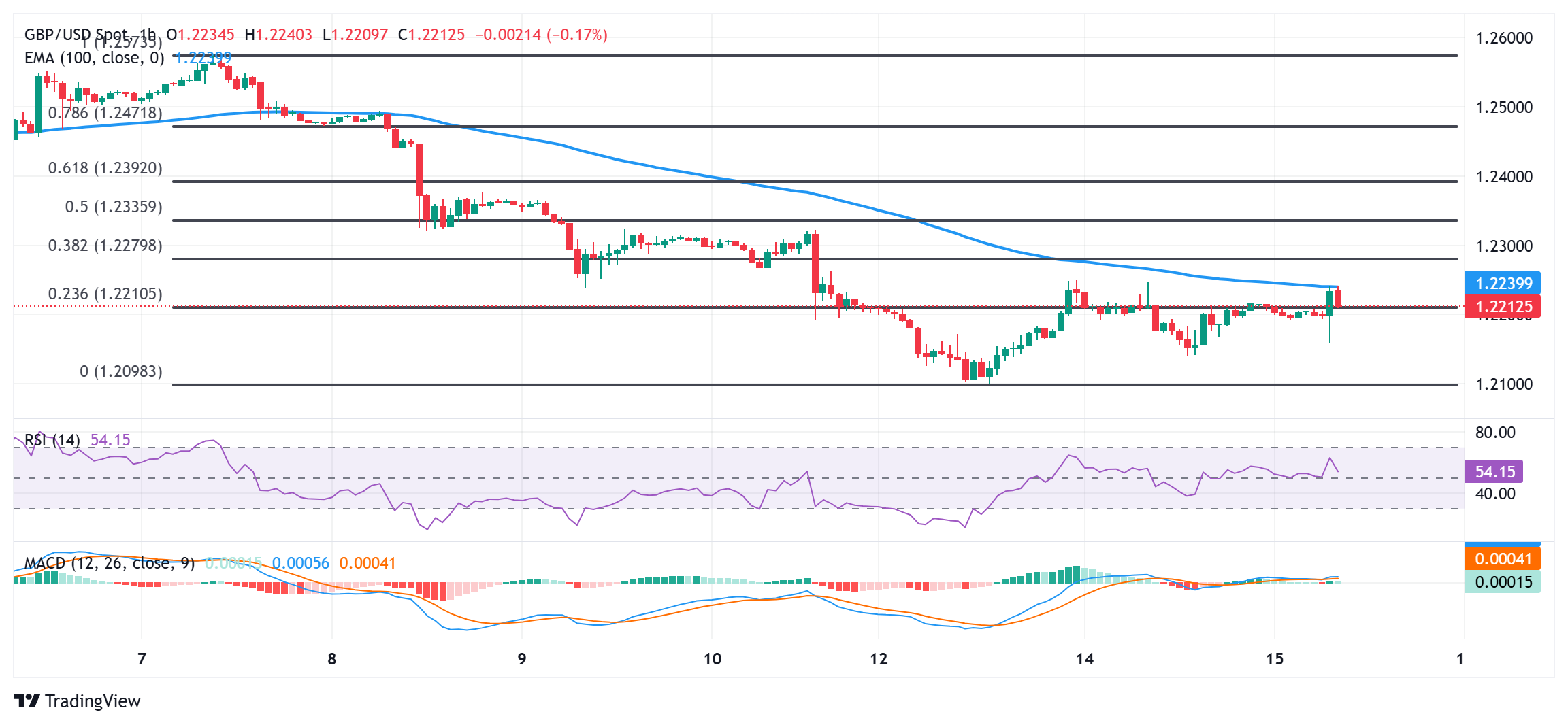
From a technical perspective, the GBP/USD pair now seems to have found acceptance above the 23.6% Fibonacci retracement level of the downfall from the monthly peak. Bulls, however, need to wait for a sustained move beyond the 100-hour Exponential Moving Average (EMA), currently pegged around the 1.2240 region, before placing fresh bets. Spot prices might then accelerate the move up towards the 1.2280 area (38.2% Fibo. level), en route to the 1.2300 mark, the 1.2315 supply zone and the 1.2335 zone (50% Fibo. level).
On the flip side, weakness below the 1.2200 round figure might continue to attract buyers near the 1.2150-1.2140 area amid a slightly oversold Relative Strength Index (RSI) on the daily chart. Some follow-through selling, however, might expose the 1.2100 mark, or over a one-year low touched on Monday. A convincing break below the said handle will be seen as a fresh trigger for bearish traders and pave the way for an extension of the GBP/USD pair’s nearly four-month-old downtrend.
Premium
You have reached your limit of 3 free articles for this month.
Start your subscription and get access to all our original articles.
Author

Haresh Menghani
FXStreet
Haresh Menghani is a detail-oriented professional with 10+ years of extensive experience in analysing the global financial markets.