GBP/USD at critical juncture ahead of Bank of England

Thursday brings the highly anticipated Bank of England monetary policy decision. In the run-up to this decision, speculation that the central bank will remain dovish has combined with a persistently strong US dollar to place heavy pressure on GBP/USD. Markets are currently expecting no major changes to interest rates or monetary policy by the BoE on Thursday. Therefore, any hawkish surprises in policy, rhetoric, or Monetary Policy Committee (MPC) votes will very likely make a substantially positive impact on sterling. In the event that the central bank remains as dovish as expected, however, any continued strength in the US dollar could help exacerbate the current GBP/USD slide of the past three weeks.
BoE Governor Mark Carney recently took the opportunity in an interview to lower expectations for an imminent rate hike due to weak data out of the UK. As a result, the pound was hit severely, as previously high expectations for another impending rate increase were greatly diminished. Coupled with the sharp rise in the dollar, the drop in the pound prompted GBP/USD to take a steep dive in subsequent days and weeks. Therefore, as noted, barring any hawkish surprises on Thursday, if the BoE remains as dovish as Carney recently implied, GBP/USD could remain under pressure.
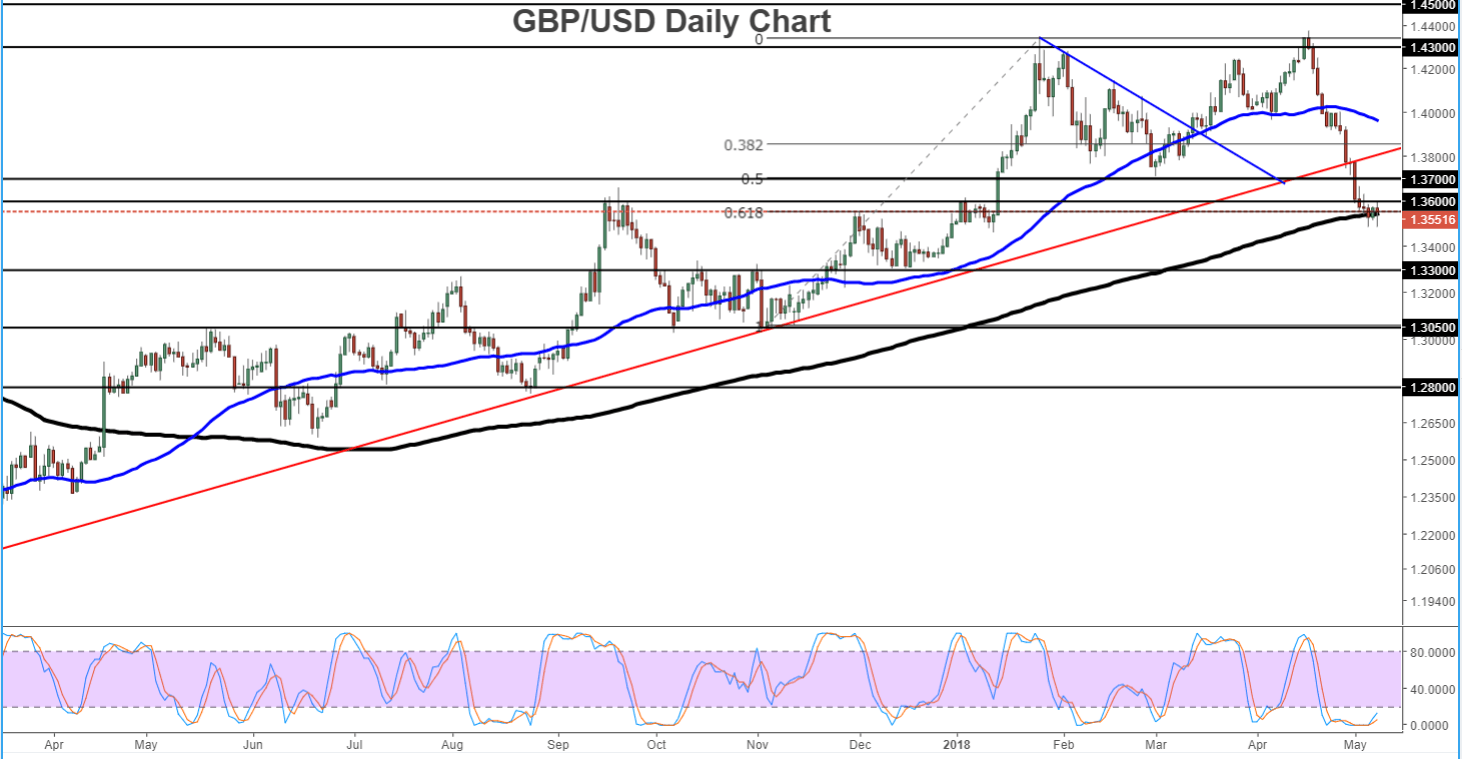
In the handful of trading days running up to the BoE’s Super Thursday, which will also feature the central bank’s pivotal inflation report, GBP/USD has consolidated in a tight range around its 200-day moving average, a critical technical juncture. Prior to this consolidation, the currency pair had fallen precipitously since mid-April, breaking down below multiple key support levels, including a clear uptrend line extending back to early 2017 as well as the important 1.3700-area support. Having currently settled around its key 200-day moving average, as noted, the near-term outlook will rely in large part on the content of the BoE’s Thursday decision. If it is as dovish as expected, GBP/USD has the potential to break below the 200-day moving average, especially if the US dollar remains as well-supported as it has been in recent weeks. The currency pair has not traded significantly below this major moving average since April of 2017. With any such GBP/USD breakdown, the next major downside target resides around the key 1.3300 support area.
Author

James Chen, CMT
Investopedia
James Chen, Chartered Market Technician (CMT), has been a financial market trader and analyst for nearly two decades.