Fed Analysis: Dollar does not like the dot-plot mini-upgrade
- The Federal Reserve raised rates as expected but left the interest rate forecast for 2018 at three hikes.
- The Fed did upgrade the forecast for 2019, 2020, and the long-term, but the moves are limited.
- The US Dollar does not like this cautious approach and drops across the board.

The FOMC decided to raise the interest rate to a maximum of 1.75% as widely expected. In the closely-watched projection of interest rates, they left the projection for three rate hikes unchanged for 2018. They did upgrade the forecasts for 2019 a rate of 2.9% against 2.7% beforehand and in 2019 from 3.1% to 3.4%. In the long-term, the upgrade is minimal: from 2.8% to 2.9%.
All in all, it seems like the Fed did not raise the interest rates very eagerly.
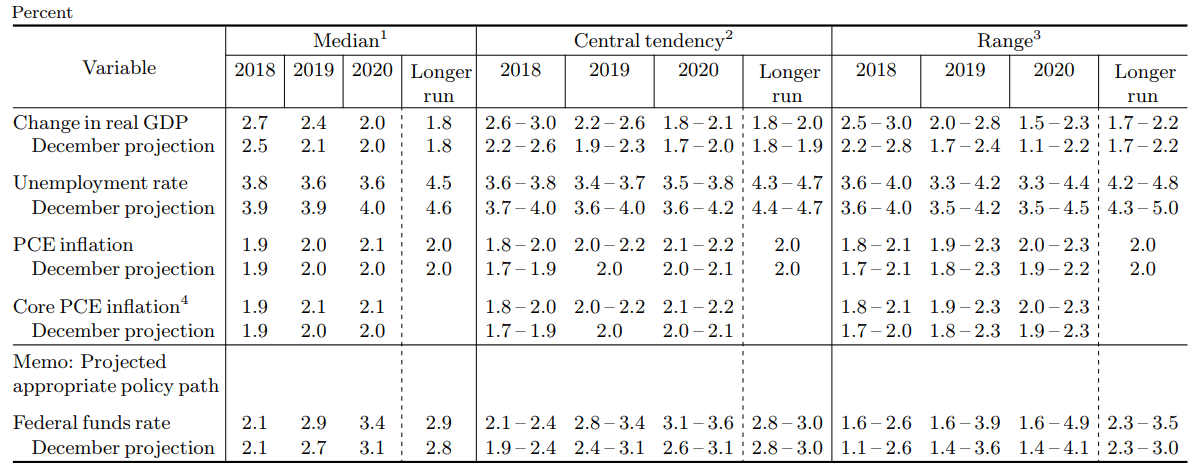
The US Dollar jumped up and down but eventually decided to move to the downside. Markets reacted to the absence of an upgrade for this year and the minor move for the long term.
Jerome Powell then addressed the press and downplayed the dot-plot, insisting that the rate hike is the main event. This did not help the greenback. On the topic of holding a press conference after every meeting, Powell said it needs to be considered very carefully, as he wants to refrain from sending a wrong message. He does not want to open the door to an accelerated path of hikes.
Moreover, some members echoed concerns from businesses about trade policy. This means that the Fed not only took the tax cuts and fiscal spending into account but also the fears of a trade war. Powell made clear that trade did not impact the current meeting, but this is something members are thinking about.
Dollar Down, commodity currencies leading the way
The US Dollar falls in various degrees across the board:
The EUR/USD has recovered from the lows and trades some 0.75% higher on the day around $1.2330.
The GBP/USD is a big winner, up some 1% at $1.4135, also enjoying the rise in UK wages reported earlier in the day.
The USD/JPY is moving in a slower manner, trading around ¥106.10 as the Japanese yen is also a safe haven.
The USD/CAD is down to C$1.2900, down some 1.25%. The Canadian Dollar enjoyed hopes for a deal on NAFTA and higher oil prices driven by lower crude inventories.
The AUD/USD is up some 1.10% on the day, trading around A$0.7760.
All in all, the British Pound and commodity currencies are the winners, while the Euro and the Japanese Yen are moving along more slowly.
Author

Yohay Elam
FXStreet
Yohay is in Forex since 2008 when he founded Forex Crunch, a blog crafted in his free time that turned into a fully-fledged currency website later sold to Finixio.

















