BRICS to grow a member more with Malaysian bid
- BRICS is set to grow by another member after Malaysia announced plans to join trade federation.
- Addition comes after a visit to Malaysia by Chinese Premier Li Qiang to forge closer ties between the nations.
- BRICS could use a mixture of “R5” currencies and Gold to dethrone US Dollar.
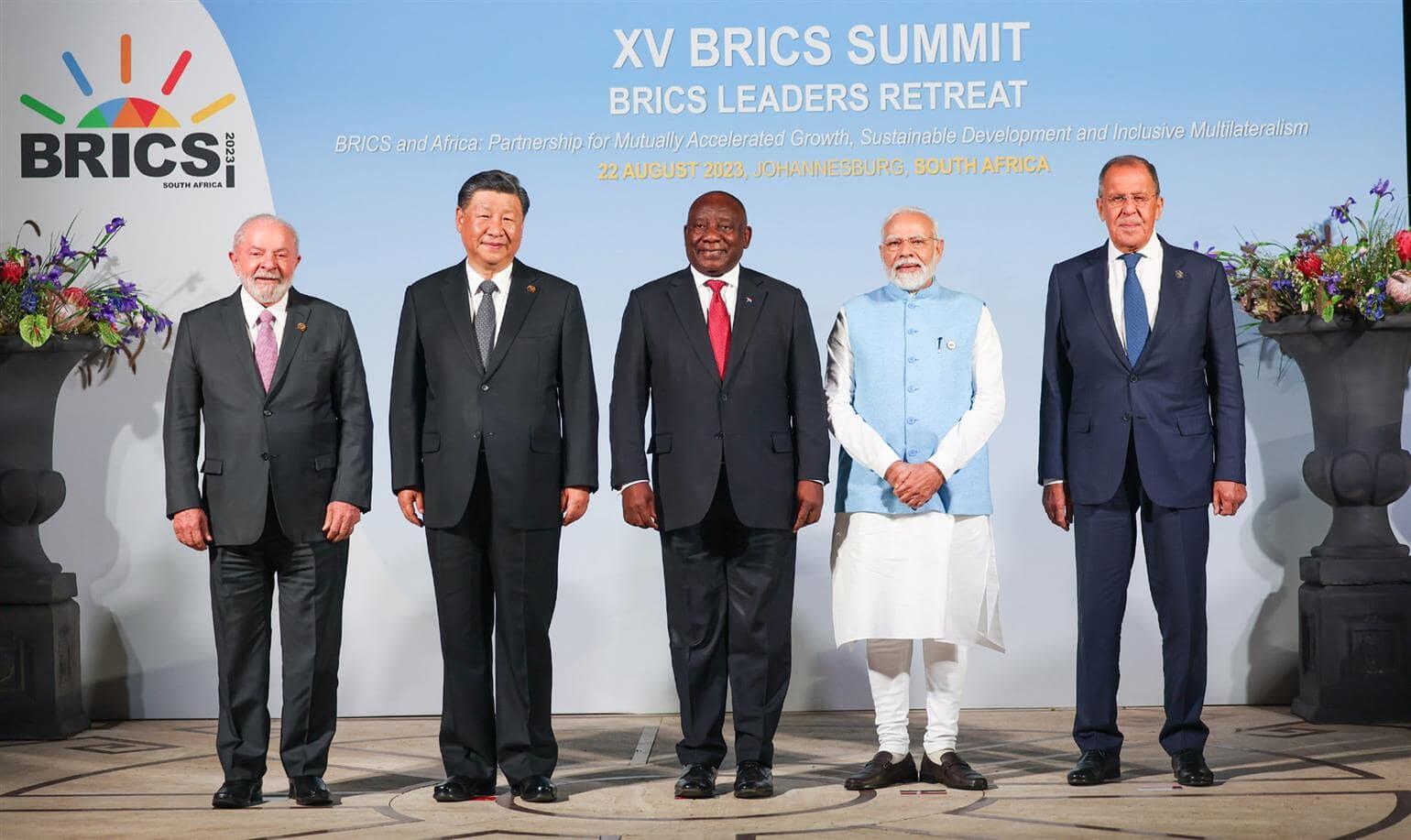
Malaysia has become the latest country harboring ambitions to join the BRICS group of developing nations, it was revealed on Wednesday.
Malaysian Prime Minister Anwar Ibrahim announced his country’s intention prior to a meeting with Chinese Premier Li Qiang in Kuala Lumpur.
“We have made the decision, and we are placing the formal procedures soon. I'm working closely with [Brazilian] President Lula [da Silva] in expanding the policy," said Anwar, according to Nikkei Asia.
The move comes as public sentiment in Malaysia tilts toward China. In a recent poll of intellectuals by Singaporean think tank the ISEAS-Yusof Ishak Institute, 75% of respondents in Malaysia said they would favor China if forced to choose between the two superpowers.
The two main reasons given for the shift are China's economic influence and the Muslim-majority nation's negative sentiment toward the US for backing Israel in the conflict with Hamas, said Nikkei Asia.
At the same time Ibrahim has been quick to reject accusations Malaysia is taking sides between superpowers, saying these are a “gross misperception” of his country’s interests.
BRICS slowly builds up
BRICS is a 10-country strong trading confederation composed of developing countries that has evolved as a counterweight to Western and US geopolitical dominance.
The block includes the original five members of Brazil, Russia, India, China and South Africa, as well as five new members — Egypt, Saudi Arabia, Ethiopia, Iran and the United Arab Emirates (UAE). Thailand has also announced its decision to apply for membership in May.
BRICS to wean globe off US Dollar-dependence
Key to BRICS’s policy agenda is to move the global economy off its dependence on the US Dollar, the world’s reserve currency.
According to data from the Bank of International Settlements, a staggering 90% of global transactions involve US Dollars and 50% of all global trade is US Dollar-denominated.
The United States has increasingly come to rely on the US Dollar’s dominance as a means of imposing sanctions on nations it deems out of line, and one major reason why BRICS wants to reduce the US Dollar’s dominance is to neutralize the threat of the currency being used as a weapon in this way.
“The United States’ greatest weapon to use – as distinct from its military – is sanctions, so sanctions means you freeze other assets, and those assets are (US Treasury) bonds,” said Ray Dalio, CEO of Bridgewater Capital, in a recent interview with Tom Bilyeu. “That happened with Russia, and there are threats of it with other countries. There is the thinking that, ‘If I hold the bonds, can that happen to me? Why am I transacting in this third currency (the US Dollar) rather than transacting directly?”
Russia, Iran and China have all been impacted by US sanctions, which can easily be imposed because of the Greenback’s role as the lifeblood of the global economy.
“R5” to replace the US Dollar
One BRICS strategy to replace the US Dollar is known as “R5” or the five Rs. These stand for the currencies of the founding BRICS countries – the Real, Ruble, Rupee, Renminbi and Rand. BRICS have already started to trade in their own currencies rather than use US Dollars as a medium of exchange.
“We already know that 80 percent of the trade carried about between Russia and China is settled in either Russian Rubles or Chinese Yuan,” said Chris Weafer, an investment analyst with Macro-Advisory, a strategic consultancy that focuses on Russia and Eurasia, in an interview with Al Jazeera News.
Even outside the core group of BRICS nations, members have begun trading with each other in their local currencies. The UAE and India, for example, have signed an agreement enabling them to settle trade payments in Rupees instead of US Dollars.
The recent expiry of the US's "Petrodollar" agreement with Saudia Arabia, which has tied the country into only selling its Oil in return for US Dollars, now also means that it will be free to trade in other currencies. This is seen as another bad omen for the US Dollar, marking its steadily declining dominance.
De-dollarization a reality?
While a growing amount of international trade among BRICS countries is now being conducted in the R5 currencies, the chances of actually replacing the US Dollar are slim, experts say.
To replace the Greenback, countries would have to transact in each other’s currencies, which would be fraught with risk. Many do not have the widespread appeal and liquidity of the Dollar and so are not a reliable store of value. In order for widespread trade to occur, BRICS nations would need to hold large reserves of each other’s currencies to facilitate transactions, according to Weafer.
Furthermore, local currencies, especially those of developing nations, are more at risk of devaluation from currency shocks. This would make FX exposure a major risk factor for importers and exporters.
Hoarding BRICS of Gold
Another strategy BRICS is using to dethrone the Dollar is to replace it with Gold. There are already signs this may be happening as BRICS central banks begin hoarding Gold, according to data from the World Gold Council (WGC). This shows almost a quarter of all Gold demand now comes from central banks – the largest of which is the People’s Bank of China (PBoC).
How would such a Gold system work in practice? BRICS countries would not likely directly pay for goods in Gold as such, as even small Gold coins tend to be of high denomination ($200). Rather they would use assets backed by Gold.
“People around the world will increasingly use various vehicles — such as bank accounts, bonds, loans and cryptocurrencies — denominated in Gold, just as they use the very same set of tools today, but denominated in Dollars,” said Forbes contributor Nathan Lewis.
BRICS’ widening net of influence
One key threat to the dominance of the US Dollar lies in the growth and popularity of the BRICS as a trade association.
With more countries wishing to join BRICS, it could eclipse the US Dollar through sheer weight of membership.
The founding members are all also members of their own regional trade alliances. This widens the influence of BRICS making de-dollarization a more realistic threat.
China is a member of the Regional Comprehensive Economic Partnership; India of the South Asian Association for Regional Cooperation; Russia of the Eurasian Economic Union and the Commonwealth of Independent States; Brazil of the Southern Common Market; and South Africa of the Southern African Customs Union.
“If BRICS successfully launches the R5, there is a legitimate threat that the trade groupings of these countries will also feel compelled to adopt the R5—at least alongside the US Dollar, if not as a replacement,” says Thomas Hill, writing for the Atlantic Council.
Author

Joaquin Monfort
FXStreet
Joaquin Monfort is a financial writer and analyst with over 10 years experience writing about financial markets and alt data. He holds a degree in Anthropology from London University and a Diploma in Technical analysis.

















