WTI steadies near $76 as firm Fed rate-cut bets cushion downside
- The Oil price finds an interim cushion near $76.00 after correcting from a fresh three-week high near $78.80.
- Firm Fed interest-rate cut prospects have supported the downside in the Oil price.
- Weak demand for stimulus in China has prompted fears of global demand concerns.
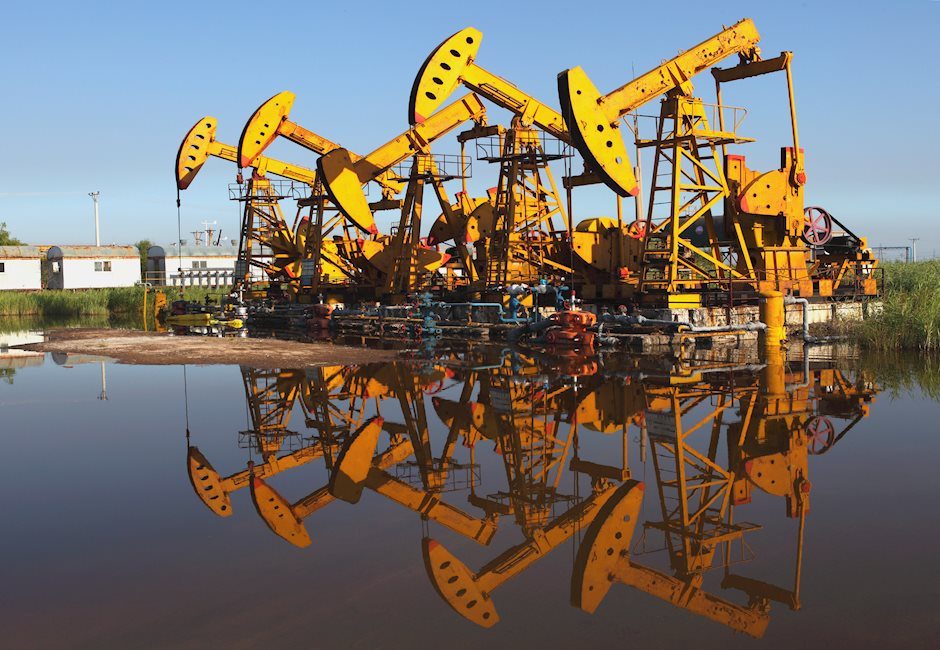

West Texas Intermediate (WTI), futures on NYMEX, discover support near $75.70 in Thursday’s European session after correcting from a fresh three-week high of $78.78 in last two trading sessions. The Oil price is expected to remain sideways as the downside is being supported by the uncertainty over Middle East conflicts and overwhelmed expectations of market participants that the Federal Reserve (Fed) will start reducing interest rates from the September meeting. While growing uncertainty of global Oil demand has sealed the upside.
Investors have been anxious as Iran continues to prepare to retaliate for the assassination of the Hamas leader by an Israeli air strike in Tehran.
Meanwhile, investors see Fed’s interest-rate cut in September as certain as price pressures remain on path that leads to Fed’s target of 2%. However, traders are split about the size with which the Fed will reduce its key borrowing rates. Lower interest rates by the Fed bode well for the Oil price as higher liquidity outflow results in an improvement in economic activity and fuel consumption.
Investors’ confidence that the Fed will cut interest rates from September was prompted by moderate growth in the United States (US) Consumer Price Index (CPI) data for July, released on Wednesday. The CPI report showed that annual core inflation, which excludes volatile food and energy prices, decelerated expectedly to 3.2%. The headline inflation surprisingly slowed to 2.9%, the lowest level seen in more than three years.
In the Asian region, deepening concerns over China’s recovery has prompted uncertainty over global demand. The data on Tuesday from the People’s Bank of China (PBoC) showed that July new bank loans plunged to a 15-year low, suggested weak demand in the domestic market. It is worth noting that China is the largest importer of Oil in the world and poor demand conditions in the economy weigh heavily on the Oil price.
Brent Crude Oil FAQs
Brent Crude Oil is a type of Crude Oil found in the North Sea that is used as a benchmark for international Oil prices. It is considered ‘light’ and ‘sweet’ because of its high gravity and low sulfur content, making it easier to refine into gasoline and other high-value products. Brent Crude Oil serves as a reference price for approximately two-thirds of the world's internationally traded Oil supplies. Its popularity rests on its availability and stability: the North Sea region has well-established infrastructure for Oil production and transportation, ensuring a reliable and consistent supply.
Like all assets supply and demand are the key drivers of Brent Crude Oil price. As such, global growth can be a driver of increased demand and vice versa for weak global growth. Political instability, wars, and sanctions can disrupt supply and impact prices. The decisions of OPEC, a group of major Oil-producing countries, is another key driver of price. The value of the US Dollar influences the price of Brent Crude Oil, since Oil is predominantly traded in US Dollars, thus a weaker US Dollar can make Oil more affordable and vice versa.
The weekly Oil inventory reports published by the American Petroleum Institute (API) and the Energy Information Agency (EIA) impact the price of Brent Crude Oil. Changes in inventories reflect fluctuating supply and demand. If the data shows a drop in inventories it can indicate increased demand, pushing up Oil price. Higher inventories can reflect increased supply, pushing down prices. API’s report is published every Tuesday and EIA’s the day after. Their results are usually similar, falling within 1% of each other 75% of the time. The EIA data is considered more reliable, since it is a government agency.
OPEC (Organization of the Petroleum Exporting Countries) is a group of 13 Oil producing nations who collectively decide production quotas for member countries at twice-yearly meetings. Their decisions often impact Brent Crude Oil prices. When OPEC decides to lower quotas, it can tighten supply, pushing up Oil prices. When OPEC increases production, it has the opposite effect. OPEC+ refers to an expanded group that includes ten extra non-OPEC members, the most notable of which is Russia.
Author
Sagar Dua
FXStreet
Sagar Dua is associated with the financial markets from his college days. Along with pursuing post-graduation in Commerce in 2014, he started his markets training with chart analysis.