USD/CHF extends gains on rising Treasury Yields
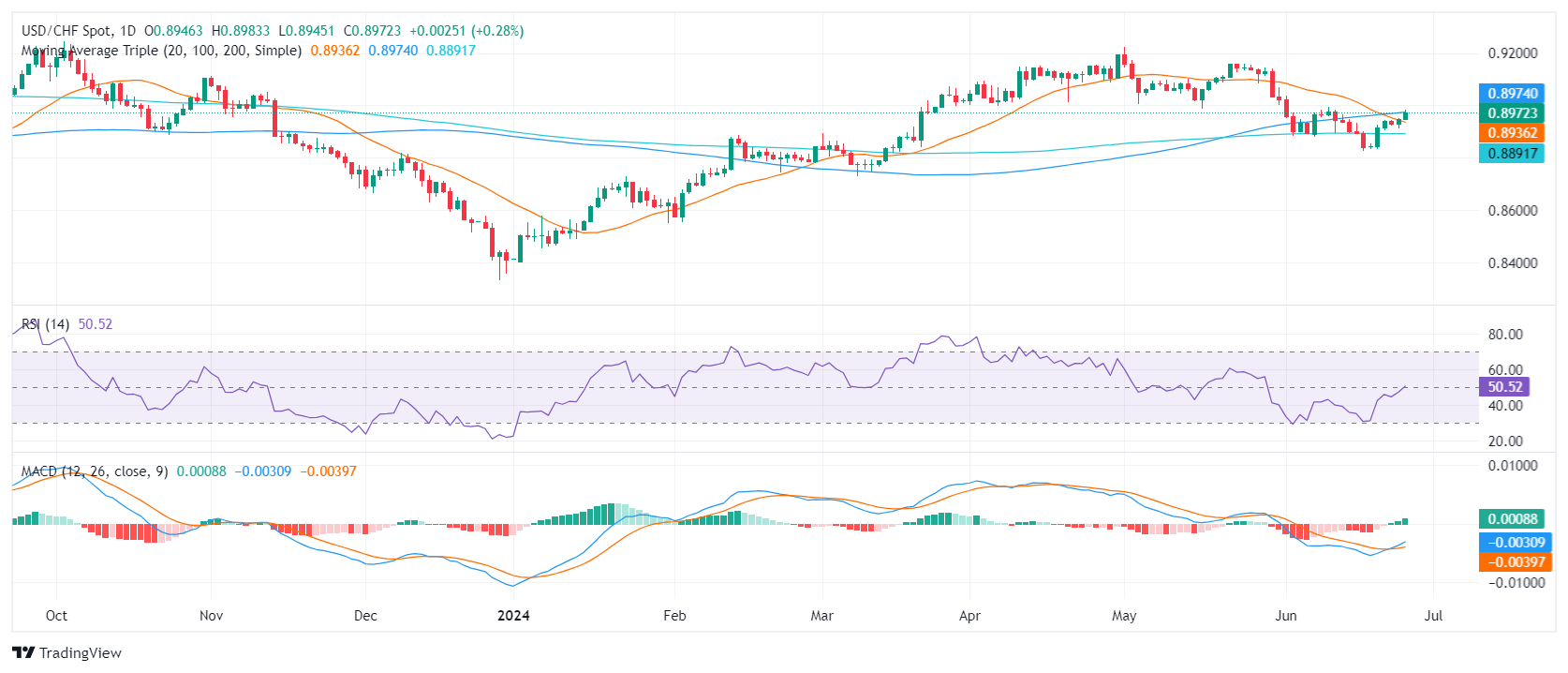
- USD/CHF surges, hitting highs not seen since mid-June and testing the crucial 100-day SMA at 0.8975.
- The strength of USD remained persistent, largely due to elevated Treasury yields.
- Market still bets on a 60% probability of a Fed rate cut in September.

The USD/CHF pair continued to benefit from rising US Treasury yields on Wednesday and shrugged off soft housing data. The Swiss economic calendar remained barren during the session, leaving the pair at the mercy of broader market trends and data from the US.
The latest New Home Sales figures for May took a hit, with the sales sinking to 619K units, causing an approximate 11.3% decrease from the former 698K, catching the market off-guard, as the expectation was set at a more favorable 640K units. Concurrently, the US 2-year, 5-year, and 10-year Treasury yields were reported at 4.74%, 4.33%, and 4.31% respectively, fostering USD attractiveness.
Even though the market suggests a 60% probability for a Fed rate cut of 25 basis points in September as gauged by the CME FedWatch Tool, the Federal Reserve's hinted at only one cut in 2024. Fed officials, including Governor Michelle Bowman, have asserted their hawkish stance, voicing opinions that a policy rate cut, at this juncture, may be premature. Moreover, significant economic events likely to affect the market expectations include the release of the revisions to the Gross Domestic Product (GDP) for Q1, expected to hold steady at 1.3% on Thursday, and the release of the May Personal Consumption Expenditures (PCE) report on Friday, the Fed’s preferred gauge of inflation.
USD/CHF technical analysis
From a technical analysis perspective, the pair's positioning indicates encouraging signs, having successfully established itself above the 20-day and 200-day SMA and vying to negotiate the 100-day average, which if accomplished might solidify its positive outlook. In addition, the Relative Strength Index (RSI) and Moving Average Convergence Divergence (MACD) rose to positive terrain, adding more arguments for the positive outlook.
USD/CHF daily chart
Author

Patricio Martín
FXStreet
Patricio is an economist from Argentina passionate about global finance and understanding the daily movements of the markets.