|

Silver Price Analysis: Pulling back within a probable downtrend

  • Silver is correcting within a short-term downtrend. 
  • A break below the June 13 lows would probably lead to a continuation of the trend of lower lows. 
  • The 50-day Simple Moving Average is an obstacle to bears pushing price lower. 

Silver (XAG/USD) trades a third of a percent lower in the $29.40s on Monday. Despite trading marginally lower on the day it has overall recovered since falling to a low of $28.66 on June 13. 

The precious metal is in a short-term downtrend, on balance, and given “the trend is your friend” this is likely to continue. The recovery since June 13 is probably a pull back rather than a reversal – once it finishes the downtrend will probably resume.

Silver 4-hour Chart 
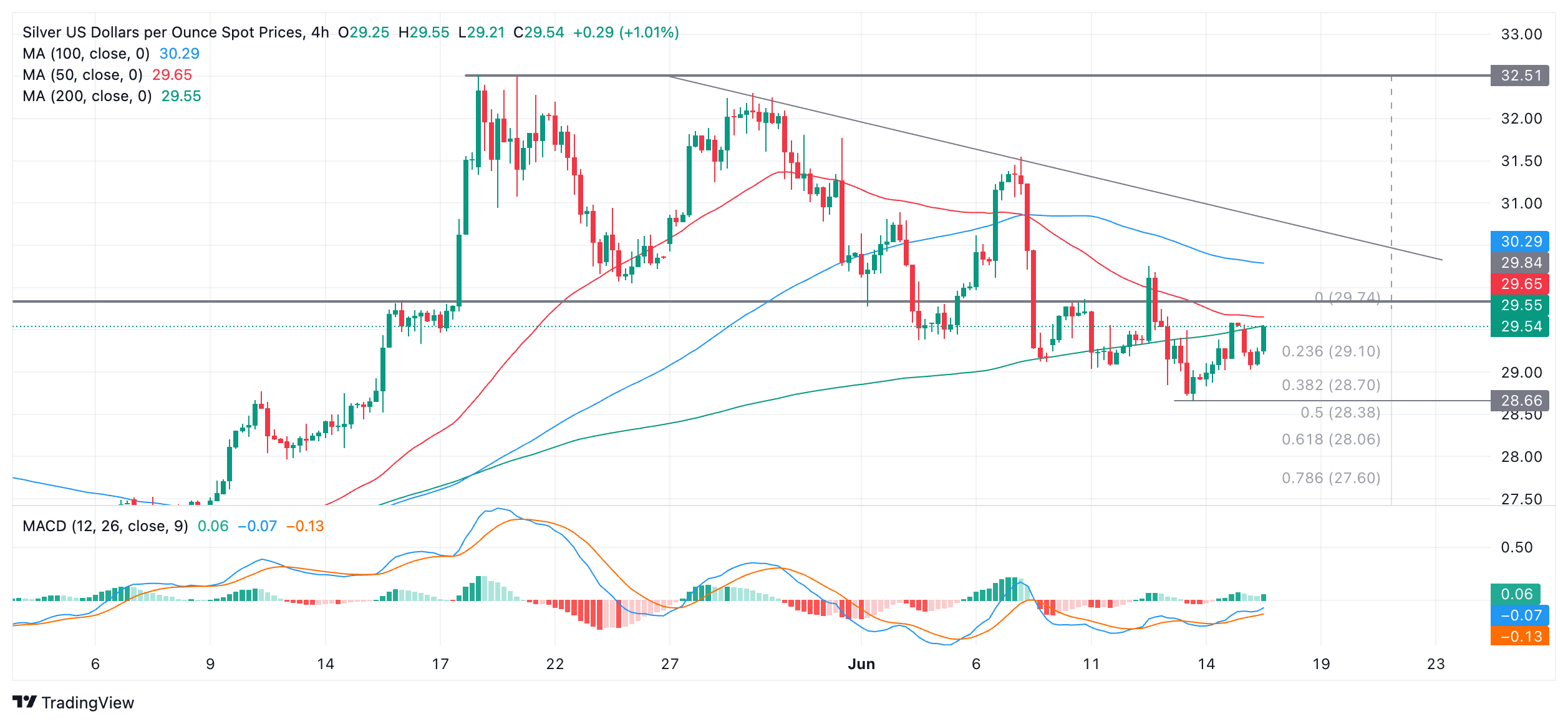
A break below $28.66 (June 13 low) would confirm another lower low, and a continuation of the bearish sequence. 

After that, Silver could fall to an initial, conservative target at $28.06, the 0.618 Fibonacci ratio of the height of the range that unfolded in the second half of May, extrapolated lower. 

The 50-day Simple Moving Average (SMA) at $29.01 could act as an obstacle to progress lower. 

Even more bearishness could see Silver reach as low as $27.02 (100% extrapolation of the height of the range lower). 

It would require a close above $30.50 to bring the short-term downtrend into doubt. A move above the $31.55 lower high would suggest the possibility of a recovery to the range high at $32.51, and a reversal of the short-term trend. 

Author

Joaquin Monfort

Joaquin Monfort is a financial writer and analyst with over 10 years experience writing about financial markets and alt data. He holds a degree in Anthropology from London University and a Diploma in Technical analysis.


More from Joaquin Monfort
Share:

Editor's Picks

GBP/USD clings to small gains near 1.3450 after UK jobs data

GBP/USD trades in positive territory at around 1.3450 in the European session on Tuesday. The UK ILO Unemployment Rate remained at 4.9% in the three months to May, compared with expectations of 5%, but failed to provide any impetus to the British Pound's renewed uptick. Traders stay cautious amid US-Iran uncertainty and the UK political transition.

EUR/USD keeps range above 1.1400 after German ZEW

EUR/USD is keeping its range above 1.1400 in Tuesday's European session, as the US Dollar (USD) retreats following Monday's rebound. Nevertheless, the uncertainty around the US-Iran conflict limits the pair's upside. Meanwhile, the Euro (EUR) pays little heed to the strong German sentiment data, as traders await Thursday's European Central Bank policy announcements, which could drive the Euro's near-term valuation.

Gold extends recovery toward $4,100

Gold gains traction following Monday's choppy action and advances toward $4,100 on Tuesday. However, the uncertainty surrounding the conflict in the Middle East and growing expectations for a hawkish Federal Reserve policy outlook could make it difficult for the precious metal to gather bullish momentum in the near term.

Bitcoin extends advance as ETF inflows, Iran war mediators' proposal lift risk mood

Bitcoin extends its gains, trading above $65,800 after closing above the key technical hurdle the previous day. The bullish price action is further supported by the return of institutional demand, with spot Exchange Traded Funds continuing their inflows on Monday. In addition, the renewed hopes for peace between the US and Iran have lifted risk sentiment, providing an additional tailwind for the Crypto King.

Buy the dip on the Dow Jones and S&P? Forex Trading Gold descending triangle

Trading during a war, a pandemic, during trade disputes, and other geopolitical events, especially when some major players are sociopathic, can be quite challenging. The Iran war is no exception. The Iran war is no exception.

US Dollar mid-year outlook: Exceptional currency, exceptional risks?
The US Dollar enters the second half of 2026 in a markedly different position from a year ago. The King currency has recovered, reflecting persistent US inflation, changing expectations for Fed policy, geopolitical tensions and renewed demand for defensive assets.