NZD/USD inches higher to near 0.6100 due to dovish Fedspeak
- NZD/USD gains ground as dovish comments from Fed officials raise speculations of rate cuts.
- Fed Chair Jerome Powell said that the central bank is getting back on the disinflationary path.
- The economic slowdown in China, a major trade partner, poses a headwind for the New Zealand Dollar.
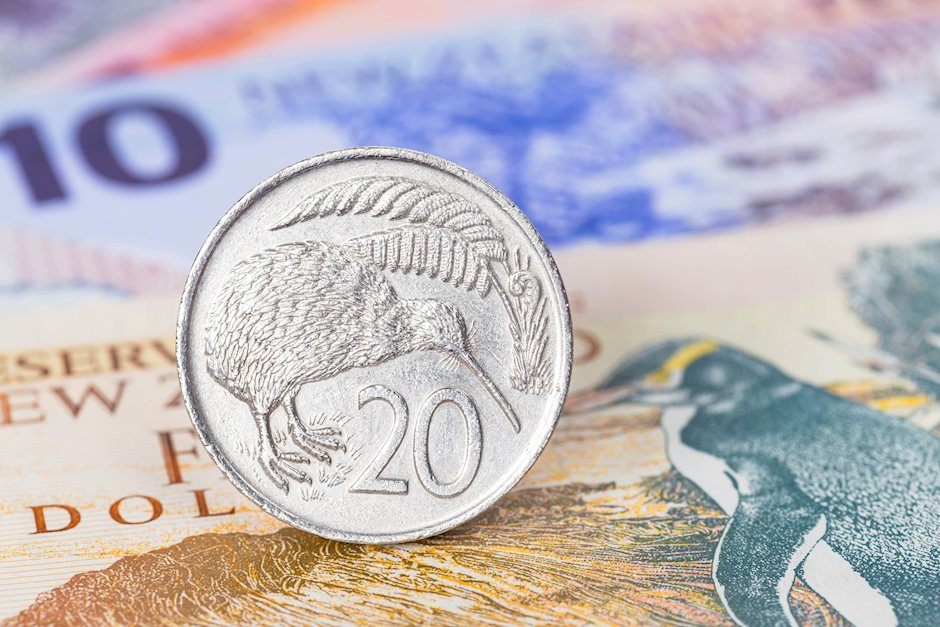

NZD/USD appreciates for the second successive session as the US Dollar (USD) struggles due to the escalated speculations of Federal Reserve (Fed) reducing interest rates in 2024. The NZD/USD pair trades around 0.6080 during the European trading hours on Wednesday.
The Greenback could limit its downside as US Treasury yields improve with 2-year and 10-year Treasury bonds standing at 4.75% and 4.43%, respectively, at the time of writing. Traders will be looking for further direction from the US ADP Employment Change, ISM Services PMI for June, and the FOMC Minutes, all of which are scheduled for release later on Wednesday.
As per Reuters, Federal Reserve (Fed) Chair Jerome Powell’s somewhat dovish remarks on Tuesday. Powell said that the Fed is getting back on the disinflationary path. Additionally, Chicago Federal Reserve Bank President Austan Goolsbee cautioned on Tuesday during an interview with CNBC, stating, "I see some warning signs that the real economy is weakening."
On the Kiwi’s front, the Services Purchasing Managers' Index (PMI) in China, a major trading partner, fell to 51.2 in June from 54.0 in May, according to the latest data released by Caixin on Wednesday. The market had forecast a figure of 53.4 for the period. This decline adds to concerns about a slowdown in the world's second-largest economy and poses a headwind for the New Zealand Dollar (NZD).
The Reserve Bank of New Zealand (RBNZ) is set to deliver an interest rate decision next week after maintaining borrowing costs at 5.5% for the seventh consecutive meeting in May. Expectations that the Reserve Bank of New Zealand (RBNZ) will cut rates earlier than projected may restrain any significant appreciation of the NZD/USD pair.
Interest rates FAQs
Interest rates are charged by financial institutions on loans to borrowers and are paid as interest to savers and depositors. They are influenced by base lending rates, which are set by central banks in response to changes in the economy. Central banks normally have a mandate to ensure price stability, which in most cases means targeting a core inflation rate of around 2%. If inflation falls below target the central bank may cut base lending rates, with a view to stimulating lending and boosting the economy. If inflation rises substantially above 2% it normally results in the central bank raising base lending rates in an attempt to lower inflation.
Higher interest rates generally help strengthen a country’s currency as they make it a more attractive place for global investors to park their money.
Higher interest rates overall weigh on the price of Gold because they increase the opportunity cost of holding Gold instead of investing in an interest-bearing asset or placing cash in the bank. If interest rates are high that usually pushes up the price of the US Dollar (USD), and since Gold is priced in Dollars, this has the effect of lowering the price of Gold.
The Fed funds rate is the overnight rate at which US banks lend to each other. It is the oft-quoted headline rate set by the Federal Reserve at its FOMC meetings. It is set as a range, for example 4.75%-5.00%, though the upper limit (in that case 5.00%) is the quoted figure. Market expectations for future Fed funds rate are tracked by the CME FedWatch tool, which shapes how many financial markets behave in anticipation of future Federal Reserve monetary policy decisions.
Author
Akhtar Faruqui
FXStreet
Akhtar Faruqui is a Forex Analyst based in New Delhi, India. With a keen eye for market trends and a passion for dissecting complex financial dynamics, he is dedicated to delivering accurate and insightful Forex news and analysis.