Mexican Peso finds thin gains for a fourth straight gain
- The Mexican Peso is holding on the high side on Friday.
- An uptick in US consumer sentiment has bolstered market risk appetite.
- Hopes for a September Fed rate cut remain high.

The Mexican Peso (MXN) eased slightly higher against the Greenback on Friday, but bullish momentum behind the MXN is draining quickly after putting in three straight days of gains. US consumer sentiment figures from the University of Michigan bolstered risk appetite during the US session, prompting broad weakness in the US Dollar as investors scooped up riskier assets.
Mexico has limited representation on the economic calendar next week, and investors will watch for the kick-off of the Jackson Hole Economic Symposium later next week.
Daily digest market movers: Mexican Peso looks for gains but momentum remains thin
- The University of Michigan’s Consumer Sentiment Index rose to 67.8 in August, up from the previous 66.4.
- Market sentiment lurched higher after the sentiment index handily beat the forecast of 66.9.
- Consumer 5-year Inflation Expectations and held steady at 3.0% in August, unchanged from the previous month.
- The Jackson Hole Symposium begins next Thursday, plenty of central bank policymaker appearances are expected.
Mexican Peso price forecast: Peso bulls at risk of running out of gas
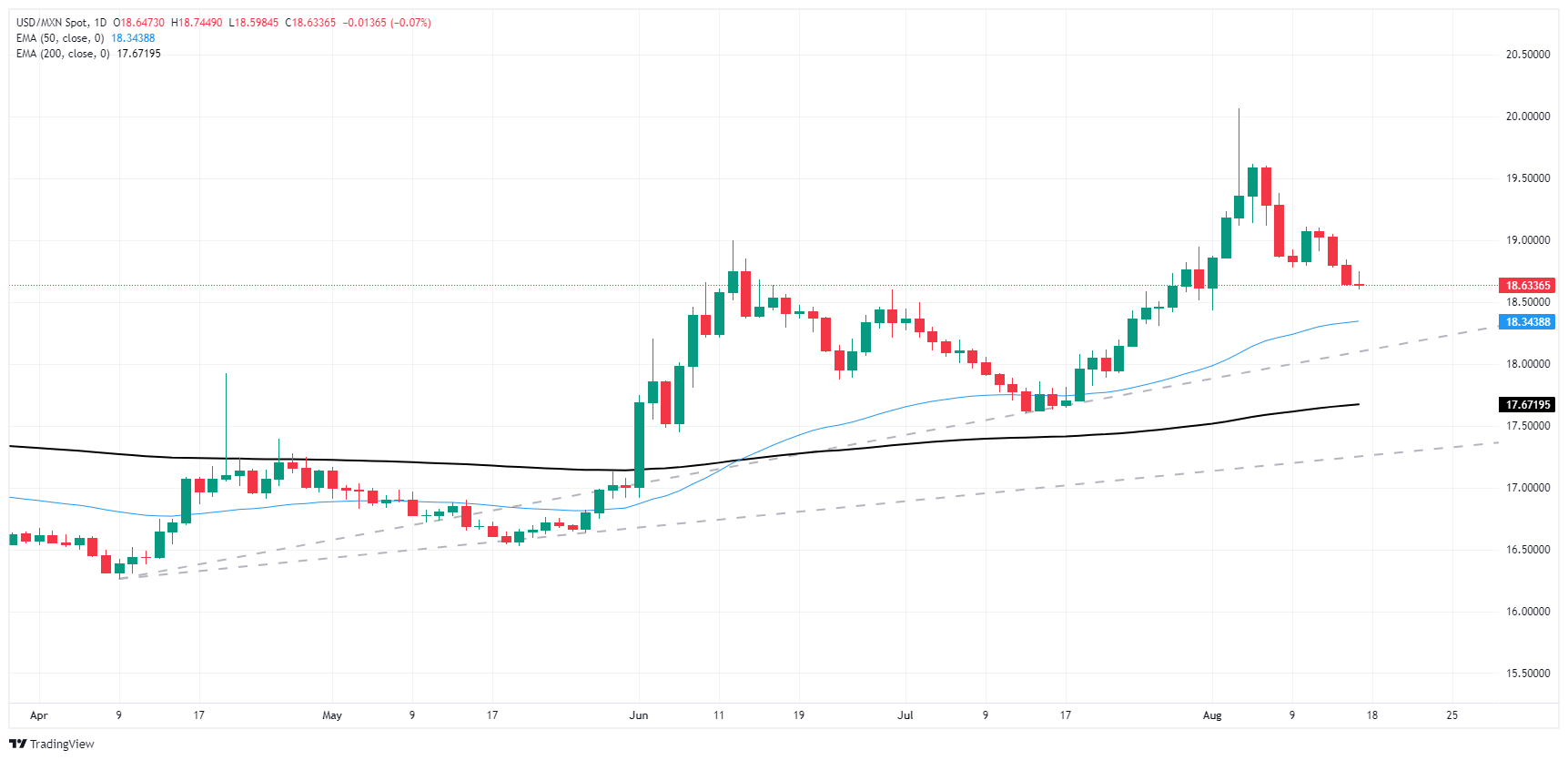
The Mexican Peso (MXN) has recovered significant ground against the US Dollar, climbing over 7.3% peak-to-trough from a nearly two-year low. Still, significant ground needs to be covered before Peso buyers can consider the MXN on balance, with the Peso still down over 14% from its peak 2024 bids against the Greenback.
USD/MXN has closed in the red for all but one of the last seven consecutive trading days as the Greenback gives back ground to the Peso, but the pair continues to trade north of the 50-day Exponential Moving Average (EMA) at 18.34, and a firm pattern of higher lows is keeping Greenback shorts at bay.
USD/MXN daily chart
Economic Indicator
Michigan Consumer Sentiment Index
The Michigan Consumer Sentiment Index, released on a monthly basis by the University of Michigan, is a survey gauging sentiment among consumers in the United States. The questions cover three broad areas: personal finances, business conditions and buying conditions. The data shows a picture of whether or not consumers are willing to spend money, a key factor as consumer spending is a major driver of the US economy. The University of Michigan survey has proven to be an accurate indicator of the future course of the US economy. The survey publishes a preliminary, mid-month reading and a final print at the end of the month. Generally, a high reading is bullish for the US Dollar (USD), while a low reading is bearish.
Read more.Last release: Fri Aug 16, 2024 14:00 (Prel)
Frequency: Monthly
Actual: 67.8
Consensus: 66.9
Previous: 66.4
Source: University of Michigan
Consumer exuberance can translate into greater spending and faster economic growth, implying a stronger labor market and a potential pick-up in inflation, helping turn the Fed hawkish. This survey’s popularity among analysts (mentioned more frequently than CB Consumer Confidence) is justified because the data here includes interviews conducted up to a day or two before the official release, making it a timely measure of consumer mood, but foremost because it gauges consumer attitudes on financial and income situations. Actual figures beating consensus tend to be USD bullish.
Author

Joshua Gibson
FXStreet
Joshua joins the FXStreet team as an Economics and Finance double major from Vancouver Island University with twelve years' experience as an independent trader focusing on technical analysis.
















