Gold price weakens further amid caution ahead of key US macro data
- Gold price eyes more downside amid caution ahead of US core PCE Price Index data.
- Apart from the US underlying inflation data, investors will focus on the Q1 GDP.
- The US Dollar corrects as a weak PMI report for April dampens investors’ confidence in the strong US economic outlook.
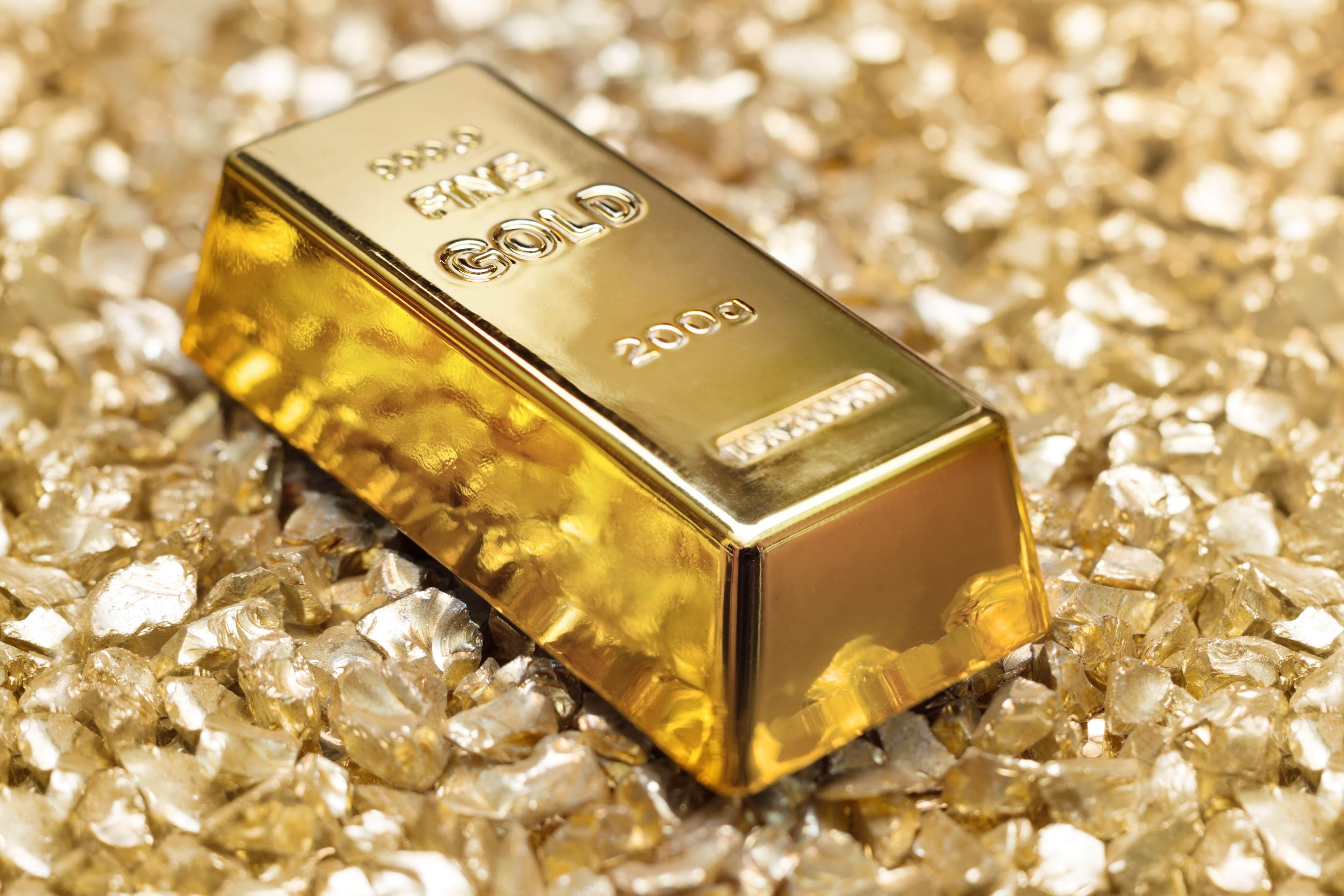
Gold price (XAU/USD) faces pressure while attempting to extend recovery above $2,320 in Wednesday’s early New York session. The near-term appeal of the precious metal remains weak as safe-haven demand wanes amid easing Middle East tensions. Also, investors turn cautious for bullions ahead of the United States Q1 Gross Domestic Product (GDP) release and the core Personal Consumption Expenditure Price Index (PCE) data for March, which will be published on Thursday and Friday, respectively.
The Q1 GDP and the underlying inflation will provide further cues about when the Federal Reserve (Fed) will begin reducing interest rates. The US core PCE Inflation, the Fed’s preferred inflation gauge, is estimated to have grown steadily by 0.3%, with annual figures softening to 2.6% from 2.8% recorded for February. The Gold price could face a sharp sell-off if the underlying inflation data comes in hotter than expected.
US inflation indicators such as Consumer Price Index (CPI) and wage growth have remained high in the first quarter. Further signs of persisting price pressures would allow the Fed to continue with their argument of keeping interest rates at the current levels for a longer period. Historically, this scenario bodes well for the US Dollar and bond yields, and makes Gold less attractive.
Daily digest market movers: Gold price remains on backfoot amid multiple headwinds
- Gold price remains on the back foot as safe-haven demand has diminished after investors shrugged off Middle East fears amid no further escalation in tensions between Iran and Israel.
- The precious metal got some relief after plunging to $2,300 as the US Dollar weakened after the release of the weak S&P Global preliminary PMI data for April. The report showed that surprisingly both Manufacturing and Services PMI were down from the prior readings. The Manufacturing PMI even fell below the 50.0 threshold, signalling a contraction.
- The US economic outlook from the agency was slightly gloomy, indicating the consequences of higher interest rates by the Federal Reserve. Chris Williamson, Chief Business Economist at S&P Global Market Intelligence said: “The US economic upturn lost momentum at the start of the second quarter, with the flash PMI survey respondents reporting below-trend business activity growth in April. Further pace may be lost in the coming months, as April saw inflows of new business fall for the first time in six months and firms’ future output expectations slipped to a five-month low amid heightened concern about the outlook.”
- However, the near-term outlook of Gold is bearish as Fed policymakers see the current monetary policy framework as appropriate due to strong labor demand and persistent price pressures. The Gold price could turn sideways as investors shift focus to the US core PCE Price Index data for March, which will influence speculation about when the Fed will pivot to interest rate cuts. Currently, traders expect that the Fed will start reducing interest rates from the September meeting.
- Meanwhile, the US Census Bureau has reported upbeat Durable Goods Orders for March. Orders for Durable Goods rose sharply by 2.6% from February's reading of 0.7%, downwardly revised from 1.4%. Durable Goods are those with a long life span and are a leading indicator of core CPI as it excludes prices of non-durable goods such as food and energy. Higher orders for Durable Goods indicate a strong demand by households, which allows factories to raise their prices at factory gates.
Technical Analysis: Gold price struggles to sustain above $2,300
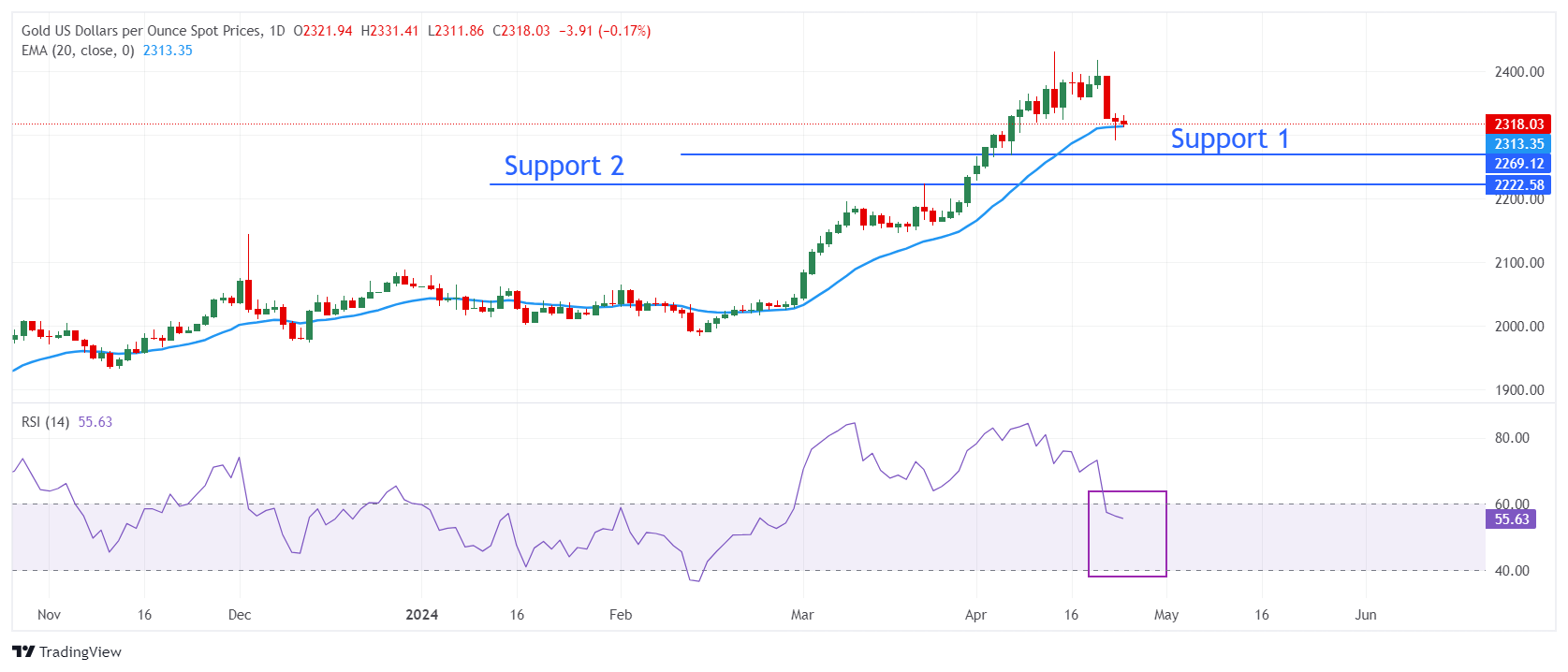
Gold price struggles for a firm footing near $2,300. The precious metal remains on tenterhooks after sliding to near the 20-day Exponential Moving Average (EMA), which trades around $2,313. The yellow metal could fall to a three-week low near $2,265 amid multiple headwinds. A breakdown below the three-week low of $2,265 would expose the asset to March 21 high at $2,223.
The 14-period Relative Strength Index (RSI) falls below 60.00, suggesting that a bullish momentum has ended. However, the upside bias is intact until it sustains above 40.00.
Inflation FAQs
Inflation measures the rise in the price of a representative basket of goods and services. Headline inflation is usually expressed as a percentage change on a month-on-month (MoM) and year-on-year (YoY) basis. Core inflation excludes more volatile elements such as food and fuel which can fluctuate because of geopolitical and seasonal factors. Core inflation is the figure economists focus on and is the level targeted by central banks, which are mandated to keep inflation at a manageable level, usually around 2%.
The Consumer Price Index (CPI) measures the change in prices of a basket of goods and services over a period of time. It is usually expressed as a percentage change on a month-on-month (MoM) and year-on-year (YoY) basis. Core CPI is the figure targeted by central banks as it excludes volatile food and fuel inputs. When Core CPI rises above 2% it usually results in higher interest rates and vice versa when it falls below 2%. Since higher interest rates are positive for a currency, higher inflation usually results in a stronger currency. The opposite is true when inflation falls.
Although it may seem counter-intuitive, high inflation in a country pushes up the value of its currency and vice versa for lower inflation. This is because the central bank will normally raise interest rates to combat the higher inflation, which attract more global capital inflows from investors looking for a lucrative place to park their money.
Formerly, Gold was the asset investors turned to in times of high inflation because it preserved its value, and whilst investors will often still buy Gold for its safe-haven properties in times of extreme market turmoil, this is not the case most of the time. This is because when inflation is high, central banks will put up interest rates to combat it. Higher interest rates are negative for Gold because they increase the opportunity-cost of holding Gold vis-a-vis an interest-bearing asset or placing the money in a cash deposit account. On the flipside, lower inflation tends to be positive for Gold as it brings interest rates down, making the bright metal a more viable investment alternative.
Author

Sagar Dua
FXStreet
Sagar Dua is associated with the financial markets from his college days. Along with pursuing post-graduation in Commerce in 2014, he started his markets training with chart analysis.