EUR/USD longs squeezed to breaking point, below parity eyed
- EUR/USD bears are moving in for the kill to break 1.05 the figure.
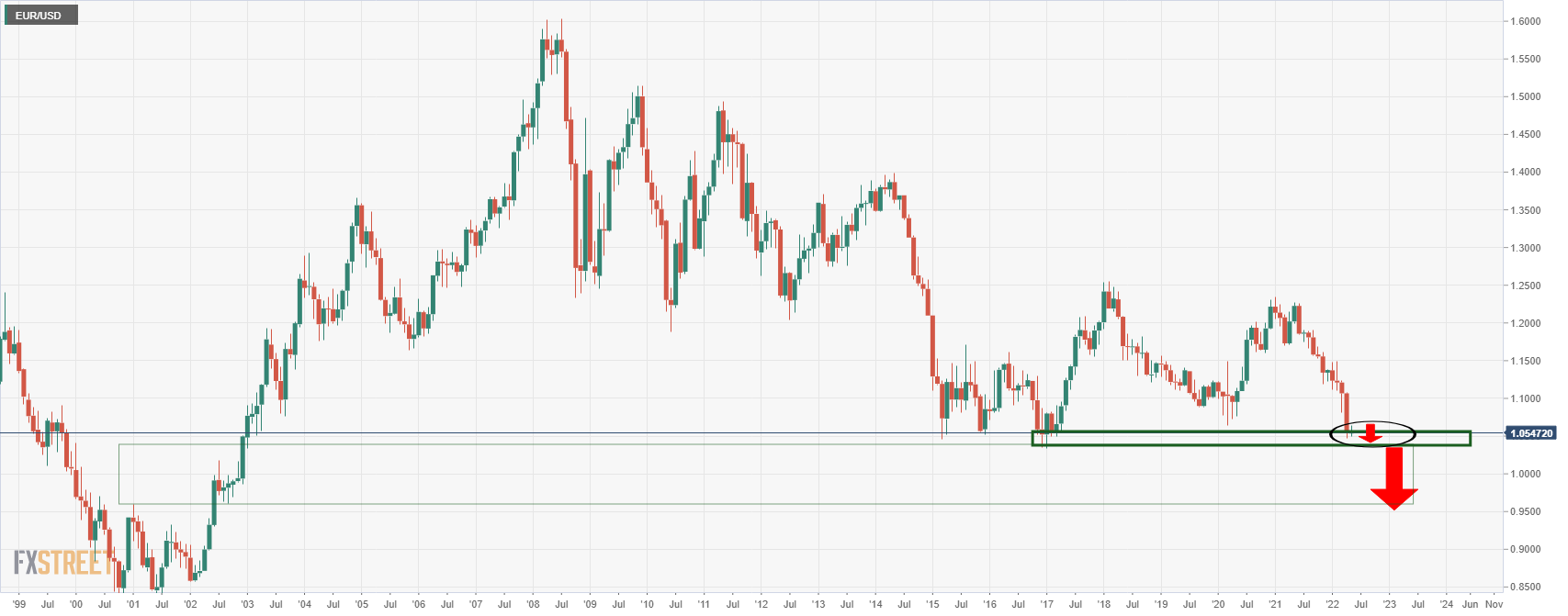
- Eyes are on the monthly support that guards the risk of a break below parity.
- The NFP data will be key in this regard as the US dollar bulls look for a reason to stay the course.

At 1.0520, EUR/USD is down some 0.9% in late trade on Wall Street. The price dropped from a high of 1.0641 to a low of 1.0492 on the day with the US dollar soaring at the start of the North American shift. The euro was sold off in the wake of damaging data from the eurozone and ongoing concerns over the Ukraine crisis.
Investors are looking ahead at the prospect of a summer of discontent as global growth fears mount following a series of worrisome economic data and ongoing geopolitical risks. Chinese PMIs remain in contraction territory and the COVID lockdowns disrupting supply chains combined with the contagion of the Ukraine crisis in commodity markets has left a dark cloud over global growth prospects.
Then, the Bank of England warning of stagflation and weak German data that was showing that industrial orders in March suffered their biggest monthly drop since last October hammered down the coffin for the euro on Thursday. The greenback was subsequently boosted by safe-haven buying as global equities come back under pressure.
DXY, an index that measures the greenback vs. six rivals, is currently trading at 103.59 and is 1.06% higher on the day after rallying from a low of 102.352 to a new cycle high of 103.942. The move comes following the Federal Reserve the prior day affirming that it would take aggressive steps to combat soaring inflation.
The greenback was initially sold off as markets sold the fact yesterday when the Fed hiked by 50bps, as expected. However, there was a cohort of investors expecting a more aggressive move and guidance from the Fed's chairman, Jerome Powell, during the press conference. Instead, the dollar dropped sharply when the Fed chairman, dialled back on prospects of 75bps hikes.
Looking ahead, a lower appetite for emerging markets combined with the Fed's focus on fighting inflation are all factors that would be expected to underpin the greenback. Friday's Nonfarm Payrolls are going to be important in this regard.
The moves in the markets come ahead of Friday's showdown event in the US jobs market. The Nonfarm Payrolls (NFP) is a major risk and could well set the tone for the following weeks ahead of the next Fed rate decision.
''A strong payrolls report could perversely push the market to price in more tightening as the Fed reduced its optionality at its most recent meeting,'' analysts at TD Securities said.
''That leaves a resilient USD vs EUR and yen very much the path of least resistance. A softer wages print should help to temporarily take the edge off but this will be short-lived until evidence of a peak/moderation in CPI emerges.''
Meanwhile, analysts at ANZ Bank explained, ''whilst the Fed is not currently considering a 75bps rate increase, that guidance is based on expectations that the trend increase in monthly Nonfarm payrolls will slow and core inflation is stabilising. But there are no guarantees at all that that will be the case. Demand for labour in the US remains very strong and core services inflation is rising steadily. The April non-farm payroll and employment reports tomorrow night, therefore, carry a lot of significance.''
Should the jobs data come in strong, it could exacerbate the fall in the euro that is already testing the bull's commitments around 1.05 the figure:
EUR/USD technical analysis
As per the prior day's post-Fed analysis in both the DXY and euro, the price indeed reverted to test and penetrate the neckline of the W-formation.
Prior analysis:
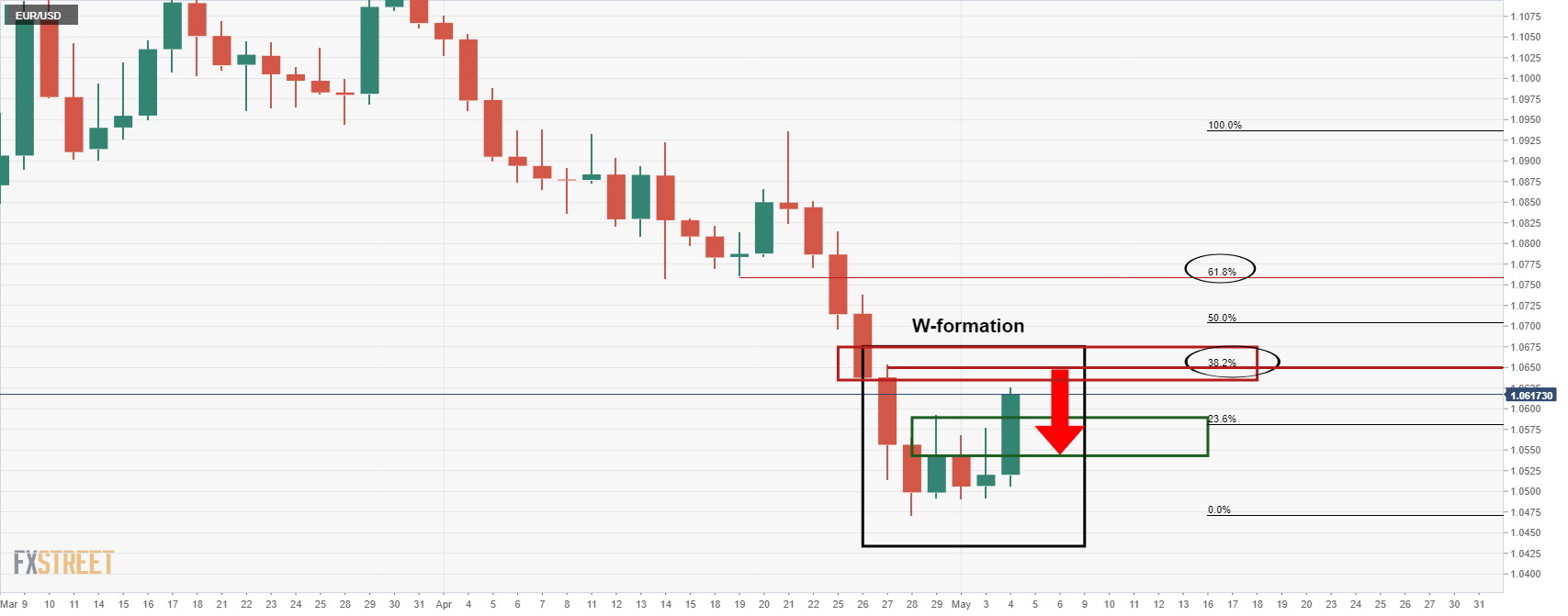
The price came into a handful of pips from the 38.2% Fibonacci retracement level of the prior bearish impulse. The market has sunk to challenge the neckline of the W-formation, penetrating to print below 1.05 the figure on the day:
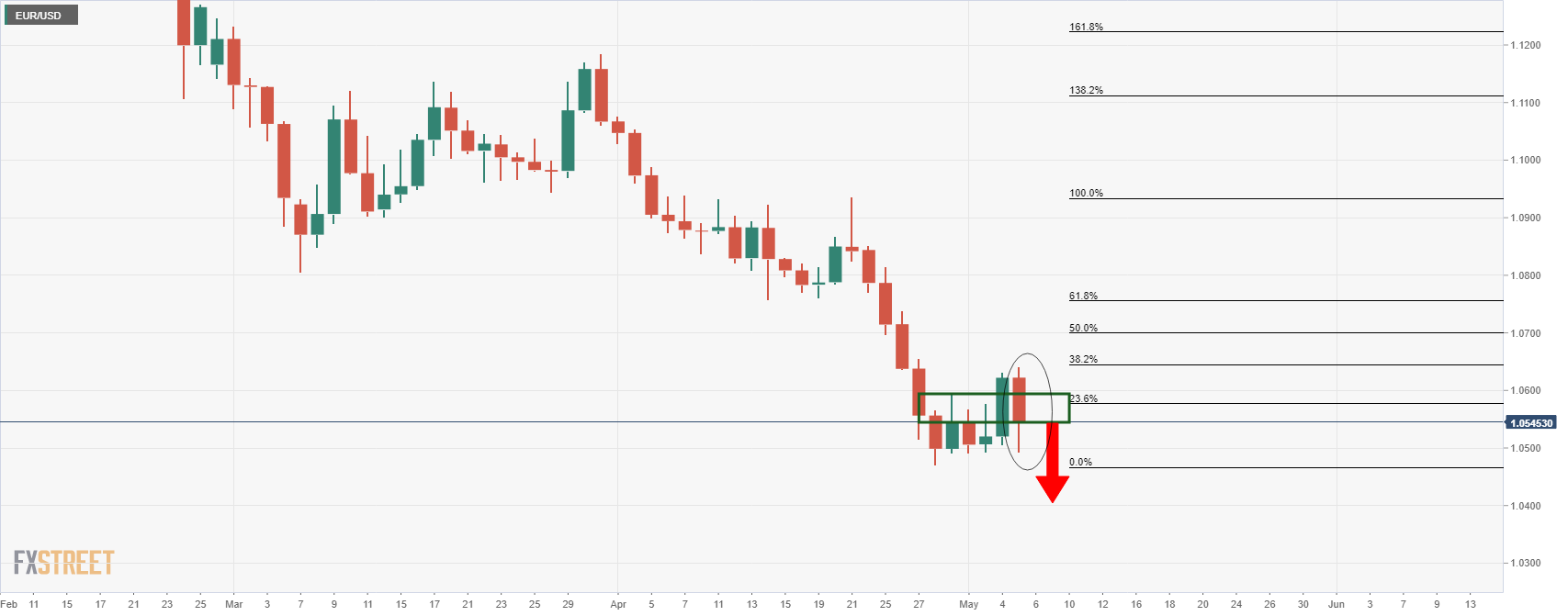
A break of the neckline followed by a bearish close will open the door for further downside ahead, as per the monthly chart:
Author

Ross J Burland
FXStreet
Ross J Burland, born in England, UK, is a sportsman at heart. He played Rugby and Judo for his county, Kent and the South East of England Rugby team.
















